




Finding a good pair of budget audiophile headphones can feel confusing, especially with so many mixed opinions online.
The Hifiman HE400se keeps coming up in conversations, and for good reason.
It promises planar magnetic sound at a price that seems almost too good to be true. But does it actually deliver in real use, or is it just hype from enthusiasts?
In this blog, I’ll break it down simply, looking at both expert reviews and real user feedback so you can decide whether the Hifiman HE400se is worth your money.
Basic Information
The HIFIMAN HE400se came out around 2020 as a budget-friendly planar magnetic headphone for people getting into audiophile gear.
It builds on the older HE400 line and introduces HIFIMAN’s stealth-magnet design at a lower price point, making this tech more accessible.
This model sits between entry-level and mid-range options. It features an open-back design, uses a wired connection, and prioritizes sound quality over additional features.
Over time, it has become popular to offer planar sound at a reasonable cost. However, it performs best when paired with a proper amplifier, as it needs enough power to really shine.
Hifiman HE400se: Features, Specs & Sound Overview
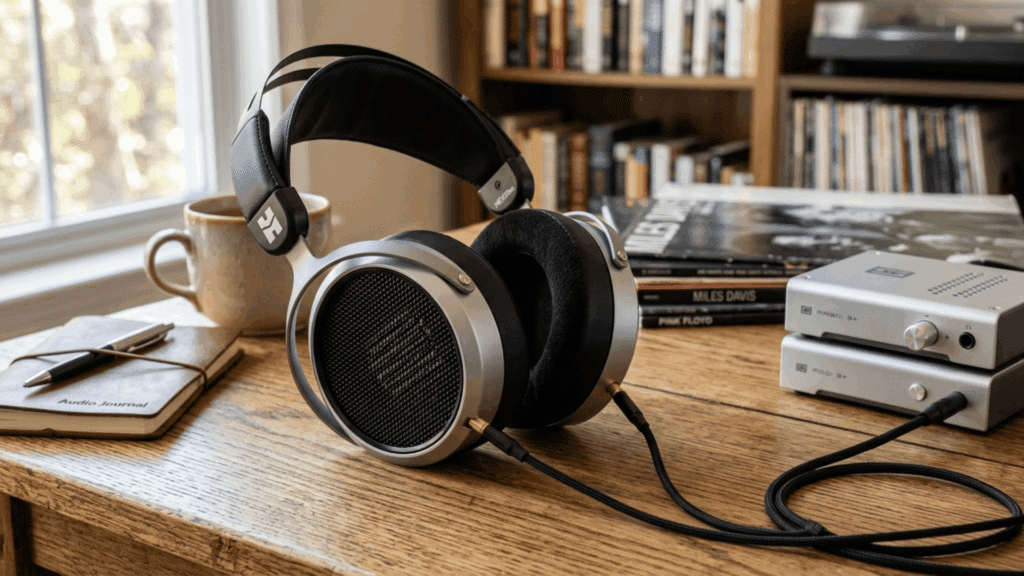
It stands out mainly because of its driver technology and tuning approach, but it also comes with a few trade-offs that are easy to overlook at first.
Instead of focusing only on specs, it’s important to understand how these features actually affect everyday listening.
1. Planar Magnetic Drivers
At its core, the HIFIMAN HE400SE uses planar magnetic drivers, which behave differently from standard dynamic drivers.
They offer faster response, better control, and lower distortion, especially in complex tracks. This is why many listeners notice cleaner separation and more precise sound, even at this price point.
That said, the improvement is more about clarity than excitement, so it may not feel instantly impressive to everyone.
2. Stealth Magnet Technology
The features of the stealth magnet design are intended to reduce airflow resistance and improve overall clarity.
In theory, this should make the sound smoother and more transparent. In practice, though, the difference can feel quite subtle, especially for casual listeners.
It’s a useful addition, but not something that completely changes the experience on its own.
3. Open-Back Design & Soundstage
The open-back design plays a big role in how the headphones sound, creating a wide, airy soundstage. Music feels more spread out, and instruments don’t feel cramped together.
However, this design comes with clear downsides. There is significant sound leakage, and it offers no isolation from outside noise, limiting it to quiet indoor use.
4. Build, Comfort & Weight
In terms of physical design, the Hifiman HE400se is lightweight and comfortable for long listening sessions.
The ear cups are spacious, and the pressure on the head is generally manageable. But the trade-off is noticeable.
The build quality feels average, and some users have reported long-term durability concerns, especially around the headband and cable.
5. Sound Signature & Technical Performance
The tuning leans toward a neutral sound with a slight brightness, which gives it a more analytical character.
It doesn’t try to artificially boost bass or add warmth. Instead, it focuses on clarity, detail, and separation, which makes it great for genres like classical or acoustic.
The wide soundstage and clean presentation also help in picking out small details in music.
6. Weaknesses & Limitations
Despite its strengths, the headphone isn’t without flaws. The most noticeable issue is the lack of bass punch, which can make certain tracks feel less engaging.
On top of that, the sound can come across as slightly thin or lean without EQ adjustments. To get the best out of it, many users end up tweaking the sound or pairing it with better gear.
HE400SE vs. Other Popular Alternatives
To understand where the Hifiman HE400se stands, it helps to compare it directly with a couple of popular alternatives in the same range.
Pricing can vary slightly depending on region and sales, but here’s a realistic U.S. price snapshot.
| Feature | HE400SE | Sennheiser HD560S | Beyerdynamic DT990 Pro |
|---|---|---|---|
| Price (USD) | $109 – $149 | $150 – $200 | $150 – $180 |
| Driver Type | Planar | Dynamic | Dynamic |
| Sound Signature | Neutral / Analytical | Neutral | V-shaped |
| Bass Impact | Low | Moderate | Strong |
| Soundstage | Wide | Wide | Very wide |
| Comfort | Good | Very good | Good |
| Build Quality | Average | Solid | Solid |
| Amp Required | Recommended | Optional | Recommended |
| Best For | Detail & clarity | Balanced listening | Fun, energetic sound |
Gaming Performance

These headphones perform surprisingly well in gaming, but it depends heavily on the kinds of games you play.
Its biggest strengths lie in accurate imaging and a wide soundstage, which make it easier to pick up directional cues. In competitive FPS titles, footsteps and movement feel more precise, so you can react faster.
The open-back design adds a sense of space that feels more natural than most closed-back gaming headsets.
That said, it’s not a perfect gaming option. The lack of a built-in mic means you’ll need an external one, and the bass is quite light, so explosions and cinematic moments don’t hit as hard.
Also, since it’s open-back, sound leakage can be distracting in shared spaces.
- Strong positional audio and imaging, great for competitive FPS games
- Wide soundstage improves awareness, helping you track movement easily
- More natural sound than typical gaming headsets, especially for clarity
- No built-in mic, so an external mic is required
- Weak bass impact, which reduces immersion in action-heavy or cinematic games
Real-world Opinions
Looking at real user feedback and tech community discussions can give helpful insight beyond specs.
I already own the Hifiman HE400Is I got on here five years ago, so why did I buy these? I tried to buy the IFI hIP dAC V2 AMP, only to find that it lacks a 3.5″ basic input, all USB, which is not what I needed
for my simple but solid Fiio X1 player/Fosi Audio amp rig. –Scott D. Briggs ,AmazonGreat headphone for those looking for an entry in to the world of planar. The stealth magnets are a huge improvement. The sound could be described as laid back and very natural but still resolving enough not to feel muddy. –Alessandro, Amazon
They are amazingly good for the price, definitely much better sound than my old AKG K271 MKII (which aren’t just V-shaped, they are N-shaped, I can’t believe I’ve spent at least 6 years in them. Yeah, and they cost about 2.5x more than the Hifimans) – Krzysztof Czarnecki , Amazon
Who Should Buy the HIFIMAN HE400SE?
These headphones aren’t a one-size-fits-all headphone. It works really well for certain users, but for others, it can feel limiting.
- Budget audiophiles who want to try planar magnetic sound without spending much
- Competitive gamers who care about positioning and clarity (with a separate mic)
- Listeners of classical, jazz, and acoustic music where detail and separation matter
- Users who enjoy tweaking EQ and using proper gear to get the best performance
- Casual listeners who want simple plug-and-play headphones
- Bass lovers who prefer a strong punch for EDM or hip-hop
- Travel or outdoor users due to sound leakage and no isolation
- Users without an amp or DAC, as performance may feel limited
- People focused on long-term durability, given the average build quality
Final verdict
The Hifiman HE400se delivers strong value, but only if you understand what you’re getting into.
It focuses on clarity, detail, and a spacious sound, yet it leaves out things like bass impact and convenience.
That balance can work really well in the right setup, especially with proper amplification or a bit of EQ. At the same time, it’s not a safe pick for everyone. If you expect an easy, plug-and-play experience, it may disappoint.
But for those willing to put in a little effort, it can be a rewarding option that punches above its price.