

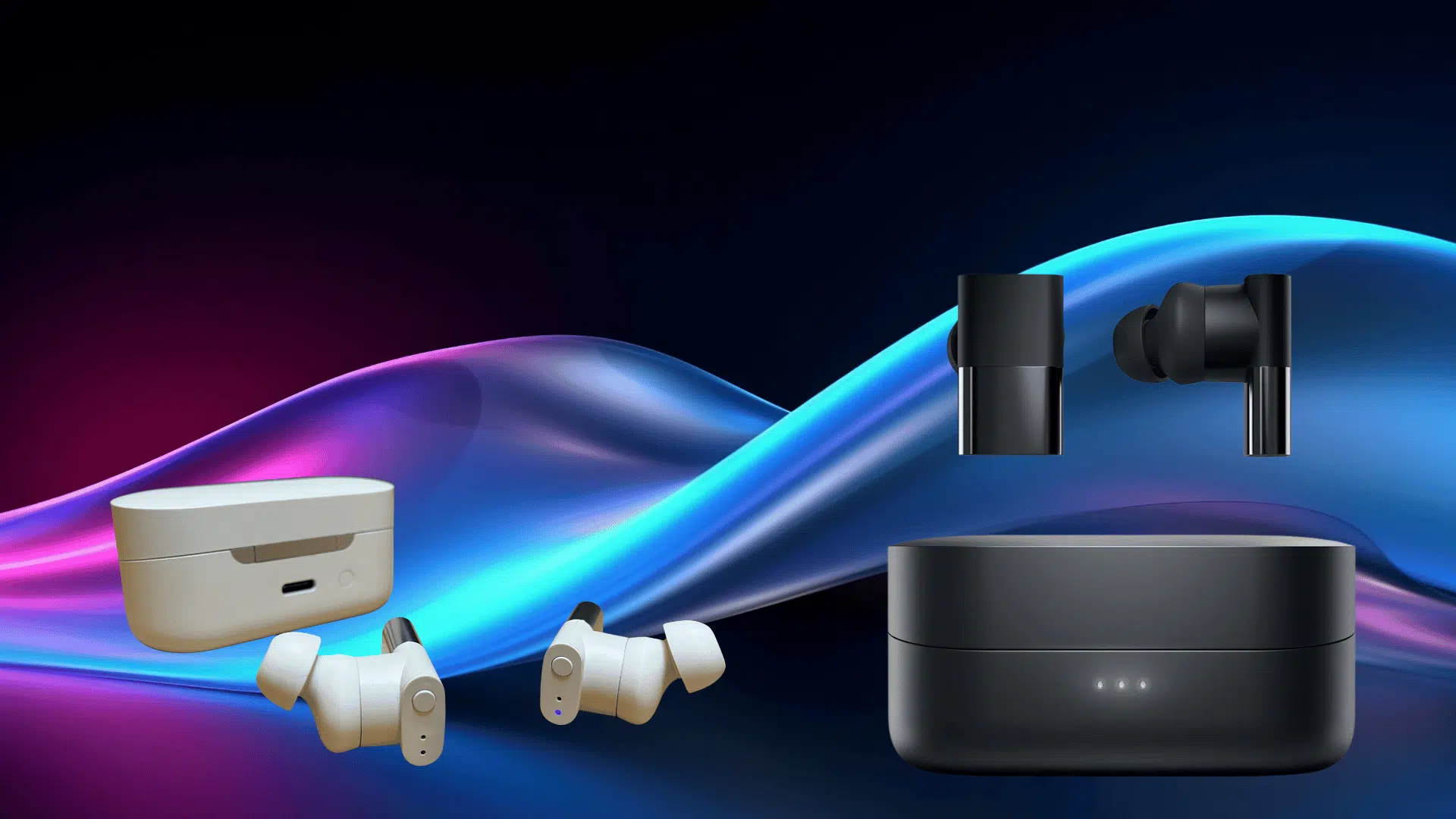


People looking into status audio usually want one thing: clear answers on sound, comfort, and real value.
There’s a lot of hype around models like the Between Pro and Pro X, but not all of it holds up in daily use.
So, instead of repeating specs, this review focuses on how these earbuds actually perform. From sound quality to battery life and long-term comfort, we’ll break it down in simple terms.
If you’re trying to decide if status audio is worth your money, this will give you a straight, no-nonsense take.
Basic Overview
Status Audio is a New York–based headphone brand that’s been around since 2016, but it still flies under the radar compared to big names like Sony or Apple.
The brand focuses heavily on sound quality rather than packing in every possible feature.
Its earbuds, especially the Between Pro and Pro X, use a triple-driver setup designed to deliver clearer bass, mids, and highs than typical single-driver earbuds.
In simple terms, status audio products are built for people who care more about how music sounds than flashy extras.
You still get modern features like noise cancellation, Bluetooth 5.3, and app support, but the main focus remains on audio performance and everyday comfort.
Key Specifications of Status Audio
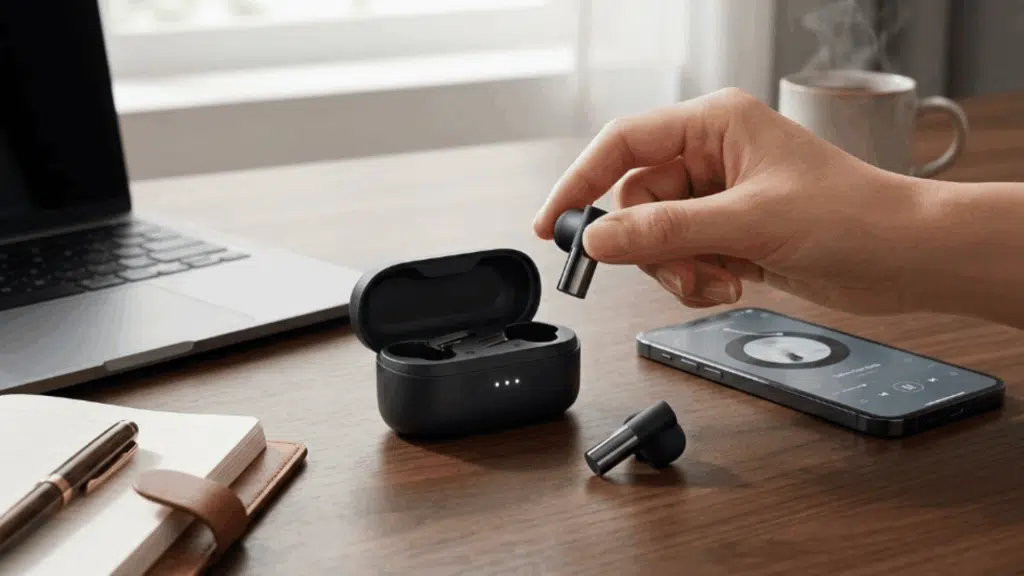
Before getting into real-world performance, it helps to look at what status audio brings on paper. These specs give a quick idea of what you’re paying for, but as always, numbers don’t tell the full story.
1. Driver Setup
One of the biggest highlights is the triple-driver configuration used in models like the Between Pro. Instead of relying on a single driver, it separates bass, mids, and highs across different drivers.
This approach aims to produce cleaner and more detailed sound. This is a rare feature at this price point, and it’s often the main reason people consider status audio in the first place.
However, the real impact depends on tuning, not just the hardware.
2. Battery Life
Battery performance is another strong point. The Between Pro, for example, offers up to 12 hours on a single charge, with the case extending it significantly.
In real use, it usually holds up well for daily listening, calls, and travel. Long battery life makes it reliable for all-day use without frequent charging, which is a big plus compared to many competitors.
3. Active Noise Cancellation (ANC)
Status audio includes ANC in its newer models, though it’s not as aggressive as top-tier brands.
It reduces background noise, such as traffic or office chatter, but doesn’t completely block it out.
ANC here feels more balanced than powerful, which some users may prefer for awareness. Still, if strong noise canceling is your priority, this might feel slightly underwhelming.
4. Connectivity and Bluetooth
Most recent models support Bluetooth 5.2 or higher, ensuring stable connections and minimal dropouts.
Pairing is quick, and switching between devices is generally smooth. Latency is low enough for casual video watching and calls.
Stable connectivity is one area where status audio performs consistently well, even if it lacks some advanced multi-device features.
5. Build and Design
The design leans more toward functionality than flash. The earbuds are lightweight, and the fit is secure for most users, making them suitable for long listening sessions.
The case is compact but not the most premium-feeling. Comfort is clearly prioritized over luxury design, which works well for everyday use but may not appeal to those expecting a premium finish.
App Support and Controls
The app and controls focus on simplicity, keeping things easy to use without adding too many extras.
- Simple App Features: The app includes basic controls like touch customization and firmware updates, making it easy to navigate.
- Limited Customization Options: Advanced settings like detailed EQ controls are missing in some models, which may feel restrictive.
- Easy-to-Use Interface: The simple layout keeps things straightforward, especially for users who prefer minimal setup.
- Responsive Touch Controls: The earbuds respond quickly to taps and are easy to learn for daily use.
- On-Ear Control Access: You can manage music, calls, and volume directly from the earbuds without using your phone.
- Occasional Mis-Taps: Accidental touches can happen during movement, like workouts, but not too often.
- Focus on Simplicity: The overall design prioritizes ease of use over offering too many advanced features.
Status Audio vs. Competitors
To understand where status audio stands, it helps to compare it directly with some of the biggest names in the market.
| Feature | Status Audio Between Pro | Status Audio Pro X | Sony WF-1000XM5 | AirPods Pro 2 |
|---|---|---|---|---|
| Price (Approx.) | $149 | $199–$299 | $299 | $249 |
| Driver Setup | Triple driver | Triple driver (hybrid) | Single dynamic | Single driver |
| ANC Performance | Moderate | Strong, near flagship level | Industry-leading | Very strong |
| Battery Life (Earbuds) | Up to 12 hours | 8 hours | 8 hours | 6 hours |
| App Features | Basic | Improved but limited | Advanced | Advanced (Apple ecosystem) |
| Comfort & Fit | Lightweight, secure | Improved ergonomics | Very comfortable | Very comfortable |
| Best For | Sound-focused users on a budget | Audiophile-level wireless experience | Best overall features + ANC | Apple users and seamless use |
Real-World Experience
Specs can look impressive, but what really matters is how status audio performs in everyday use.
From calls and commuting to long listening sessions, real-world performance often tells a very different story than what you see on paper.
Hands down the best true wireless in ear buds on the market.
Originally was a little worried about ease of connectivity as I came from Airpods which connected instantly to iPhone. Status’ product has little to no noticeable difference in connection speed or quality – Yakov Drumm, AmazonI got a lot of ads for this product and after trying every earbud from JBL from low end to high end, and the Pro X’s are better in every way. – Percy , Amazon
I purchased the Between Pro earbuds a few years ago and they were amazing. They got loud, the bass, mids, and highs were amazing. – Mike Littrell, Amazon
After a reordering process, these buds are lovely on android and sound good on iOS I don’t like that the equalizer on app don’t allow all bands to be fully independent. Other than that I’m enjoying, I don’t get long battery life with the case nor the buds. – Ronald Barr, Amazon
Can Status Audio Be Used for Gaming?

While status audio earbuds offer strong sound quality, gaming performance is a mixed experience and depends on how you plan to use them.
For casual gaming, they work reasonably well. The audio is clear, and the bass adds impact to effects like explosions or background music.
Some models can achieve latency as low as 48 ms under certain conditions, which is acceptable for mobile gaming and general use.
However, they are not designed specifically for gaming. Most models rely on Bluetooth and don’t include a dedicated low-latency mode or a wireless dongle, which can cause slight audio delay during gameplay.
- Good for casual mobile gaming – works fine for games like PUBG Mobile or casual titles
- Not ideal for competitive gaming – audio delay can affect timing and reactions
- Better for single-player experiences – sound quality makes games more immersive
- Limited for PC/console gaming – lack of wired or low-latency support
Who Should Buy It?
Not every pair of earbuds fits every type of user, and Status Audio is no different. It works really well for some people, but for others, it may feel like something is missing.
- People who care most about sound quality: If you want detailed audio with clear separation between bass, mids, and highs, this is where Status Audio stands out.
- Users who want long battery life: These earbuds can last through a full day of listening without frequent charging, making them reliable for work, travel, or commutes.
- People looking for value over brand name: You’re getting strong audio performance at a lower price without paying for extra ecosystem features.
- Gym-goers and casual runners: A secure fit and water resistance make them suitable for workouts and light outdoor use.
- Users who prefer simple, no-frills earbuds: If you don’t need advanced app controls or deep customization, the straightforward experience keeps things easy and focused on listening.
Final Verdict
At the end of the day, status audio delivers where it matters most: sound quality and battery life.
It doesn’t try to compete on every feature, and that’s actually its strength.
You get clear, detailed audio without paying flagship prices, but you do give up some polish in app features and noise canceling.
If your focus is music first and extras second, it’s a solid choice. If you want a more complete feature set or tighter ecosystem support, you might want to look elsewhere.