



Many gamers assume higher internet speed always means better performance, but that’s not how it really works.
So, is 500 Mbps good for gaming, or is it more than you actually need? Here, I’ll break down how much speed games use, what really impacts performance, and when higher plans make sense.
You’ll also see where faster internet helps and where it doesn’t, so you can choose a plan based on real needs, not just numbers.
Is 500 Mbps Fast for Gaming?
Yes, 500 Mbps is more than enough for gaming. In fact, it’s far higher than what most games actually need.
Most online games use only 3–10 Mbps since they send small data like player actions, not large files. So even lower speeds can handle gameplay easily.
What matters more is latency (ping) and connection stability. High speed won’t fix lag if your ping is poor.
Where 500 Mbps helps is faster downloads and smoother performance when multiple devices are online, not better in-game performance.
How Much Internet Speed Gaming Actually Uses
Most online games use very little internet speed, even during active gameplay.
For example:
- FPS and battle royale games usually use around 3–6 Mbps
- MMO and open-world games may go up to 5–10 Mbps
- Even fast-paced competitive games stay in this low range
Games don’t stream heavy data like videos. They send small packets like player actions, positions, and updates, so bandwidth use stays low.
That’s why 25 to 100 Mbps is enough for smooth gameplay. Higher speeds don’t improve performance.
Faster plans matter mainly for downloads, updates, or cloud gaming, where they reduce wait time, not lag.
Why 500 Mbps Feels Faster Even if Games Don’t Need It
A 500 Mbps connection often feels like an upgrade even though games themselves use a fraction of that speed. The difference shows up everywhere around the game, not inside it.
It Won’t Change Your In-Game Performance
Higher download speed has no effect on ping, jitter, or how responsive your controls feel. Those are determined by your connection’s stability and latency, not its bandwidth ceiling. If gameplay feels smooth at 100 Mbps, it will feel identical at 500 Mbps.
It Makes Downloads Noticeably Faster
Large games and updates routinely run 50–150 GB. On a 100 Mbps connection, a 100 GB download takes over two hours. At 500 Mbps, the same file finishes in around 25–30 minutes. That time difference is felt every time a major patch drops.
It Gives Every Device Room to Breathe
When streaming, browsing, and active downloads all run at the same time, they compete for available bandwidth. On a tighter plan, that competition shows up as slowdowns. On 500 Mbps, there’s enough headroom that each device gets what it needs without stepping on the others.
It Works Better in Shared Homes
The more people online at once — gaming, streaming, video calling — the more a higher-speed plan pulls its weight. 500 Mbps handles heavy simultaneous usage without any one activity degrading the others.
In short, 500 Mbps improves the experience around gaming; downloads, multitasking, shared usage, without changing what happens inside the game itself.
What Actually Affects Gaming Performance More than Speed
Gaming performance depends less on speed and more on how quickly and consistently your connection responds in real time.
1. Latency (Ping)
Ping measures how long it takes for your input to reach the game server and return. When ping is high, there’s a gap between what you do and what the game registers.
You press fire, but the server doesn’t receive that input until 120ms later, by which point the target has moved. The game then sends an update back reflecting the new positions, and what you see on screen is already out of date.
That mismatch between your actions and the game state is what lag actually is. It has nothing to do with how fast your download speed is.
A 500 Mbps plan does not guarantee lower ping. Latency is influenced by server distance, network routing, and your ISP’s quality. Even with high speed, gameplay can feel delayed if ping is high.
As a general target, ping under 50ms works fine for casual play, while competitive gamers should aim for under 20ms.
Above 100ms, you’ll notice visible delays, enemies appear to teleport, shots register late, and reactions feel off.
2. Connection Stability (Jitter and Packet Loss)
Stability plays a bigger role than raw speed. Jitter happens when ping fluctuates, leading to uneven or choppy gameplay.
For smooth play, aim for jitter under 30ms. Above that, even a low average ping can produce inconsistent frame delivery and uneven movement.
Packet loss occurs when some data doesn’t reach the server, which can cause sudden movement jumps or missed actions.
A stable connection, even at lower speeds, often delivers a smoother experience than a faster but inconsistent one.
3. Wired vs. Wi-Fi Connection
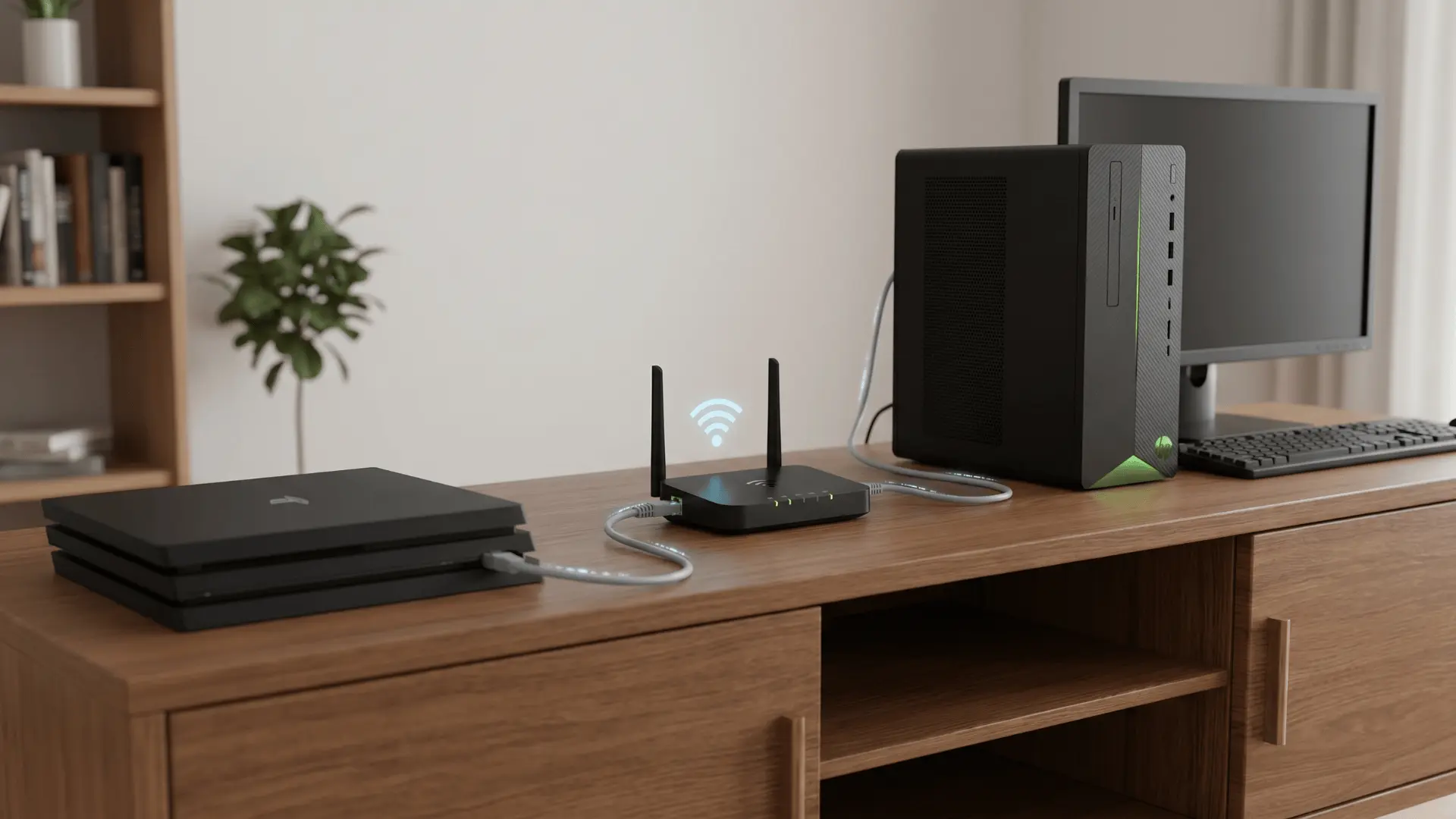
The type of connection also affects performance. A wired Ethernet connection offers a direct and steady link, reducing interference and data loss.
Wi-Fi is more sensitive to distance, walls, and other devices, which can introduce delays and inconsistency.
In many setups, a moderate-speed wired connection feels more reliable than a higher-speed Wi-Fi connection because consistency matters more than peak speed.
4. Upload Speed
Most gaming discussions focus on download speed, but upload speed matters too. When you play online, your device is constantly sending data to the game server: your movements, actions, and inputs.
This outbound stream requires upload bandwidth.
For standard online gaming, 3–5 Mbps upload is enough. But if you stream your gameplay on Twitch or YouTube, you need significantly more; at least 5–10 Mbps upload for a stable 1080p stream.
A 500 Mbps plan typically includes upload speeds well above this threshold, particularly on fiber connections where upload and download speeds are symmetrical.
When 500 Mbps is Actually Worth It for Gaming
Here are the situations where a 500 Mbps plan actually makes sense:
Multiple Gamers
Each player only needs 3–10 Mbps during a session, but add in background downloads, voice chat, and other devices, and the total climbs fast. Higher bandwidth keeps everyone’s connection stable without one user affecting another.
Gaming Alongside Streaming
A 4K Netflix stream uses around 15–25 Mbps on its own.
Running that alongside an active game session on a tighter plan creates real competition for bandwidth; 500 Mbps gives both enough room to coexist without interference.
Busy Household Usage
System updates, cloud backups, and video calls running in the background compete for the same connection you’re gaming on.
On a limited plan, that congestion shows up as lag spikes. On 500 Mbps, there’s enough headroom that background processes don’t interfere.
Cloud Gaming
Services like GeForce NOW and Xbox Cloud Gaming stream the entire game as video from a remote server, requiring 10–35 Mbps of stable bandwidth depending on resolution; far more than a standard multiplayer session.
500 Mbps provides the headroom and consistency these services need to avoid mid-session quality drops.
Large Game Downloads
Modern games and updates routinely exceed 100 GB. At 100 Mbps, a 100 GB file takes roughly 2+ hours. At 500 Mbps, that same download finishes in around 25–30 minutes; a difference that adds up across frequent updates and day-one patches.
In short, 500 Mbps is most useful when gaming is part of a larger, high-usage setup rather than a single activity.
When 500 Mbps is Overkill
A 500 Mbps plan is unnecessary if your setup is simple and your connection is already stable.
If you’re a single gamer with minimal background usage, 50 to 100 Mbps is usually enough. Most online games use only 3–10 Mbps during active play, so the extra bandwidth never comes into play during a session. It sits idle while you game.
What it won’t do is fix lag. A faster download speed has no effect on ping, jitter, or packet loss; the three things that actually determine how smooth gameplay feels.
If your current connection is stable and your ping is low, upgrading to 500 Mbps won’t change your in-game experience at all. The only real difference you’d notice is faster game downloads, and only if you download often enough for that to matter.
For a solo gamer on a stable connection, the extra spend goes toward speed you won’t use.
500 Mbps vs. 1 Gbps for Gaming: Is There Any Real Difference?
| Factor | 500 Mbps | 1 Gbps |
|---|---|---|
| Gameplay | Same performance | Same performance |
| Ping / Lag | No change | No change |
| Downloads | Fast | Faster |
| Multiple Devices | Handles well | Handles very heavy load |
| Noticeable Difference | Already more than enough | Rarely noticeable |
| Best For | Most homes | Heavy usage homes only |
For gaming, both feel the same. The extra speed mainly helps with downloads and very busy networks.
Final Decision: Should You Choose 500 Mbps for Gaming?
Here’s a simple way to decide if 500 Mbps fits your setup:
- Focus on Usage: Choose 500 Mbps based on overall internet use, not gaming alone.
- Single Gamer Needs Less: If you’re gaming alone, 50 to 100 Mbps is usually enough for smooth performance.
- Shared Connection Benefits: 500 Mbps works well when multiple people are streaming, gaming, or downloading at the same time.
- Performance Depends on Stability: Low ping, a reliable ISP, and a wired connection matter more than higher speed.
- Simple Decision Rule: More users and heavier usage justify higher speed, not gaming by itself.
In short, 500 Mbps is a good choice when your internet handles more than just gaming.
Conclusion
Choosing the right speed comes down to usage, not just gaming demands. While 500 Mbps sounds powerful, its real value shows in busy households, faster downloads, and smoother multitasking.
For gameplay itself, stability and low ping matter far more than raw speed. So, is 500 Mbps good for gaming? Yes, but only when your overall usage supports it.
The right plan comes down to your setup; how many people are online, what they’re doing, and whether you’re gaming alone or alongside heavy usage.
Frequently Asked Questions
Is 500 Mbps enough for competitive gaming?
Yes. Competitive gaming relies on low ping and stable connections, not high bandwidth. Even 50–100 Mbps can support smooth, responsive gameplay without issues.
Will upgrading to 500 Mbps reduce lag?
Only if lag is caused by network congestion from multiple devices. It will not fix high ping, poor routing, or distance from game servers.
How many gamers can 500 Mbps support?
500 Mbps can support multiple gamers at once because each player uses very little bandwidth. Performance depends more on connection stability than total internet speed.
Is Wi-Fi good enough for gaming with 500 Mbps?
Wi-Fi can work, but it is less stable due to interference and distance. A wired Ethernet connection provides more consistent performance, especially for competitive gaming.