








Struggling to hear dialogue clearly, even at high volume? That’s a common problem with built-in TV speakers.
The best budget soundbar can fix this without breaking the bank. It improves clarity, adds bass, and makes the sound feel more complete.
You don’t need an expensive setup to get better audio. The right soundbar can make movies, shows, and music more enjoyable.
Today, I’ll help you choose the right one, understand key features, and find the best value for your budget.
What “Budget Soundbar” Actually Means?
“Budget soundbar” does not mean a single fixed price. In 2026, it usually falls into three ranges: $30–$50 for basic upgrades, $50–$150 for balanced performance, and $150–$300 for near-premium features.
Lower-priced models improve volume but use smaller drivers, limiting bass and clarity. Mid-range options offer better tuning and stronger bass, while higher-budget models add subwoofers and wider sound.
The difference comes from hardware quality. Cheaper soundbars often sound thin or distort at higher volume, so going too low can lead to poor clarity and weak overall performance.
Best Budget Soundbars by Price Range
Here are some of the best options across different price ranges, offering great sound quality without breaking the bank.
Ultra Budget Pick Under $50
This range offers a basic upgrade with better volume and clarity than TV speakers, using simple 2.0 setups with Bluetooth for small rooms or casual use.
Hardware is limited, so the bass is weak, the sound feels narrow, and distortion may appear at higher volumes.
1. Hisense HS205G
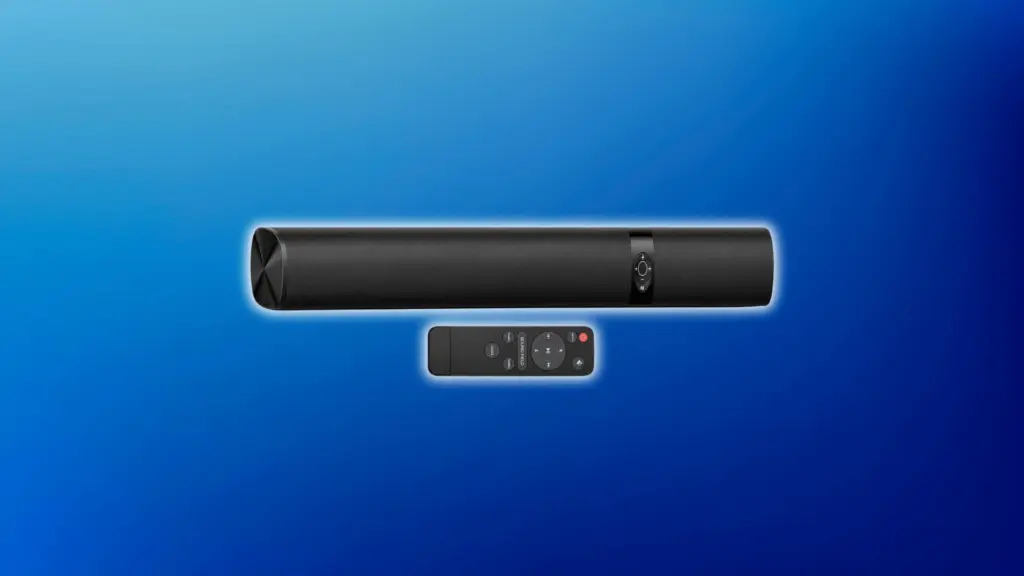
The Hisense HS205G 2.0 Channel Soundbar delivers clear audio with a 2.0 channel setup and Dolby Audio support. It features HDMI ARC, Bluetooth, optical, and USB connectivity.
Sound modes like Movie and News improve clarity for different content. Its slim design suits small rooms, making it a simple and budget-friendly upgrade for better TV sound.
2. MZEIBO 50W Soundbar

The MZEIBO 50W soundbar delivers decent audio output for its price with a simple 2.0 setup. It supports multiple input options, including Bluetooth, AUX, USB, and optical, for flexible use.
The volume is good enough for small rooms and casual viewing. It’s a practical choice for basic TV upgrades without spending much.
3. Bestisan 50W Soundbar
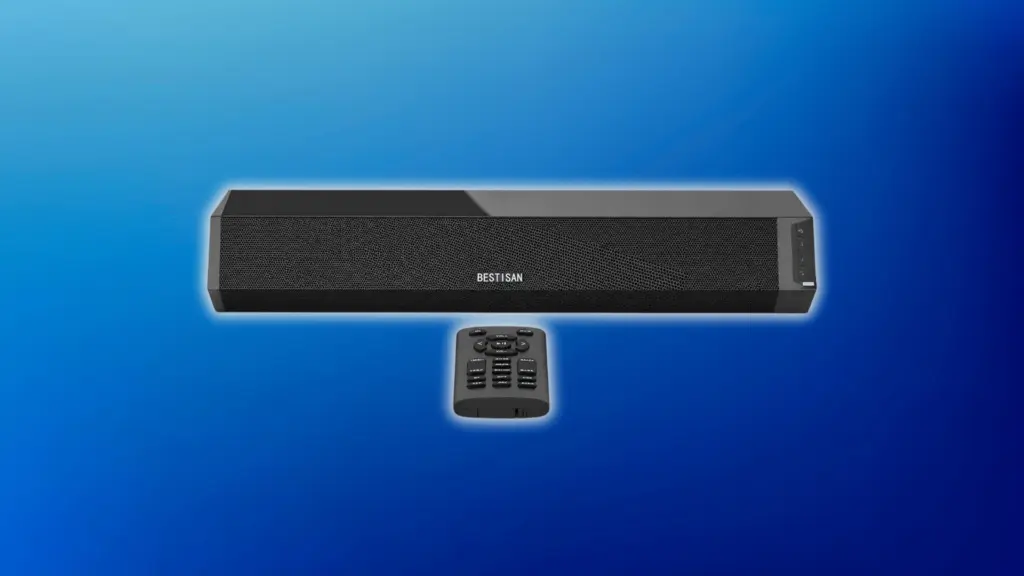
The Bestisan soundbar offers loud, clear output with a simple 2.0 setup. It includes Bluetooth for easy wireless streaming, along with basic wired inputs.
The sound is strong enough for small rooms and daily TV use. It works well as an entry-level option for improving audio without a high cost.
Best Value Segment: $50 – $150
Best balance of price and performance with clearer sound, stronger bass, and better connectivity. Most models include a 2.1 setup with HDMI ARC or optical for a solid upgrade.
4. Vizio SV510X-0806

The Vizio SV510X-0806 offers a full 5.1 channel setup with rear speakers and a subwoofer for a more immersive sound experience. It delivers clear dialogue, strong bass, and better surround effects compared to basic soundbars.
Multiple connectivity options add flexibility for different devices. It’s a solid mid-range choice for users wanting a home theater feel at a reasonable price.
5. Hisense HS214

The Hisense HS214 features a built-in subwoofer that boosts bass without needing extra speakers.
Its compact design fits easily in small spaces.
It improves overall TV sound while keeping the setup simple, making it a practical choice for basic upgrades.
6. Roku Streambar Pro
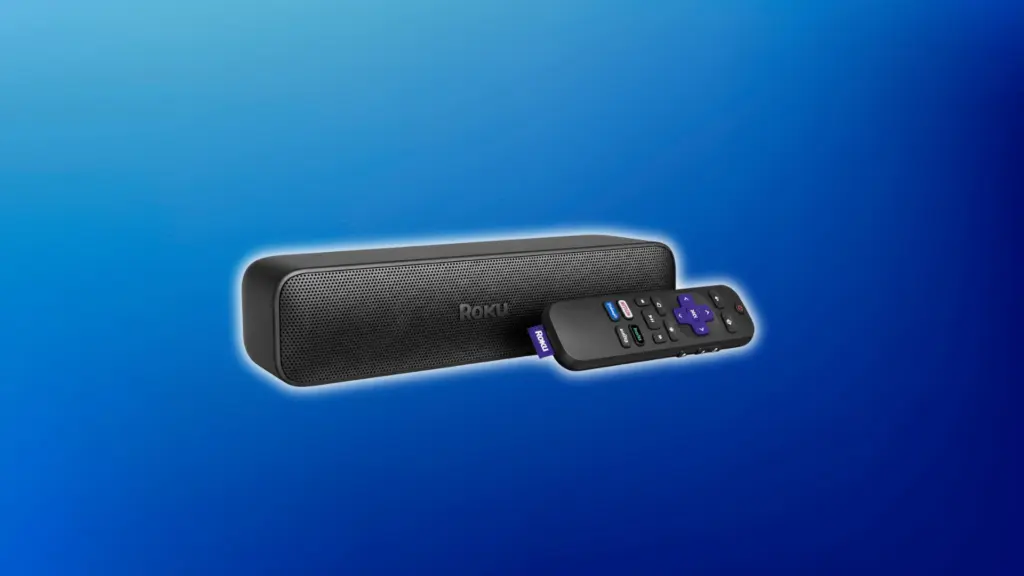
The Roku Streambar Pro combines a soundbar with built-in streaming in one device. It delivers clear dialogue and balanced sound for everyday viewing.
With easy apps and a simple setup, it works well as an all-in-one upgrade for both audio and streaming.
High-End Budget Picks: $150 – $300
This range offers near-premium sound with Dolby Audio or basic Atmos and better bass from dedicated subwoofers.
Audio sounds fuller and clearer, though most models use virtual Atmos rather than true surround.
7. Samsung HW-B750D

The Samsung HW-B750D is a 2.1 channel soundbar with a wireless subwoofer for deep, punchy bass.
It delivers clear dialogue and balanced audio for both movies and music.
With multiple connectivity options and a simple setup, it’s a solid choice for upgrading your home audio experience.
8. Vizio SV510X-0806 (5.1 System)

The Vizio SV510X includes rear speakers that expand the soundstage for better surround effects. It creates a more immersive listening experience compared to basic soundbars.
Despite the added speakers, it remains affordable, making it a good option for users who want better audio without spending too much.
9. Klipsch Cinema 400

The Klipsch Cinema 400 comes with a large wireless subwoofer for deep, punchy bass. It delivers clear dialogue and strong overall sound performance.
It works well for movies and music, especially if you want powerful low-end audio. The simple setup and solid build make it easy to use daily.
Soundbar vs. TV Speakers: Is It Worth It?
Here is a clear side-by-side comparison to help you understand the real difference:
| Feature | TV Speakers | Budget Soundbar |
|---|---|---|
| Speaker Direction | Downward/rear-facing | Forward-facing |
| Space & Design | Very limited internal space | Dedicated enclosure |
| Sound Projection | Scattered and less direct | Focused and room-filling |
| Dialogue Clarity | Often muffled | Clearer and more defined |
| Bass Performance | Very limited | Deeper with better impact |
| Volume Output | Low to moderate | Higher and more stable |
| Sound Separation | Mixed and unclear | Better separation of vocals/effects |
| Connectivity | Basic (TV only) | HDMI ARC, Optical, Bluetooth |
| Upgrade Value | No upgrade | Noticeable improvement |
| Immersion | Flat experience | More engaging sound |
The difference comes from design and hardware. Soundbars use a larger enclosure and forward-facing drivers, which improve projection, clarity, and volume.
In most cases, this results in a clear upgrade for movies, shows, and music. However, very cheap soundbars may not outperform good TV speakers, so the improvement depends on the model you choose.
How to Choose the Best Budget Soundbar
Choosing the right budget soundbar can be tricky, but understanding a few key factors can help you find the best option for your needs.
Step 1: Match Soundbar Type to Your Room Size
Room size directly affects how sound spreads and feels.
- Small rooms work well with 2.0 or compact soundbars because sound reflects easily and fills the space.
- Medium rooms need 2.1 setups with a subwoofer for better depth and coverage.
- Large rooms require 5.1 or virtual surround systems to push sound across a wider area.
Bigger rooms need more sound dispersion. If the soundbar is too small, the audio feels weak and flat. If it is too powerful for a small room, you end up paying more without a real improvement.
Step 2: Decide Between 2.0, 2.1, and 5.1 Channels
Channel setup defines how sound is distributed.
- 2.0 means two speakers for basic stereo sound.
- 2.1 adds a subwoofer, which improves bass and depth.
- 5.1 includes extra channels for surround sound, creating a more immersive feel.
This matters because more channels improve sound separation. Voices, music, and effects feel more distinct, rather than blending.
However, there is a common issue in budget models. Many 5.1 soundbars use virtual surround instead of true surround speakers. This reduces the real impact and can feel less immersive than expected.
In some cases, a good 2.1 setup can sound better than a weak 5.1 system.
Step 3: Check Connectivity (Most Buyers Ignore This)
Connectivity affects how smoothly your soundbar works with your TV and other devices.
- HDMI ARC is the best option because it allows easy control and keeps audio perfectly in sync with video.
- Optical is stable and reliable, but it offers limited control and fewer features.
- Bluetooth is convenient for wireless use, but it can introduce a slight delay.
The signal type directly impacts latency and audio quality. If the connection is unstable or too slow, audio can fall out of sync with the screen. This leads to a frustrating experience, especially while watching movies.
I’d suggest not going for Bluetooth-only soundbars. They often create noticeable lag, making dialogue and visuals feel mismatched.
Step 4: Evaluate Sound Quality (What Actually Matters)
Sound quality is not just about loudness; it is about how clearly different elements are heard. Dialogue clarity matters most for movies and shows, as voices should stay sharp and easy to understand.
Bass depth adds impact, especially in action scenes and music. Volume handling is also important, as some soundbars distort when pushed too high.
The reason behind this comes down to hardware and tuning. Smaller drivers cannot reproduce low frequencies properly, resulting in thin, flat sound.
Poor tuning can also blend vocals and effects, reducing clarity. I’ve seen people rely solely on wattage numbers only to find out that it makes no difference.
Step 5: Look for Must-Have Features Only
Focus on features that actually improve daily use, not extras that raise the price. Essentials include a remote control for easy access, EQ modes like movie or news for better sound tuning, and wall mount support if you plan to save space.
These features improve usability without affecting the core performance. The key reason to stay selective is that extra features add cost but do not improve sound quality. Many budget soundbars include flashy add-ons to attract attention.
I’ve gone for models with RGB lights or unnecessary gimmicks before. These do not enhance audio and only shift the focus away from what really matters: sound performance.
High wattage may look powerful on paper, but without proper tuning, the sound can still feel harsh and unbalanced.
Quick Checklist Before You Buy
Before buying a budget soundbar, go through these key checks to avoid mistakes:
- Match the soundbar to the room size: Make sure the soundbar can fill your space. Small rooms need compact bars, while larger rooms need more power or a subwoofer.
- Choose the right channel type: Pick 2.0 for basic use, 2.1 for better bass, or 5.1 for a more immersive feel. Do not overpay for surround if you do not need it.
- Check for HDMI ARC support: This makes setup easier and keeps audio in sync with your TV. It also lets you control the soundbar with your TV remote.
- Look for a subwoofer if bass matters: Built-in TV speakers lack bass, so a subwoofer adds depth. Skip it only if you watch mostly news or dialogue-heavy content.
- Verify brand reliability and support: A known brand usually means better build quality and after-sales service. This reduces the risk of issues after purchase.
This checklist helps you focus on what actually impacts performance, so you get real value for your budget.
Conclusion
Choosing the best budget soundbar comes down to understanding what actually impacts sound quality, not just price or specs.
When you match the soundbar to your room, pick the right channel setup, and focus on real features like HDMI ARC and a subwoofer, you get a noticeable upgrade without overspending.
A good budget option can deliver clear dialogue, better bass, and a more enjoyable viewing experience. Take a moment to compare your needs with the options above. Pick the one that fits your setup, not just your budget.
Frequently Asked Questions
Which is the best budget soundbar overall?
The best option depends on your price range and room size. For most users, models in the $50–$150 range offer the best balance of sound, features, and value.
Which brand is most reliable in budget soundbars?
Brands like JBL and Sony are more reliable in higher budget ranges. For lower budgets, brands like Hisense, TCL, and Vizio offer strong value and consistent performance.
Is a cheap soundbar better than TV speakers?
Yes, in most cases. Soundbars improve clarity and volume by using better speaker placement and larger enclosures. However, very cheap models may only offer a small upgrade.
What is the best budget soundbar for home use?
It depends on how you use it. For movies, go for a 2.1 or 5.1 setup with a subwoofer. For music or daily TV, a good 2.0 or 2.1 soundbar is enough.