


A wrinkled shirt five minutes before you need to leave, or a stack of lightweight tops you’re worried about damaging, can require two very different solutions. Choosing the right tool between a steamer vs iron saves time, protects your clothes, and simplifies your daily routine.
Quick Answer: Choose a garment steamer if you mostly wear casual clothes, travel often, or want fast wrinkle removal on soft fabrics without extra setup. Choose an iron if you need sharp creases, pressed dress shirts, or a formal, structured finish.
Many closets benefit from having both because each tool handles a different type of wrinkle. The better choice depends on what you wear most, how much time you have, and the finish you want.
Which One Should You Choose: Steamer, Iron, Or Both?
If you need a quick decision, match the tool to your usual wardrobe and routine:
- Steamer: Best for casual clothes, travel days, soft fabrics, and busy mornings when you need fast touch-ups.
- Iron: Better for office shirts, trousers, linen, and clothing that needs a crisp, pressed appearance.
- Both: A practical choice for wardrobes that include everyday outfits along with formal or structured pieces.
The right option depends less on which tool is better overall and more on which one fits your clothing habits.
Steamer And Iron: Key Differences At A Glance
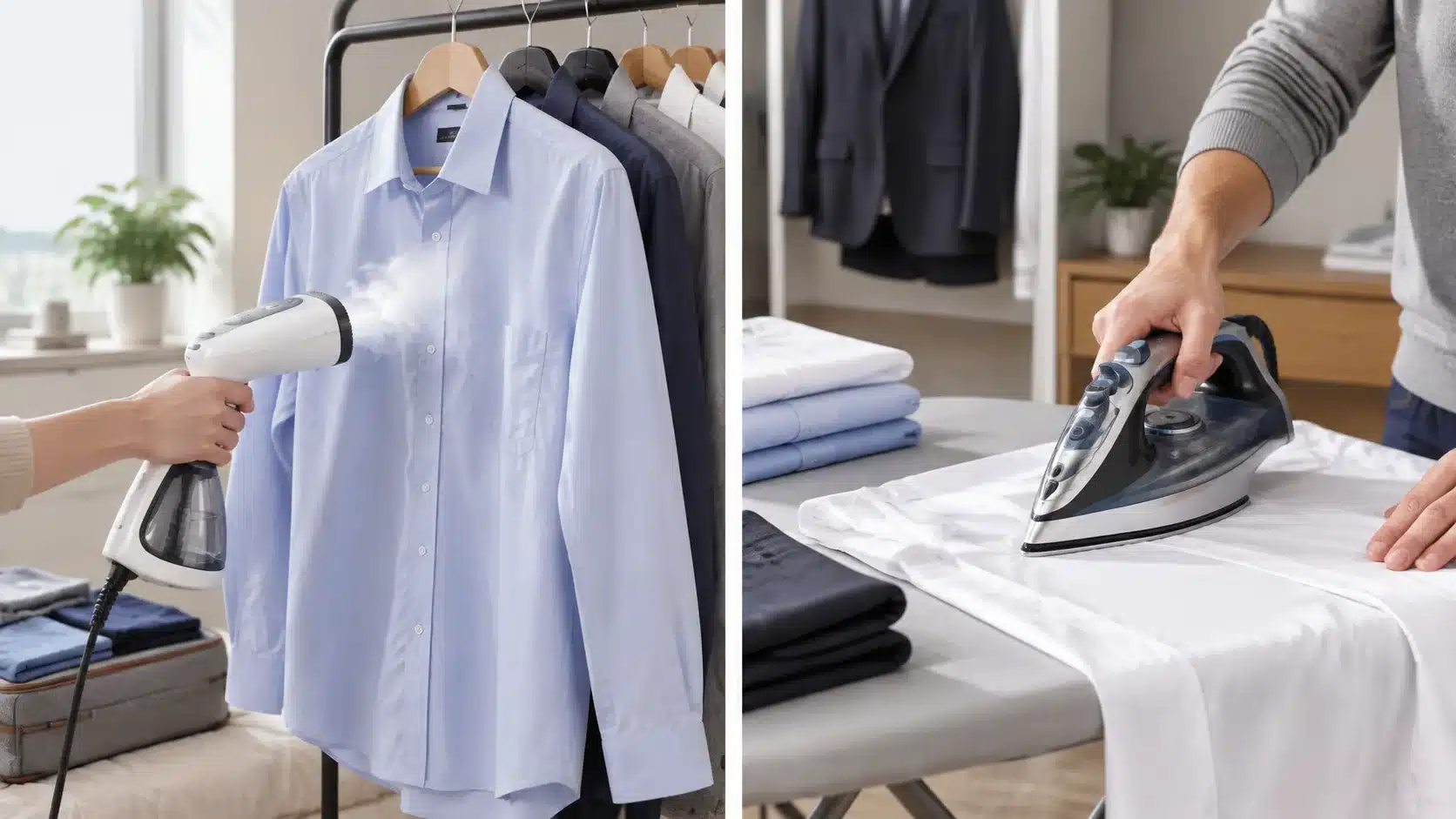
A garment steamer and a steam iron both use heat and moisture to loosen wrinkles, but they differ in several ways. A steamer hangs clothing and lets steam relax the fibers without ever touching the fabric directly. An iron pairs a heated soleplate with direct pressure on a flat surface, which is what creates that crisp, pressed line.
Feature | Garment Steamer | Steam Iron |
|---|---|---|
Best For | Fast touch-ups and a softer finish | Crisp results and deep wrinkles |
Finish | Natural, relaxed appearance | Sharp, pressed appearance |
Setup | Usually no ironing board needed | Requires a flat surface |
Fabric Contact | Less direct pressure on fabric | Direct contact with fabric |
Portability | Handheld models pack easily | Better suited to regular home use |
Steamer Vs Iron: Performance Comparison
The better choice depends on how you actually use it. Some people need something fast before walking out the door, while others want a perfectly pressed line. Speed, finish, and fabric handling make the difference clearer.
1. Speed And Convenience
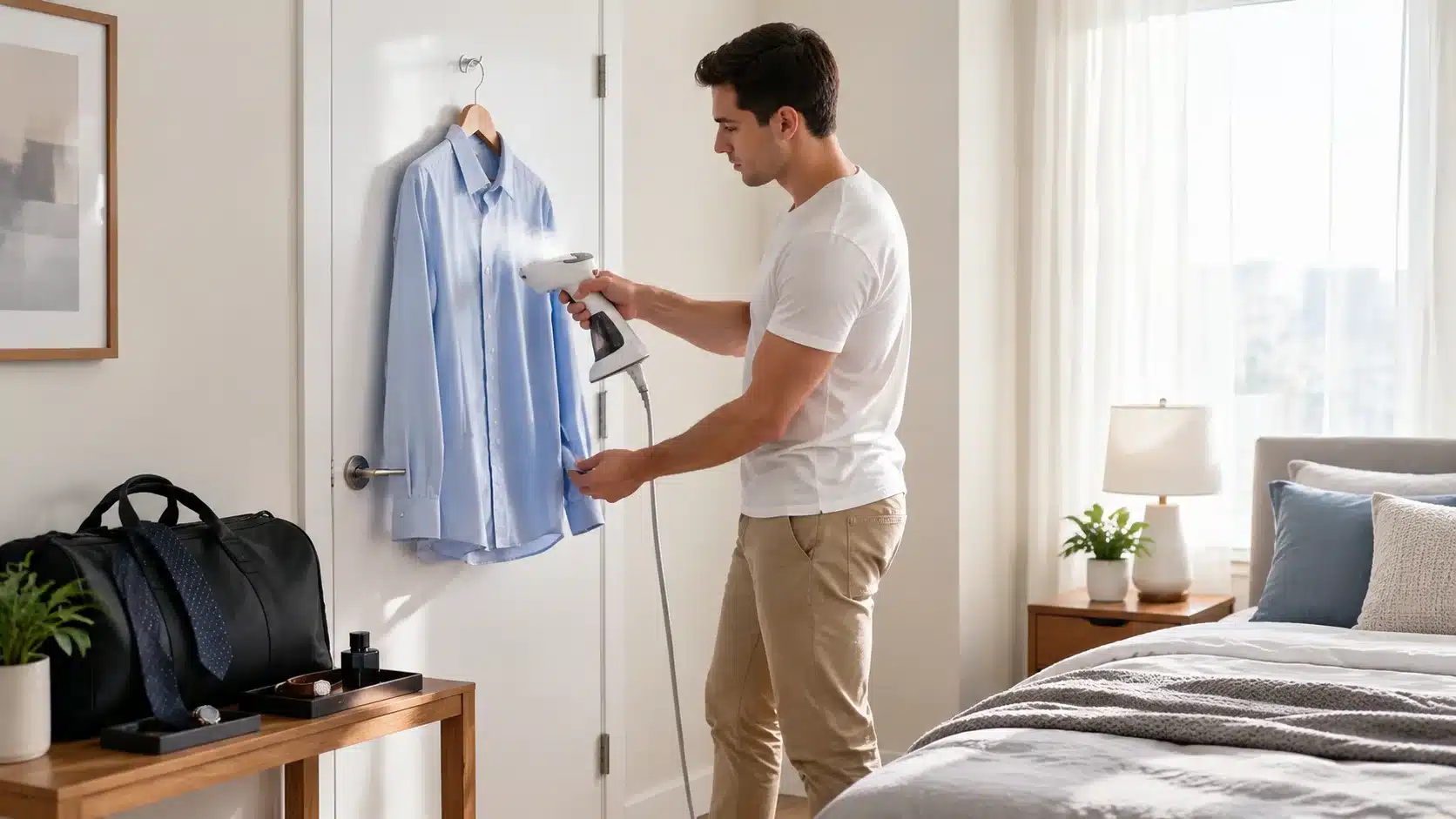
For a rushed morning, a steamer usually wins. Hang the shirt, dress, or jacket and steam away wrinkles without setting up a board.
That makes it handy for apartments, travel, and quick outfit changes. An iron needs more setup, but it works efficiently when you press several garments at once on a flat surface.
2. Wrinkle Removal And Finish Quality
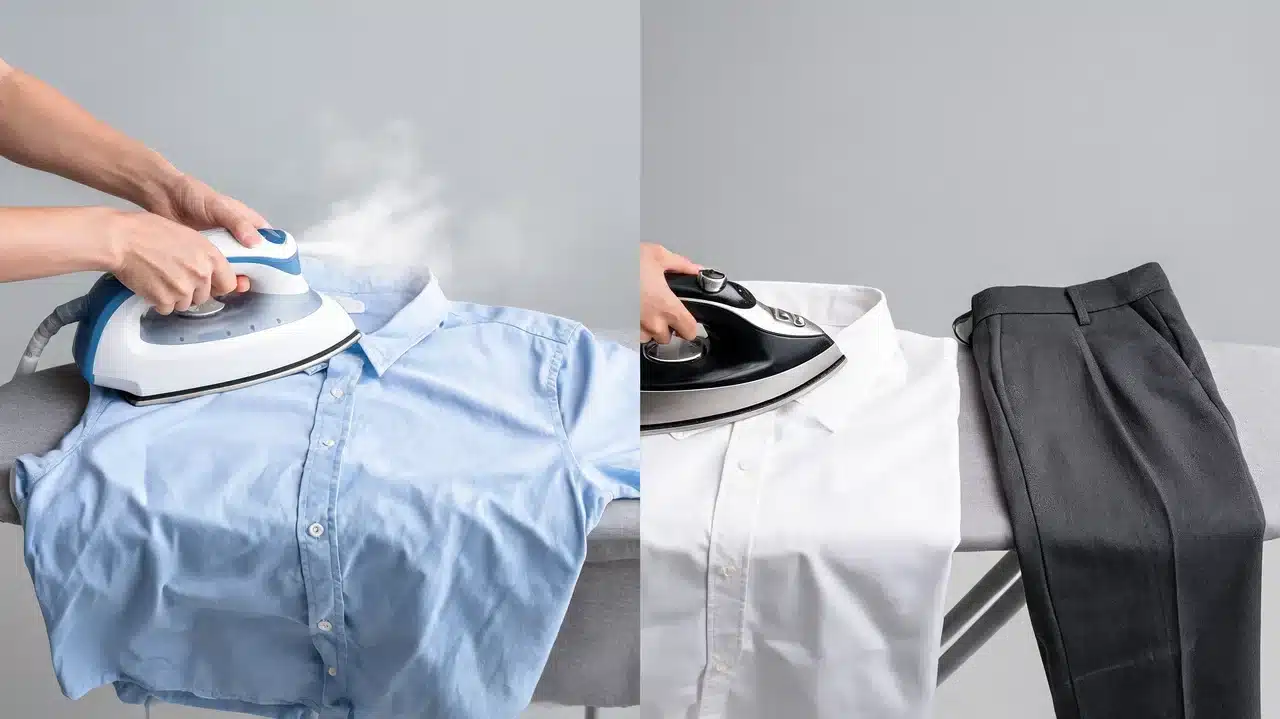
An iron combines heat with pressure, so it flattens deep wrinkles and creates sharp trouser lines and crisp collars.
A steamer relaxes fibers without pressing them flat, giving clothes a softer, more natural look. For casual pieces, that softer finish is usually enough. For formal wear, the added control of an iron makes the difference.
3. Fabric Safety Guidelines
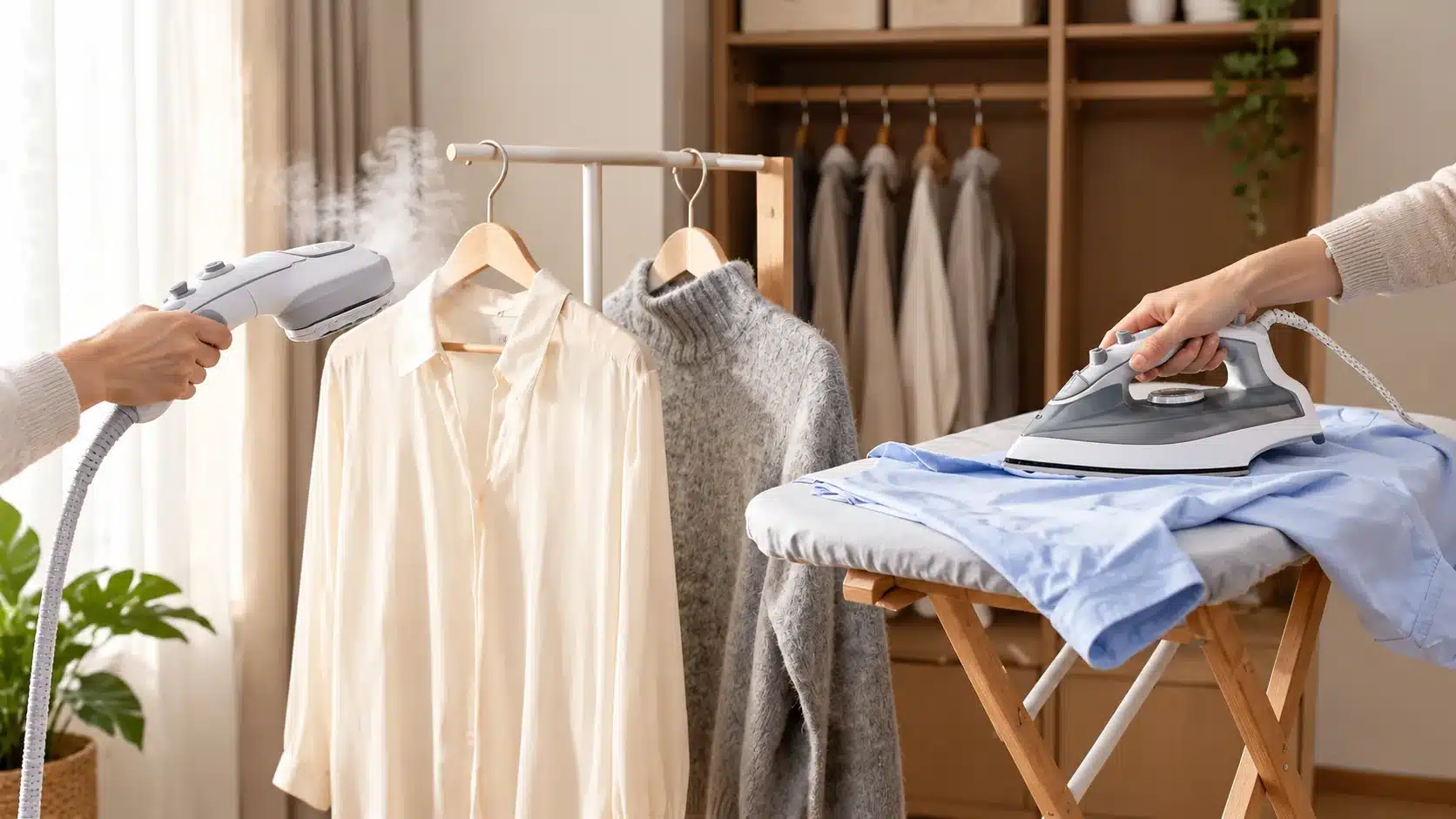
Steamers avoid direct contact, so they’re gentler on materials that heat and pressure can scorch. They still call for care, since not every fabric tolerates moisture well.
Irons need a correct temperature setting, because too much heat can leave marks or damage fibers. Check the care label first, test in an inconspicuous spot, and treat stains before applying heat or steam.
Which Fabrics Work Best For Each Tool
Not every fabric responds the same way to steam or direct heat. Matching the tool to the material keeps clothes looking sharp instead of damaged, and this breakdown shows which fabrics typically pair best with each appliance.
Works Well With A Steamer | Works Well With An Iron |
|---|---|
Silk | Cotton |
Chiffon | Linen |
Velvet | Denim |
Many synthetic fabrics | Wool |
Ruffled or beaded trim | Structured trousers |
Where Steamers And Irons Fall Short
Neither tool does everything well, and knowing the limits helps you decide when to reach for backup. Here’s where each one tends to fall short.
A steamer struggles with:
- Creating sharp creases or precise pressed lines
- Heavy wrinkles in stiff, thick fabrics
- Leather, suede, or waxed materials
- Fast results on thick items like jeans
An iron struggles with:
- Needing an ironing board and flat space
- Slower setup for a quick touch-up
- A higher risk of scorching fine fabrics
- Handling hanging or already-packed clothes
Can A Steamer Replace An Iron Completely
A steamer can replace an iron for many casual wardrobes, quick refreshes, and lightweight fabrics like silk, chiffon, or mixed synthetics. Hang the garment, run steam over it for a minute, and light creasing disappears without a board or an outlet.
It falls short wherever a sharp, pressed edge matters: trouser creases, a stiff point collar, or a jacket lapel that needs to hold its shape. Steam relaxes fibers, but it can’t apply the same pressure an iron does, so those lines never come out as crisp.
A steamer can handle a cotton shirt before a meeting, but an iron still wins when the collar and cuffs need a genuinely pressed look.
If your closet leans casual, a steamer may cover most weeks. If formal pieces show up often, keep both tools within reach so neither has to do a job it wasn’t built for.
What Clothes Should You Not Steam Or Iron
Some materials and finishes can be damaged by heat, pressure, or moisture, no matter how careful you are. Check the care label before you touch either tool to these items.
- Suede: heat and moisture can change its texture.
- Leather: direct heat can dry out and crack the surface.
- Waxed fabrics: heat can melt the protective coating.
- Coated materials: high temperatures can affect the outer layer.
- Plastic prints: heat can melt or warp the design.
- Beads, sequins, and glued trim: direct heat can loosen them.
If a garment is stained, treat it before steaming or ironing, since heat can set some stains permanently. The Federal Trade Commission explains what those care-label symbols mean, and Mississippi State University Extension offers a practical breakdown of how to sort and handle different fabric types safely.
What To Look For Before Buying
Before choosing a steamer or iron, focus on the features that match your clothing and your routine, not just the price tag.
- Check heat-up time for fast outfit fixes before work
- Look at water tank size so refills stay infrequent
- Prioritize a lightweight design for regular, comfortable use
- Compare steam output for more efficient wrinkle removal
- Confirm adjustable temperature settings to protect fabrics
- Look for automatic shut-off as a safety feature
Auto shut-off matters most if your mornings are rushed or you tend to forget unplugging things on your way out the door. It’s one of the features the U.S. Consumer Product Safety Commission flags as worth checking on any heated appliance. It’s also worth checking the rest of your laundry setup while you’re at it, since a dryer that won’t start mid-cycle can undo any wrinkle-free effort in minutes.
Common Mistakes To Avoid
Small habits during use can reduce performance or mark your clothes. Watch for these three most often.
- Holding steam in one spot too long: keep the steamer moving to avoid pooling.
- Skipping fabric prep before ironing: smooth the garment first to avoid pressing in folds.
- Ignoring appliance maintenance: mineral buildup and soleplate residue slow both tools down over time.
These fixes take only a moment, yet they protect your clothes and keep your steamer or iron working well for longer. Build them into your routine, and pressing or steaming will stay quick, safe, and reliable every time.
Final Thoughts
The steamer vs iron decision comes down to the clothes you wear most and the results you expect.
If your wardrobe is mostly casual, a steamer can save time and handle everyday wrinkles with less effort. If you regularly wear dress shirts, trousers, or structured clothing, an iron gives you the control needed for a cleaner, sharper finish.
For many people, the best setup is having both tools available. Use the steamer for speed, and reach for the iron when precision matters. Once you pick the tool that fits your typical week, getting ready in the morning becomes faster, and your clothes hold up better.
Frequently Asked Questions
Is an iron or steamer better for linen?
An iron usually works better for linen because the fabric wrinkles deeply and responds well to heat and pressure. A steamer can refresh linen between wears and suits a relaxed look, but it won’t create the same smooth, pressed finish for a crisper appearance.
Can I steam a dress shirt instead of ironing it?
Yes, for a fast refresh between washes. A steamer loosens light wrinkles nicely, but if you want a crisp collar and sharp cuffs for the office, finish with an iron. Combining both gets you a polished shirt faster.
Is a steamer good for jeans and heavy denim?
A steamer knocks out light creasing, but heavy denim holds its wrinkles stubbornly. An iron on a cotton setting works faster for jeans that spent the night balled up in a bag or a dryer.
Is a steamer better for travel?
For most travelers, a handheld steamer is more practical. It packs easily, works on hanging clothes, and skips the ironing board altogether, making it a solid pick for a hotel room or a carry-on.
Does a steamer use more electricity than an iron?
Power use depends on the appliance’s wattage, heat-up time, and how long you run it. A quick touch-up with either tool generally uses less energy than a long ironing session.