







You may have passed a cell tower many times without giving it much thought. Yet 5G has made people more curious about what these structures actually look like.
Some are easy to notice, while others can blend into the streets and buildings around them.
So, what does a 5G tower look like, and can you spot one at a glance? This post will help you understand the signs to watch for without making the topic feel confusing or overly technical at first glance.
What Does a 5G Tower Look Like?
A 5G tower usually looks like a tall metal structure with flat, rectangular antenna panels attached near the top. The antennas may be arranged around a central pole or mounted on metal frames facing different directions.
You may also see box-shaped radio equipment, thick cables, and other hardware near the antennas. Near the base, there can be equipment cabinets that hold power and network components.
Some installations have several antenna panels grouped together, which can make the top look crowded. The exact size, shape, and number of visible antennas can vary depending on the site and its location.
5G Towers vs. 4G Towers
5G and 4G sites can look similar at first, but their equipment and placement are often different. 5G networks may use more compact units and more local sites, especially in areas with heavy mobile use.
Feature | 5G | 4G |
|---|---|---|
Antennas | Large panels or compact units | Mostly panel antennas |
Placement | Towers, poles, rooftops, streetlights | Mostly towers and rooftops |
Small Cells | More common | Less common |
Site Density | More sites may be used in busy areas | Often fewer sites |
Equipment | May use Massive MIMO units | Traditional radio equipment is common |
Mounting Height | High or closer to street level | Usually higher |
Coverage | Broad or highly localized | Often wider-area coverage |
Street Equipment | More common | Less common |
Existing Towers | Can be added to existing sites | Common on established sites |
By Appearance | Not always easy to identify | Not always easy to identify |
Common Types of 5G Towers You Can Often See Around
5G towers do not all have the same shape, size, speed, or setup. Their appearance often depends on where the equipment is installed and the coverage needed.
1. Traditional Cell Towers
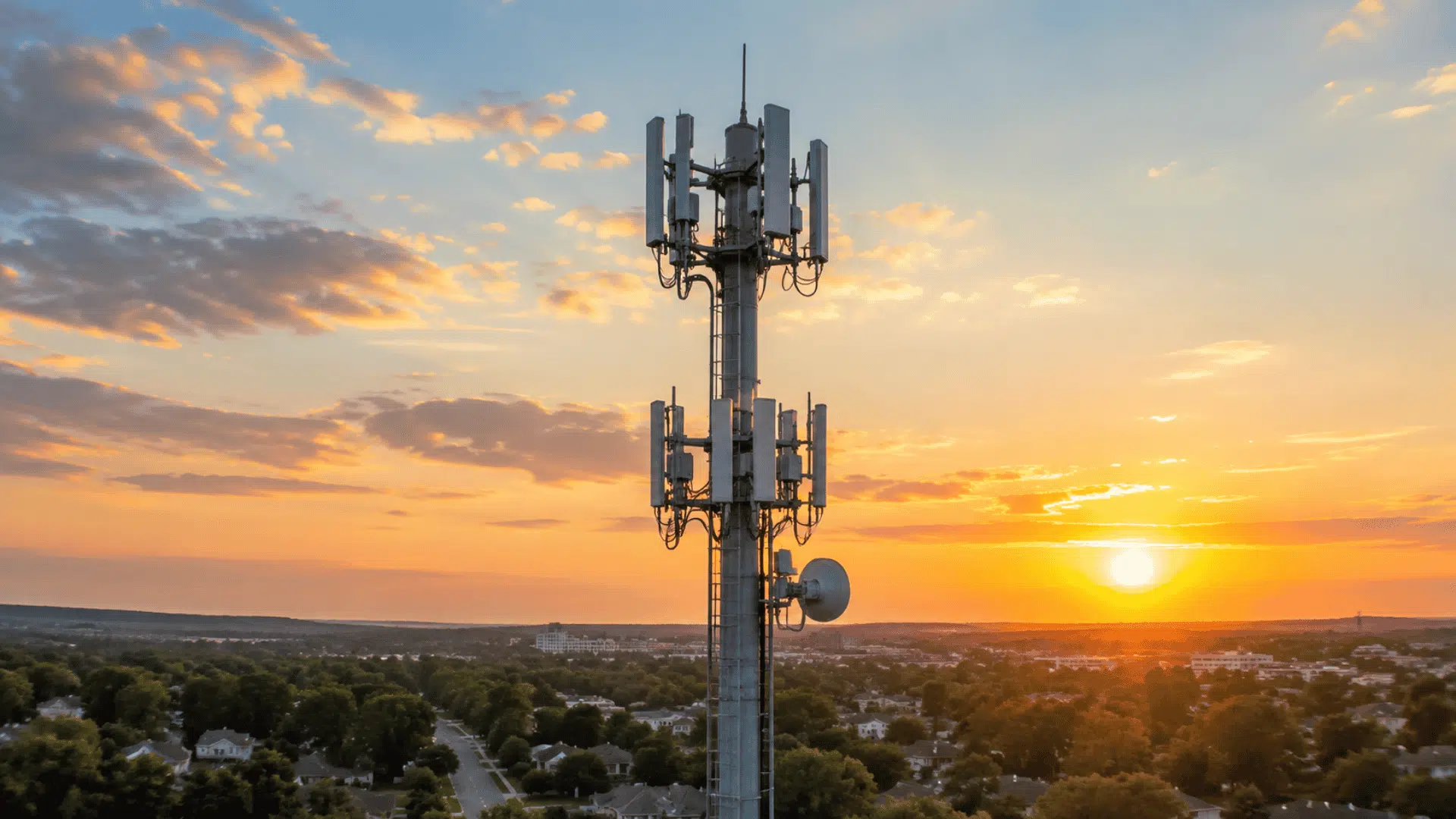
Traditional cell towers are still used for 5G service, especially where signals need to cover a larger area. These sites can hold several antennas and radio units at the same time.
- Monopoles use one tall steel shaft with antennas near the top.
- Lattice towers use an open metal frame with several mounting levels.
- Antenna panels are often arranged in groups around the upper section.
- Radio units may sit directly behind or below each antenna panel.
- One tower can support equipment from more than one mobile network.
2. 5G Small Cell Poles
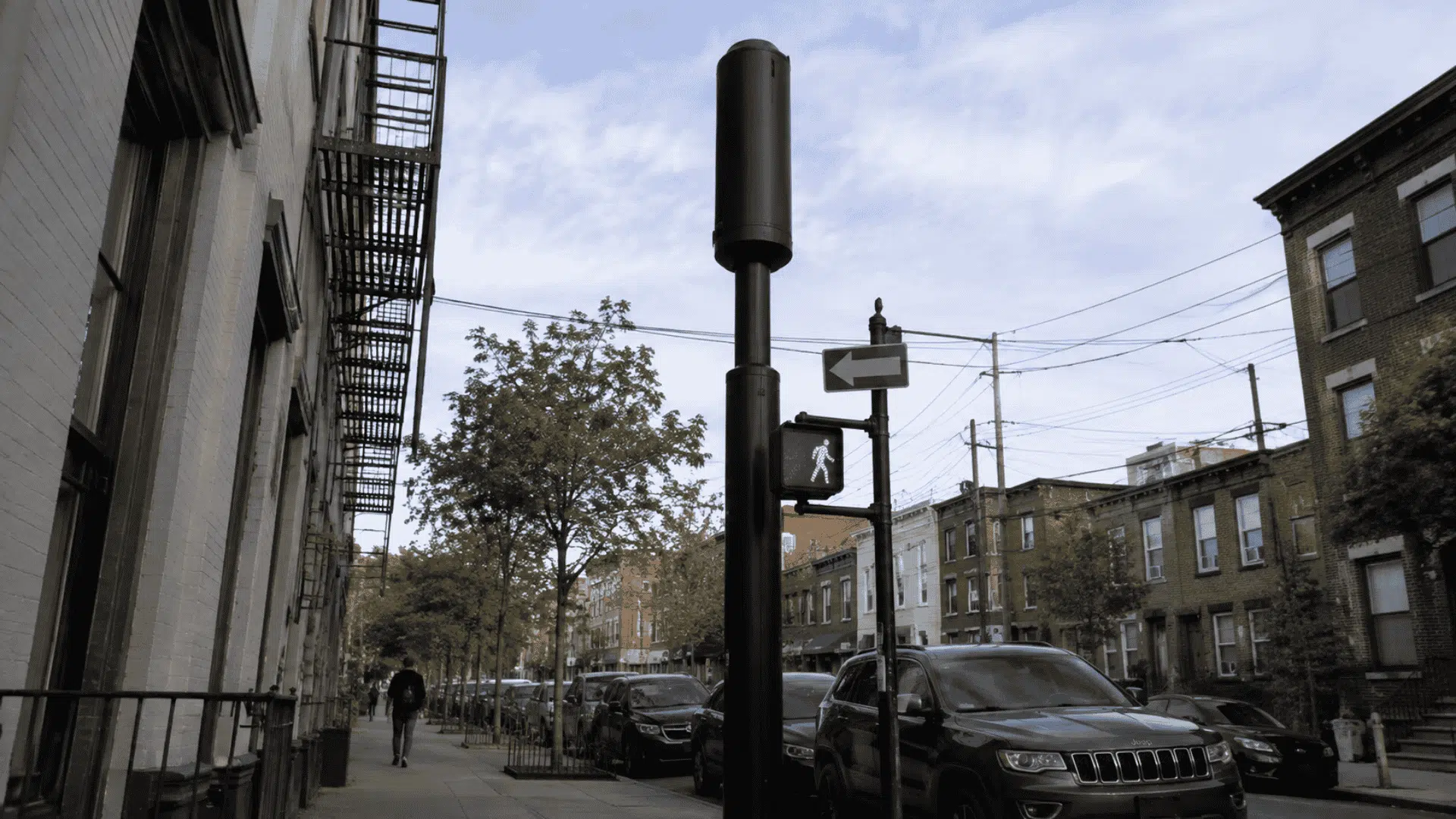
Small cell poles are shorter and are usually placed closer to streets, homes, and businesses. They help provide service in areas where a large tower may not be enough.
- Units may appear as short cylinders or compact boxes.
- They are often mounted on poles near sidewalks and intersections.
- Power and radio hardware may be housed inside the pole base.
- Several small cells may be placed along the same street.
- Their lower position helps serve users between nearby buildings.
3. Rooftop 5G Antennas
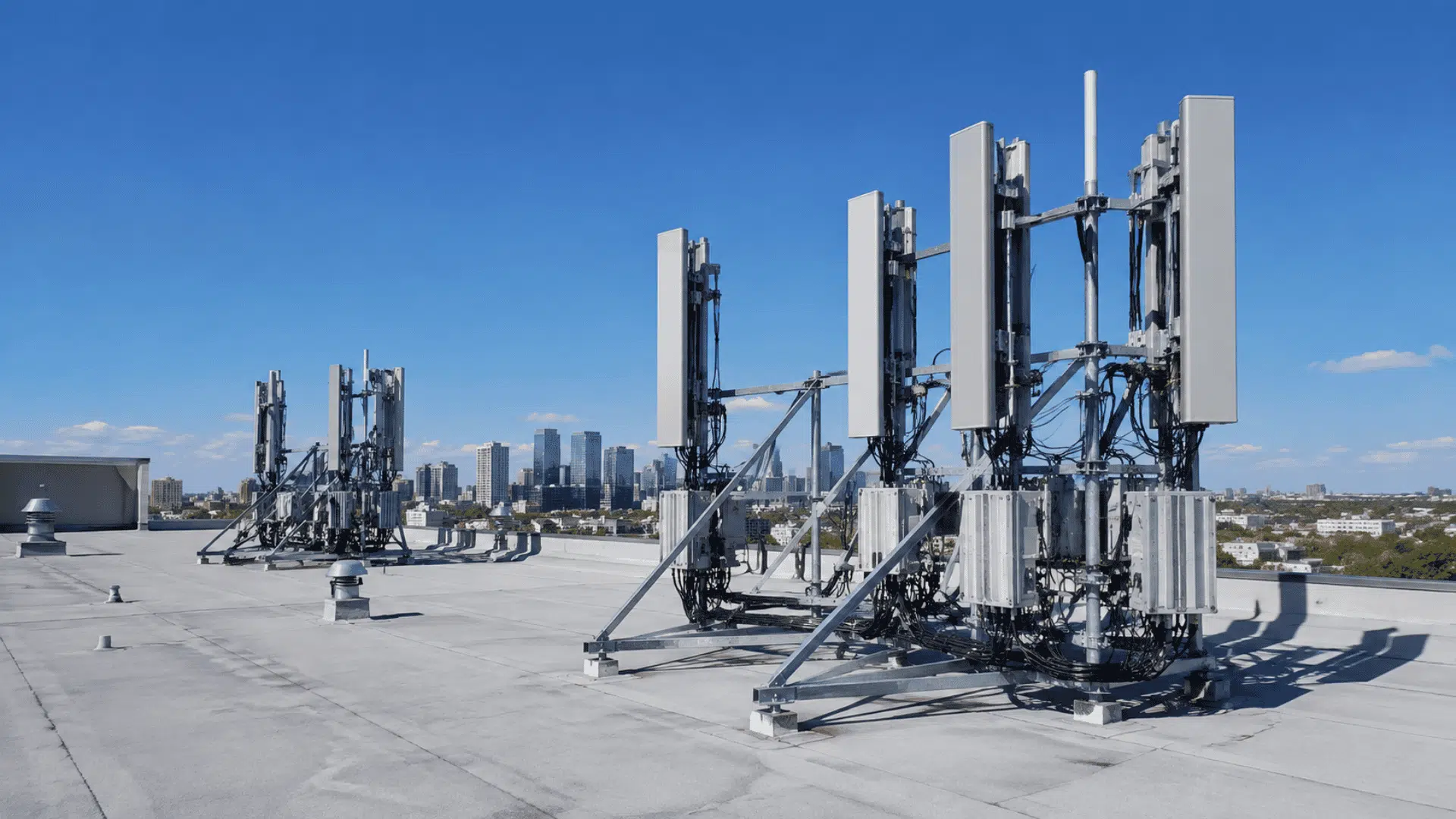
Rooftop 5G antennas use building height to send signals across nearby streets and blocks. They can be found on apartments, offices, hotels, and other taller buildings.
- Panels may be fixed to parapet walls near the roof edge.
- Some antennas sit on metal frames several feet above the roof.
- Units may face different streets from the same building.
- Fiber and power cables usually run into a roof service area.
- Equipment may be hidden behind panels that match the building exterior, not like usual security installations.
4. Massive MIMO Antennas
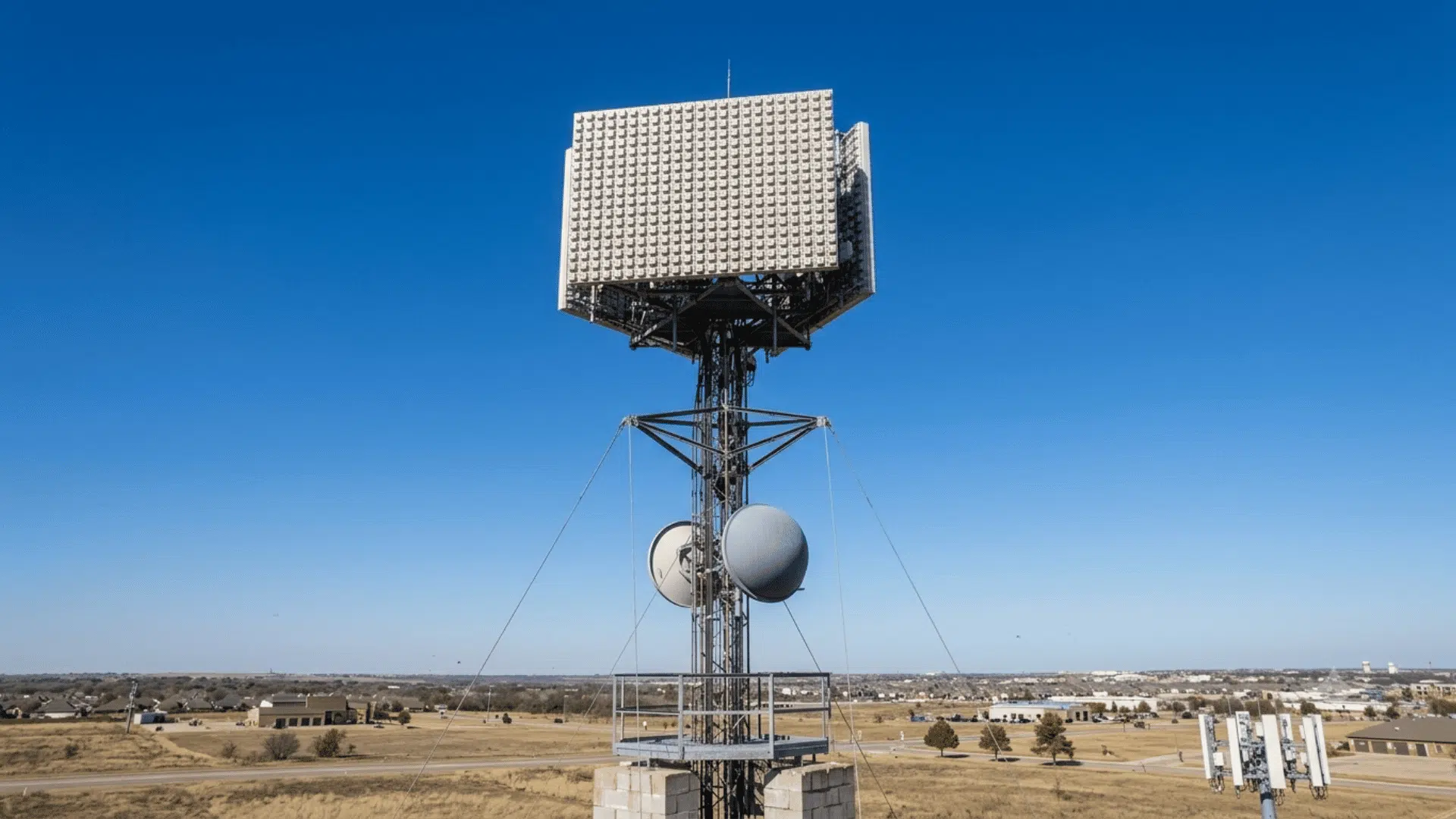
Massive MIMO units often look like thick rectangular panels rather than thin antenna strips. They contain many small antenna elements inside one housing.
- The panel is usually wider and thicker than older antenna units.
- Many antenna elements work together inside the same casing.
- Units are often mounted high on monopoles or rooftop frames.
- One panel can send signals in more focused directions.
- Large heat sinks or rear housings may make the unit look deeper from the side.
5. Millimeter Wave Antennas
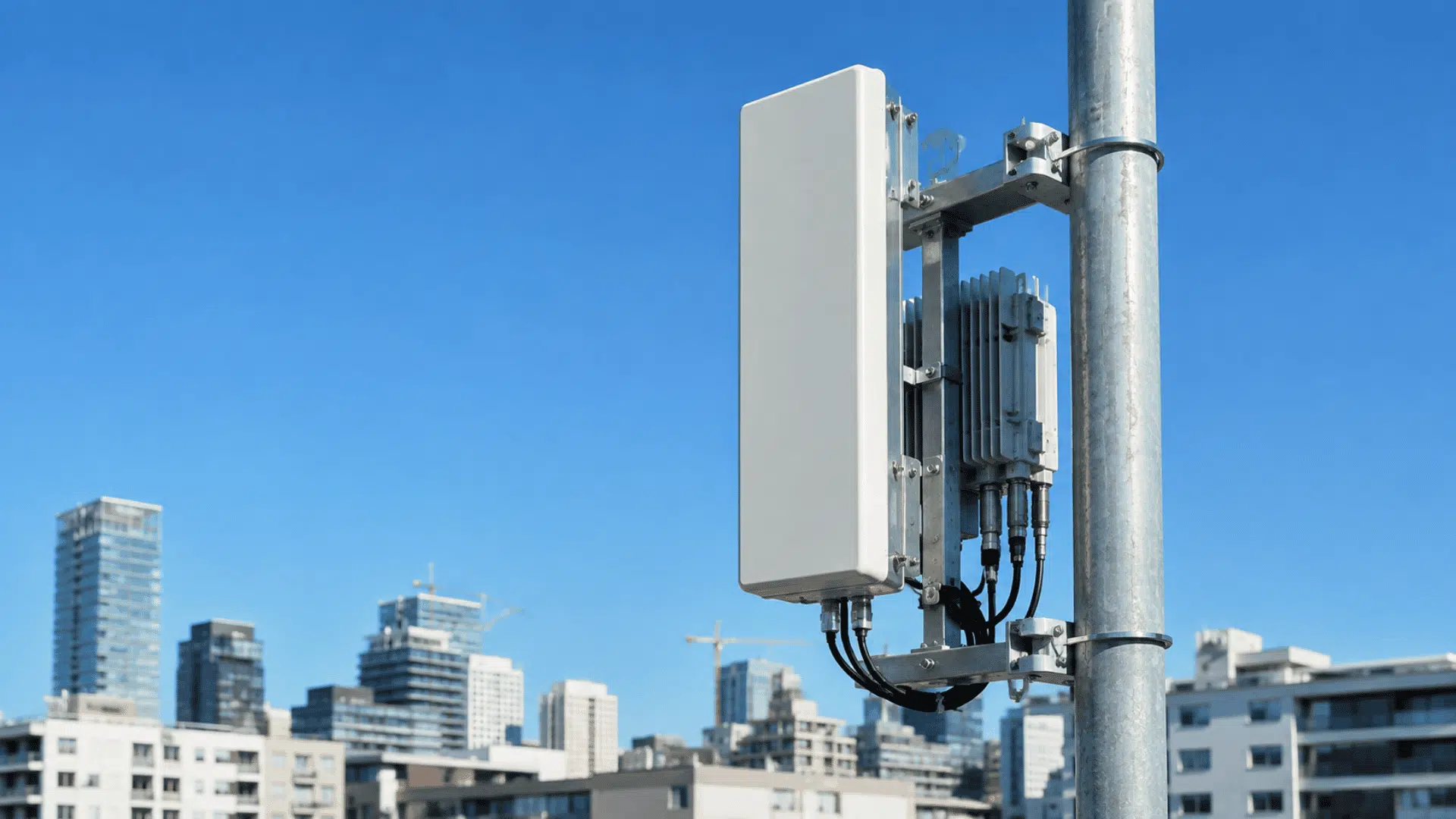
Millimeter wave antennas are usually smaller and placed much closer to the people using the network. They are often installed where signals only need to travel a short distance.
- Units can look like compact square or rectangular boxes.
- They may be fixed to light poles, walls, or traffic structures.
- Several units may appear within a few blocks of each other.
- Mounting height is often lower than on full-size cell towers.
- These antennas are more common on dense streets, at venues, and in high-use public areas.
Note: A 5G site may use more than one antenna type at the same location. The shape and placement can offer clues, but equipment labels or local site records give a more certain answer.
How are 5G Installations Different From Older Cell Towers?
5G installations can use newer antenna equipment and appear in more locations than older cell setups. Some differences are easy to spot, while others are hidden inside the equipment.
Feature | 5G Installation | Older Cell Tower |
|---|---|---|
Antenna Layout | May use dense antenna arrays | Often uses separate panel antennas |
Antenna Size | Large panels or compact units | Usually long panel antennas |
Site Placement | Towers, poles, rooftops, walls | Mostly towers and rooftops |
Site Density | More sites may serve busy areas | Often fewer, larger sites |
Coverage | Broad or highly localized | Often wider-area coverage |
Small Cells | More commonly used | Less common |
Street-Level Equipment | Can appear on poles and streetlights | Less common |
Radio Position | Often closer to antennas | May sit farther from antennas |
Massive MIMO | May use Massive MIMO arrays | Less common in older setups |
Existing Towers | New equipment can be added | May retain older equipment |
Mounting Height | High or closer to street level | Usually mounted higher |
Equipment Design | Can be compact and integrated | Often uses separate components |
Visible Hardware | Panels, boxes, cables, small units | Mostly panels, cables, and cabinets |
Appearance | Varies widely by installation | Often has a traditional cell-site look |
How Can You Spot a 5G Small Cell?
A 5G small cell may be harder to spot because its equipment is smaller and can be mounted on existing structures. According to the FCC, small-cell antennas and radios may be installed on poles along public rights-of-way.
- Smaller equipment: Small-cell antennas and hardware are smaller than traditional macrocell equipment.
- Lower mounting: Small cells can be installed lower than antennas on traditional cell towers.
- Utility poles: Equipment may be attached to existing utility poles.
- Light poles: Small wireless facilities can be installed on light poles.
- Building walls: Small-cell equipment may be mounted directly on building walls.
- Rooftops: Some small cells are installed on building rooftops.
- Public rights-of-way: Installations may appear on structures along public rights-of-way.
- Indoor locations: Small cells can also be installed inside buildings.
- Concealed equipment: Some installations use enclosures that help equipment blend in.
- Multiple nodes: Several small cells may serve an area instead of one large macrocell.
Can Two 5G Towers Look Different?
Yes, two 5G towers can look very different from each other. One may be a tall metal tower, while another may use a much smaller pole-mounted setup.
The difference often comes from the frequency used, the area being served, and the space available for equipment. A site near a busy street may need a different setup than one covering an open rural area.
Some 5G hardware is also added to existing towers, rooftops, or utility structures rather than a new tower. Because of this, no single shape, height, or antenna layout identifies every 5G site.
Note: Two 5G sites in different areas may look nothing alike, even when both provide the same type of mobile service.
Wrapping it Up
Spotting what a 5 G tower looks like isn’t always as straightforward as you’d expect. Once you start paying attention, though, you’ll probably notice these structures a lot more than before.
I still catch myself glancing up at poles and rooftops more than I used to. It’s kind of fun once you know what you’re looking for.
So next time you’re out and about, keep an eye out. You might spot more 5G towers around you than you’d think.
Frequently Asked Questions
Do 5G Towers Make Noise?
Most 5G sites are quiet, though cooling fans inside equipment cabinets may produce a faint sound nearby.
Do 5G Towers Have Warning Lights?
Some tall structures use aviation warning lights when their height or location requires them.
Are 5G Towers Painted a Certain Color?
No, tower colors vary and may be chosen to fit safety rules, site design, or local requirements.
Can 5G Towers Work During a Power Outage?
Some sites use backup batteries or generators, but operation time depends on the backup system installed.
Who Owns 5G Towers?
5G sites may be owned by wireless carriers, tower companies, property owners, or infrastructure firms.