




Finding wired earphones that sound genuinely premium without costing hundreds of dollars isn’t easy.
While researching for this Sennheiser IE 200 review, I found plenty of opinions but very little practical information about how these IEMs perform in everyday use.
If you’re planning to upgrade from standard earbuds, you probably want to know if the IE 200 is really worth the price or if another model offers better value.
I spent time evaluating its comfort, build quality, sound signature, and overall performance across different music genres.
By the end, you’ll know exactly where the IE 200 excels, where it falls short, and whether it deserves a place in your audio setup.
What is the Sennheiser IE 200?
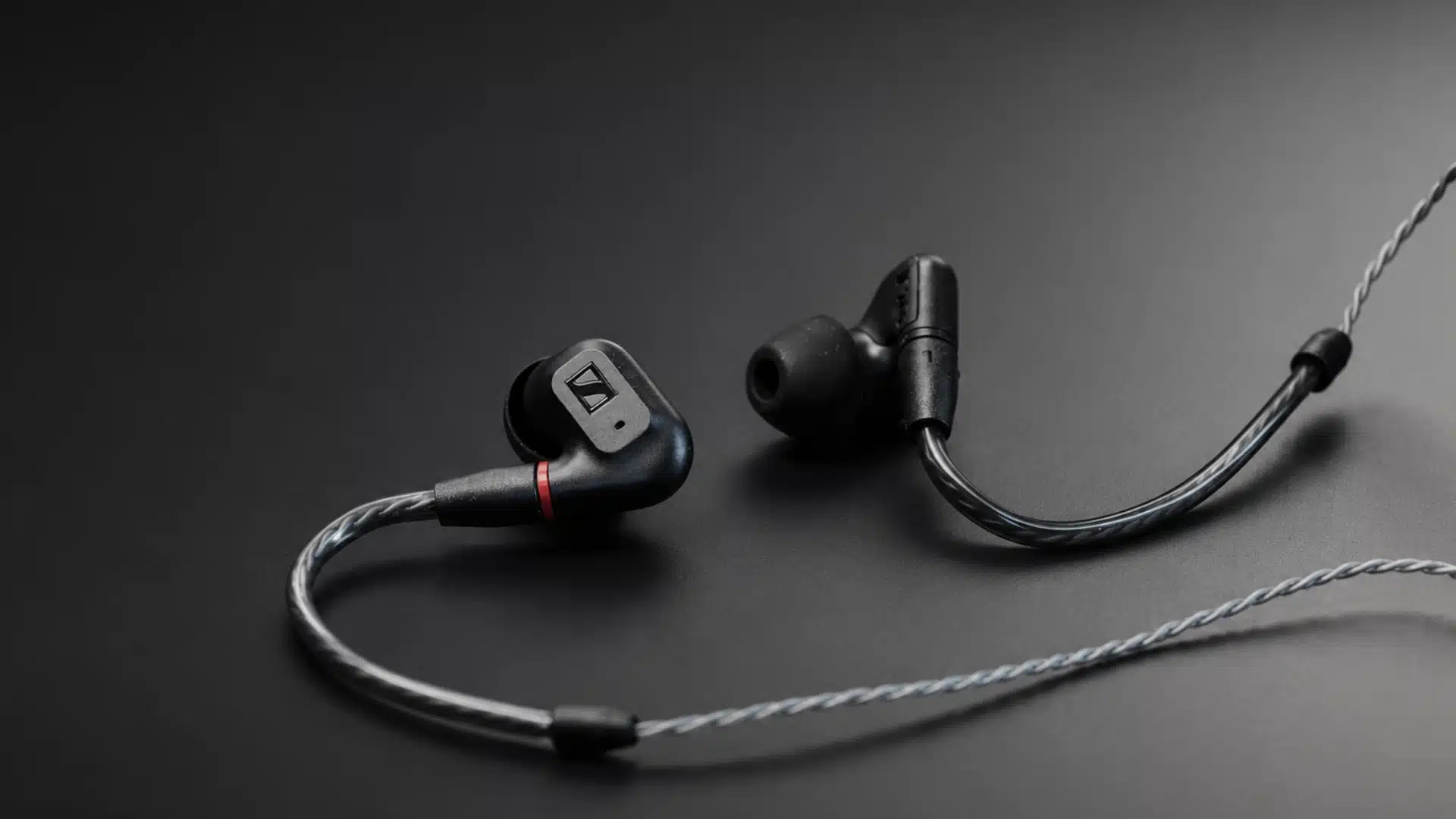
The IE 200 is a wired in-ear monitor designed for listeners who value balanced, detailed sound over heavy bass or artificial enhancements. It sits below the IE 300, IE 600, and flagship IE 900, making it the most affordable model in Sennheiser’s premium wired IEM lineup.
Instead of chasing flashy tuning, it focuses on an accurate presentation that works well across genres. At its core is Sennheiser’s 7mm TrueResponse dynamic driver, the same platform used throughout the higher-end IE series, engineered to minimize distortion while preserving detail and tonal balance.
It’s best suited for:
- First-time audiophiles looking for a neutral sound signature
- Listeners upgrading from entry-level earphones
- Users who want lightweight earphones for extended sessions
- Gamers who value accurate positional audio
What’s in the Box?
The IE 200 package includes everything needed to begin listening immediately without overwhelming buyers with unnecessary accessories.
Inside the box you’ll find:
- Sennheiser IE 200 earphones
- Braided detachable MMCX cable
- Three pairs of silicone ear tips
- Three pairs of memory foam ear tips
- Soft carrying pouch
- Quick start guide
- Warranty documentation
Although the accessory package is fairly simple, the included ear tips provide enough options to achieve a secure fit for most listeners. Choosing the correct tip size is especially important because it affects comfort, bass response, and passive noise isolation.
Design, Build Quality, and Everyday Use
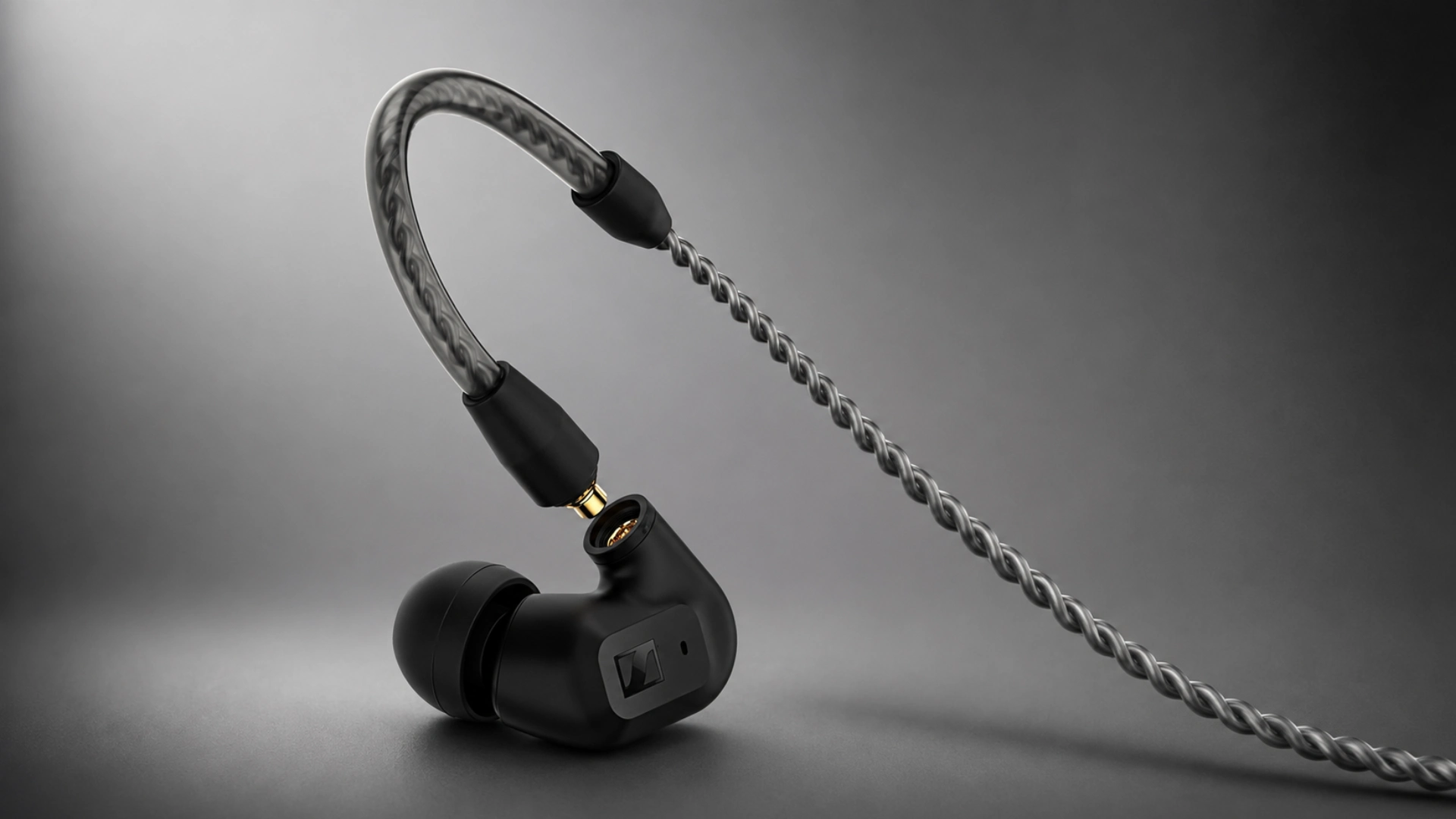
The IE 200 doesn’t try to look flashy. Unlike competitors that lean on polished metal housings or transparent resin shells, Sennheiser goes minimalist, prioritizing comfort over appearance.
After wearing the IE 200 for several hours each day, the lightweight design became one of my favorite features. Unlike larger IEMs that start feeling bulky after an hour or two, these almost disappeared in my ears. I wore them while working, walking around the house, and during long music sessions without feeling uncomfortable
The compact shells are light enough to nearly disappear once in your ears, which pays off during long commutes, office days, or extended listening sessions.
The plastic housing doesn’t feel as premium as the metal build on the IE 600, but it keeps weight down without feeling flimsy, resists fingerprints, and looks understated enough for both casual and professional settings.
Build highlights:
- Extremely lightweight construction
- Ergonomic shape borrowed from higher-end IE models
- Replaceable MMCX cable
- Compact shell that fits most ear sizes
- Durable enough for daily use
The one real compromise is the stock cable, flexible, but prone to microphonic noise (rubbing/clothing noise transmitted up the cable) when you’re walking or exercising. The detachable MMCX connection makes swapping it out straightforward if that bothers you.
Sennheiser IE 200 Sound Quality and Performance
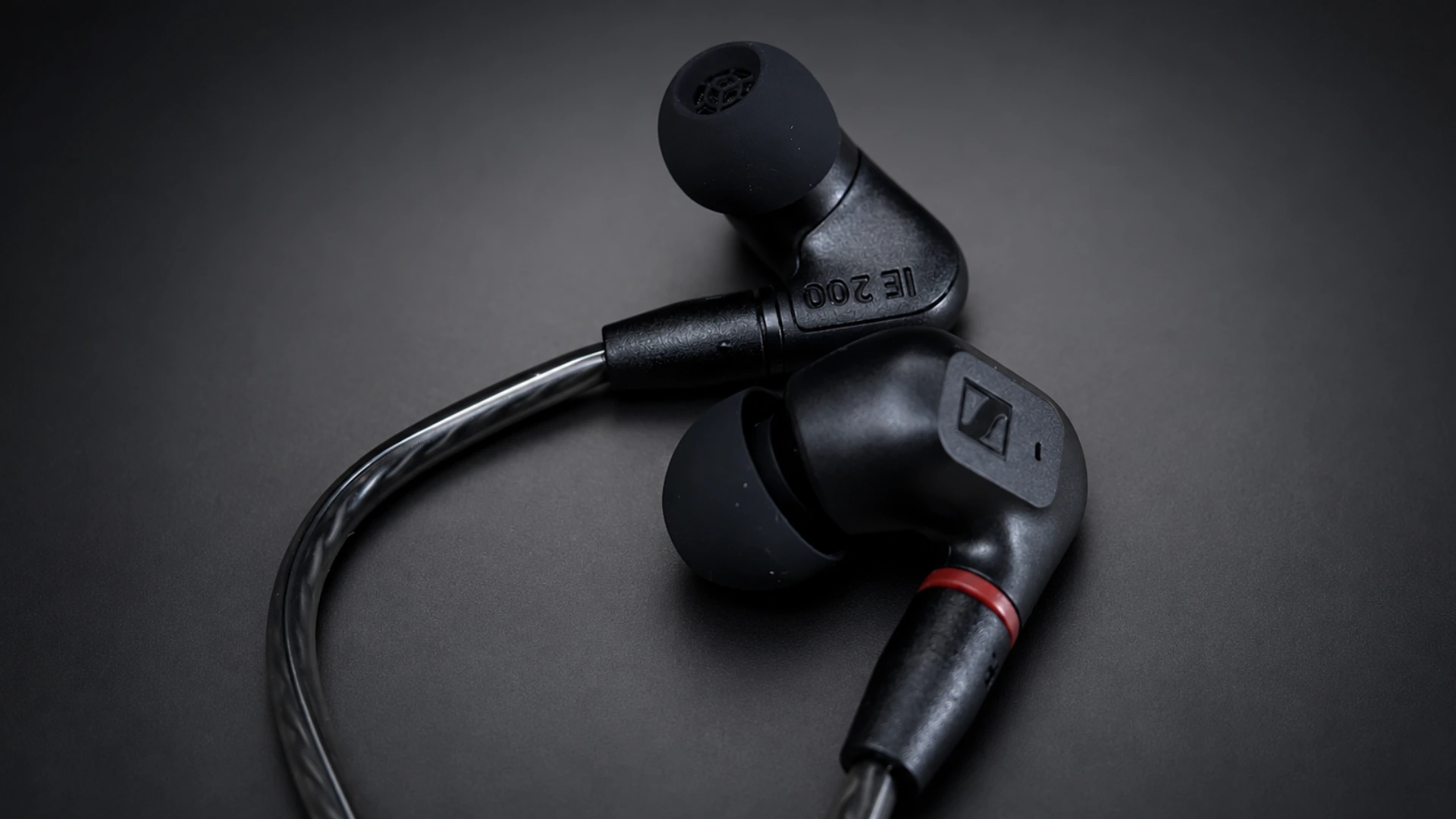
Sound quality is where the Sennheiser IE 200 justifies its reputation.
Rather than emphasizing bass or treble, it delivers a balanced presentation that prioritizes clarity, natural tonality, and instrument separation. This approach allows recordings to sound closer to their original mix instead of being artificially colored.
The tuning won’t impress listeners looking for overwhelming bass, but it rewards careful listening with impressive detail across a wide variety of music.
1. Bass Performance
The bass is controlled, clean, and accurate.
Instead of producing an exaggerated impact, it focuses on texture and definition. Bass notes remain tight even during busy recordings, allowing kick drums and bass guitars to retain their individual character.
Sub-bass extension is respectable, but listeners coming from bass-heavy consumer earbuds may initially find the presentation restrained.
For acoustic music, jazz, rock, and classical recordings, this disciplined bass response works exceptionally well because it never masks the midrange.
2. Midrange Performance
The midrange is the highlight of the IE 200.
Vocals sound natural, instruments maintain realistic timbre, and recordings retain their intended balance without sounding overly warm or recessed.
Male and female vocals remain equally convincing, while guitars, pianos, strings, and acoustic instruments benefit from excellent tonal accuracy.
The absence of excessive mid-bass keeps the presentation open and prevents vocals from becoming congested.
For singer-songwriter recordings, podcasts, and orchestral music, the IE 200 consistently delivers an engaging listening experience.
3. Treble Performance
Treble is detailed without becoming excessively sharp.
High-frequency instruments such as cymbals, violins, and acoustic strings retain plenty of sparkle while avoiding the harshness that affects some bright-tuned IEMs.
Poorly mastered recordings may occasionally sound slightly bright, but high-quality recordings benefit from the additional openness and air.
The result is a presentation that feels spacious rather than aggressive.
4. Soundstage and Imaging
For an in-ear monitor in this price range, the IE 200 creates an impressively open presentation.
Instead of feeling confined inside your head, instruments occupy distinct positions across the soundstage, making complex recordings easier to follow.
Imaging accuracy is particularly impressive. Directional sounds remain easy to identify, which benefits not only music but also gaming and movie watching.
Layering is another strength. Even when multiple instruments play simultaneously, each maintains its own space without blending into a single wall of sound.
5. Detail Retrieval and Timbre
The IE 200 performs beyond expectations in terms it micro-detail.
Small background sounds, vocal textures, and subtle instrumental nuances remain audible without requiring unusually high listening volumes.
Its natural timbre is equally impressive. Acoustic instruments sound more realistic than artificially boosted ones, making jazz ensembles, orchestras, and live recordings particularly enjoyable.
Compared with many V-shaped IEMs in the same price range, the IE 200 offers a more refined and balanced presentation that rewards careful listening.
Best Music Genres for the IE 200
| Genre | Performance | Why It Works |
|---|---|---|
| Acoustic | Excellent | Natural timbre, lifelike vocals |
| Jazz | Excellent | Clear separation, balanced presentation |
| Classical | Excellent | Wide imaging, accurate orchestral reproduction |
| Indie | Excellent | Clean vocals, detailed layering |
| Rock | Very Good | Well-defined guitars, controlled bass |
| Pop | Very Good | Balanced, vocals never overpowered |
| Electronic | Good | Fast bass response, moderate impact |
| Hip-Hop | Good | Clean low end, limited sub-bass emphasis |
| EDM | Good | Detailed highs; bass lovers may want more punch |
If your library leans acoustic, jazz, vocal, or classical, this is one of the stronger performers at its price.
Does It Need a DAC or Amplifier?
No, the Sennheiser IE 200 doesn’t require a DAC or amplifier to perform well.
With an 18-ohm impedance and 119 dB sensitivity (1 kHz, 1 Vrms), it’s easy to power using most laptops, tablets, portable music players, and smartphones paired with a USB-C or Lightning headphone adapter.
You’ll get clear, detailed sound without investing in additional equipment. That said, a quality USB DAC or portable amplifier can provide subtle improvements, such as a cleaner background, better instrument separation, and slightly improved dynamics when playing high-resolution or lossless audio.
These differences are noticeable but not essential. For most listeners upgrading from standard earbuds, the IE 200 delivers its excellent sound quality straight out of the box, making extra audio gear an optional upgrade rather than a necessity.
Sennheiser IE 200 vs. Competitors
The mid-range IEM market has become increasingly competitive, with several excellent options available. Here’s how the IE 200 compares with some of its closest rivals.
| Feature | IE 200 | IE 300 | IE 600 | Kefine Delci |
|---|---|---|---|---|
| Sound Signature | Neutral, balanced | Warm, stronger bass | Neutral, exceptional detail | Slight V-shape |
| Driver | 7mm TrueResponse | 7mm Extra Wide Band | 7mm TrueResponse | Dynamic |
| Comfort | Excellent | Very good | Excellent | Good |
| Build | PlasticZA | Plastic | Amorphous metal | Resin/metal |
| Detail Retrieval | Very good | Very good | Outstanding | Good |
| Bass | Controlled | Fuller | Deep, textured | Punchier |
| Best For | Balanced listening | Bass lovers | Audiophiles | Budget buyers |
The IE 200 occupies a clear sweet spot for neutral, accurate sound, while the IE 300 and IE 600 offer warmer or more premium alternatives at higher prices. The Kefine Delci is cheaper but doesn’t match the clarity of the IE 200.
Price and Value
The IE 200 typically retails for $129-$150, with sales often bringing it closer to $100. At that price, it goes up against respected competitors from Moondrop, Truthear, and SIMGOT.
What sets it apart is tuning maturity, rather than chasing exaggerated bass or treble; it aims for an accurate, comfortable listen over long sessions.
Combined with a replaceable cable and proven driver tech, it’s a strong entry point into the audiophile hobby.
What Reddit Users Think About the Sennheiser IE 200

Discussions on r/inearfidelity show that the Sennheiser IE 200 earns consistent praise for its balanced sound and excellent comfort, though a few recurring criticisms appear.
One user said the IE 200 became a favorite after upgrading the cable and ear tips, recommending it especially when it goes on sale.
Another shared that they experienced no issues with the stock cable and were completely satisfied with the overall performance
Some users, however, felt the plastic build and included cable didn’t match the asking price, while others suggested replacing the cable and ear tips to get the best experience.
Overall, the community agrees that the IE 200 delivers excellent comfort and natural sound, with most complaints focused on the accessories rather than the audio quality
Is the Sennheiser IE 200 Still Worth Buying?
Yes. It remains one of the best-balanced wired IEMs in its price range. Natural tuning, strong comfort, a detailed midrange, and precise imaging let it hold its own even against newer releases.
It won’t deliver the biggest bass or the most premium build, but it nails what matters most: sound quality. For listeners after an accurate, fatigue-free experience over exaggerated excitement, it still justifies the hype.
Disclosure: This review is based on hands-on evaluation where noted, supported by research and feedback from trusted reviewers and the audio community. It is not sponsored by Sennheiser.
Summing Up
After spending time with these earphones, I believe the Sennheiser IE 200 review comes down to one simple point: sound quality takes priority over flashy features.
You get a balanced tuning, natural vocals, impressive detail, excellent comfort, and a lightweight design that’s easy to wear for hours.
The stock cable and plastic shell won’t impress everyone, but they don’t overshadow the listening experience. If you value accuracy over heavy bass, the IE 200 remains one of the strongest choices in its price range.
I hope this review helps you make a confident decision. If you’ve used the IE 200, share your experience, or explore more IEM reviews before choosing your next pair.
Frequently Asked Questions
Does the Sennheiser IE 200 support balanced cables?
Yes. The IE 200 uses standard MMCX connectors, so you can replace the stock cable with compatible balanced cables that use 2.5mm or 4.4mm plugs if your DAC or music player supports them.
Can you replace the ear tips on the Sennheiser IE 200?
Yes. The IE 200 is compatible with many third-party silicone and memory foam ear tips. Changing the ear tips can improve comfort, passive noise isolation, and even slightly alter the bass response.
Does the Sennheiser IE 200 work with smartphones?
Yes. It works with smartphones that have a 3.5mm headphone jack. If your phone doesn’t include one, you can use a USB-C or Lightning-to-3.5 mm adapter without affecting normal playback.
Is the Sennheiser IE 200 suitable for high-resolution audio?
Yes. The IE 200 is capable of reproducing fine detail in lossless and high-resolution audio files. Pairing it with quality recordings and a good source helps you hear its full potential.
How durable is the Sennheiser IE 200 for everyday use?
The lightweight plastic shells are designed for daily use and feel sturdy despite their low weight. The detachable MMCX cable also makes it easier to replace the cable instead of replacing the entire earphone if it becomes damaged