


TV labels can make buying a new screen harder than it needs to be. I understand why Mini LED and QLED sound like two competing technologies, but they improve different parts of an LCD TV.
QLED uses quantum dots to produce stronger color, while Mini LED uses smaller backlights for finer control over bright and dark areas. Some televisions combine both.
For me, the better choice depends on how and where the TV is used. This Mini LED vs QLED comparison focuses on image quality, gaming, movies, price, lifespan, and the features that matter when comparing actual models.
What Are Mini LED and QLED?
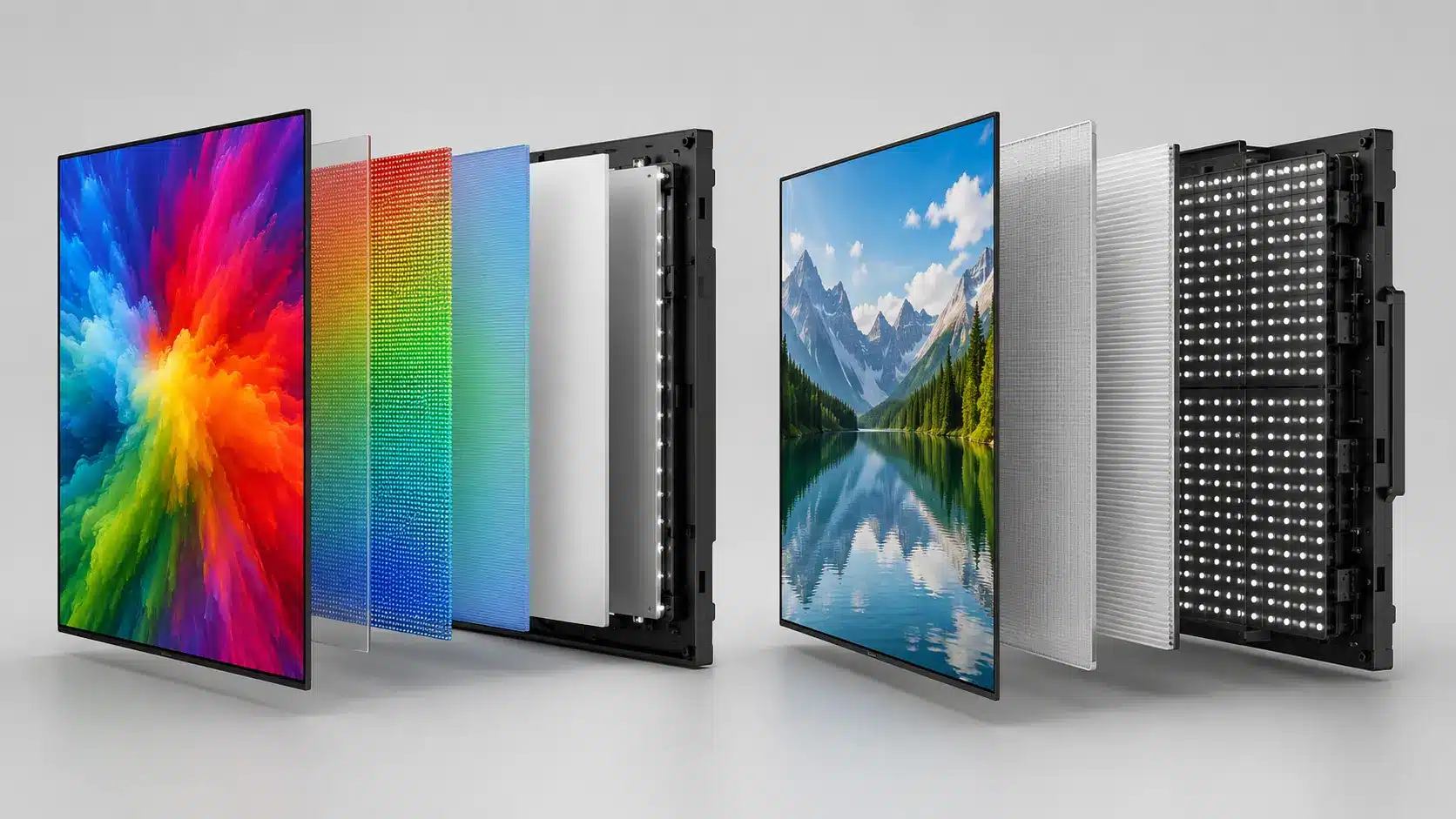
QLED is an LCD display technology that adds a quantum-dot layer between the backlight and screen. These tiny particles help produce bright, rich colors, especially when the TV reaches higher brightness levels.
Mini LED refers to the backlight behind an LCD panel. Instead of using fewer large LEDs, it uses many smaller lights divided into local-dimming zones. The TV can brighten or darken these zones depending on what appears on the screen.
Since both technologies sit on the LCD side of the display world, it helps to understand how a monitor differs from a television before comparing panel types, since screen size and viewing distance change which features actually matter.
The important point is that the technologies can work together. A QD-Mini LED television uses quantum dots for color and Mini LED backlighting for light control.
Samsung explains the difference between its QLED and Mini LED systems.
What Is the Main Difference?
QLED mainly affects color, while Mini LED mainly affects contrast and backlight control.
A standard QLED TV may use edge lighting or a regular full-array backlight. Its color can look excellent, but black levels depend heavily on the lighting system behind the LCD panel.
Mini LED uses smaller backlights that can be divided into more controlled zones. This allows dark parts of an image to receive less light without reducing the brightness of nearby highlights.
Here is the basic comparison.
| Feature | QLED | Mini LED |
|---|---|---|
| Main Purpose | Improves color | Improves backlight control |
| Display Type | LCD | LCD |
| Color | Usually rich and bright | Depends on the color system |
| Brightness | High | Often very high |
| Black Levels | Depends on backlight quality | Usually deeper |
| Local Dimming | Varies by model | Usually more precise |
| Blooming | Can be noticeable | Often reduced |
| HDR Performance | Good to strong | Usually stronger |
| Price Range | Budget to premium | Midrange to premium |
| Burn-In Risk | Very low | Very low |
A television can include both technologies, so the labels should not always be treated as an either-or choice.
How Do Mini LED and QLED Compare in Picture Quality?
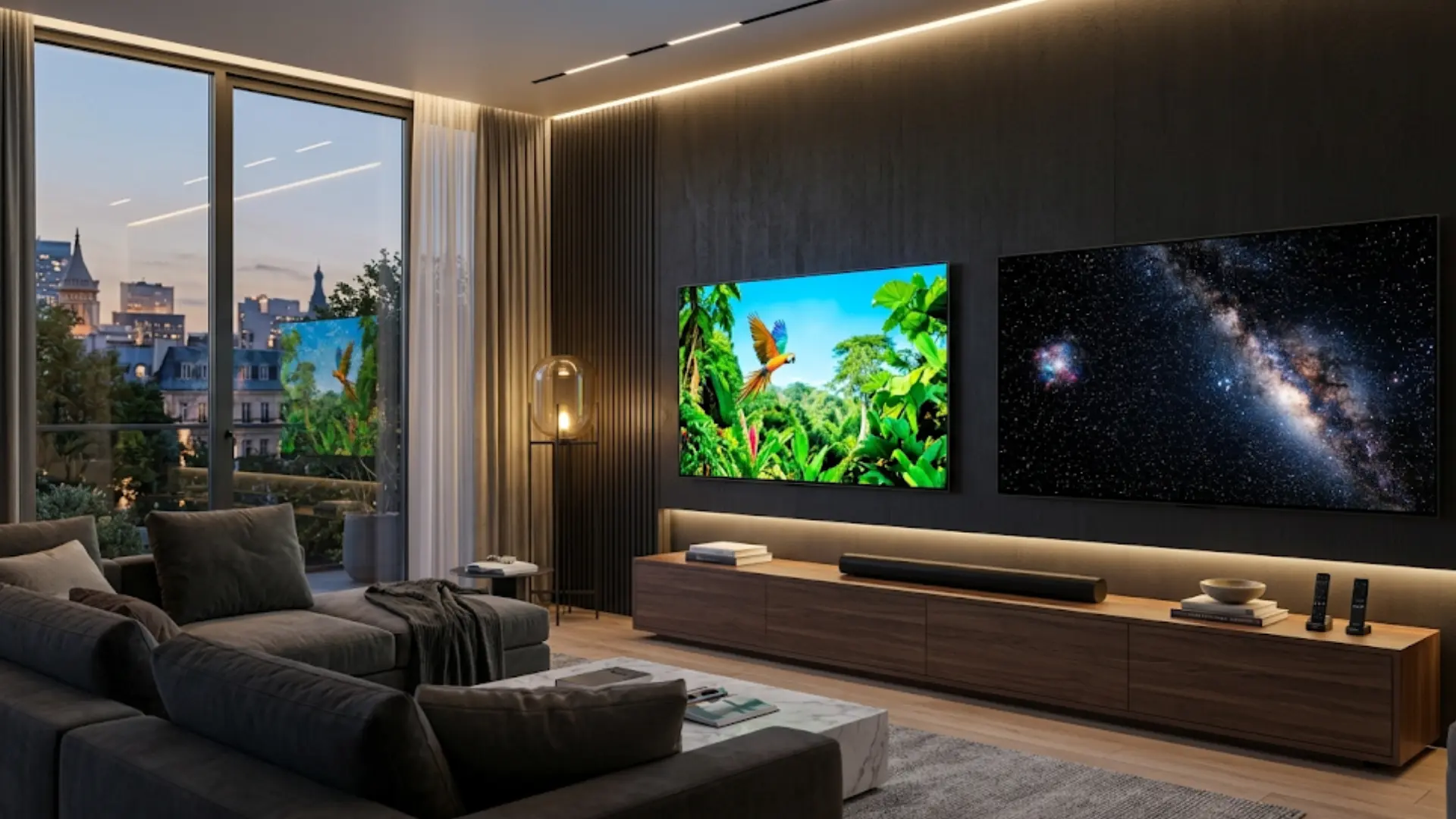
Image quality is where the practical differences become easier to see. Color, contrast, brightness, and HDR performance all depend on how the TV handles light.
1. Color
QLED has an advantage when color reproduction is the main concern.
Quantum dots help a TV maintain rich colors at high brightness. This works especially well for sports, animation, nature programs, and colorful HDR content. If you want a deeper look at how LCD backlighting actually works, the same core lighting principles apply whether you’re shopping for a TV or a monitor.
Mini LED does not directly improve color because it changes the backlight rather than the color layer.
However, many higher-end Mini LED TVs also use quantum dots. These models can provide the color strengths of QLED along with better light control.
2. Black Levels and Contrast
Mini LED usually performs better in dark scenes.
Its smaller LEDs allow more areas of the backlight to be controlled independently. Dark sections can dim while bright objects remain visible.
This can make shadows look deeper and reduce the gray appearance seen on some cheaper LCD TVs.
Blooming can still occur. A bright subtitle, star, or lamp may create a faint glow around it because each dimming zone controls several pixels rather than one pixel.
The amount of blooming depends on the number of zones, processing quality, and panel design.
3. HDR
Mini LED often has an advantage with HDR because it can combine high brightness with stronger contrast.
A bright reflection, flame, or light source can stay intense while nearby dark areas remain darker. The source matters too, since a strong 4K streaming device pick can make a noticeable difference in how much of that HDR detail actually reaches the screen.
A good QLED television can also produce impressive HDR, particularly when it includes full-array local dimming. The difference becomes more noticeable when comparing it with a Mini LED model that has better control over small bright objects.
Which Is Better for a Bright Room?
Both technologies can work well in rooms with plenty of daylight.
QLED is known for producing bright colors that remain visible when the room is not dark. This makes it a practical option for sports, news, cable TV, and daytime streaming.
Mini LED can also reach high brightness, but its main strength is controlling that brightness more precisely. That can help during HDR scenes containing bright highlights beside darker areas.
Brightness alone should not decide the purchase. Reflection handling matters just as much in a sunny living room. A bright TV with a highly reflective screen may still be difficult to watch near large windows.
Check tested brightness and reflection performance when comparing individual models.
Which Is Better for Gaming, Movies, and Sports?
Different viewing habits can make one option more useful than the other.
1. Gaming
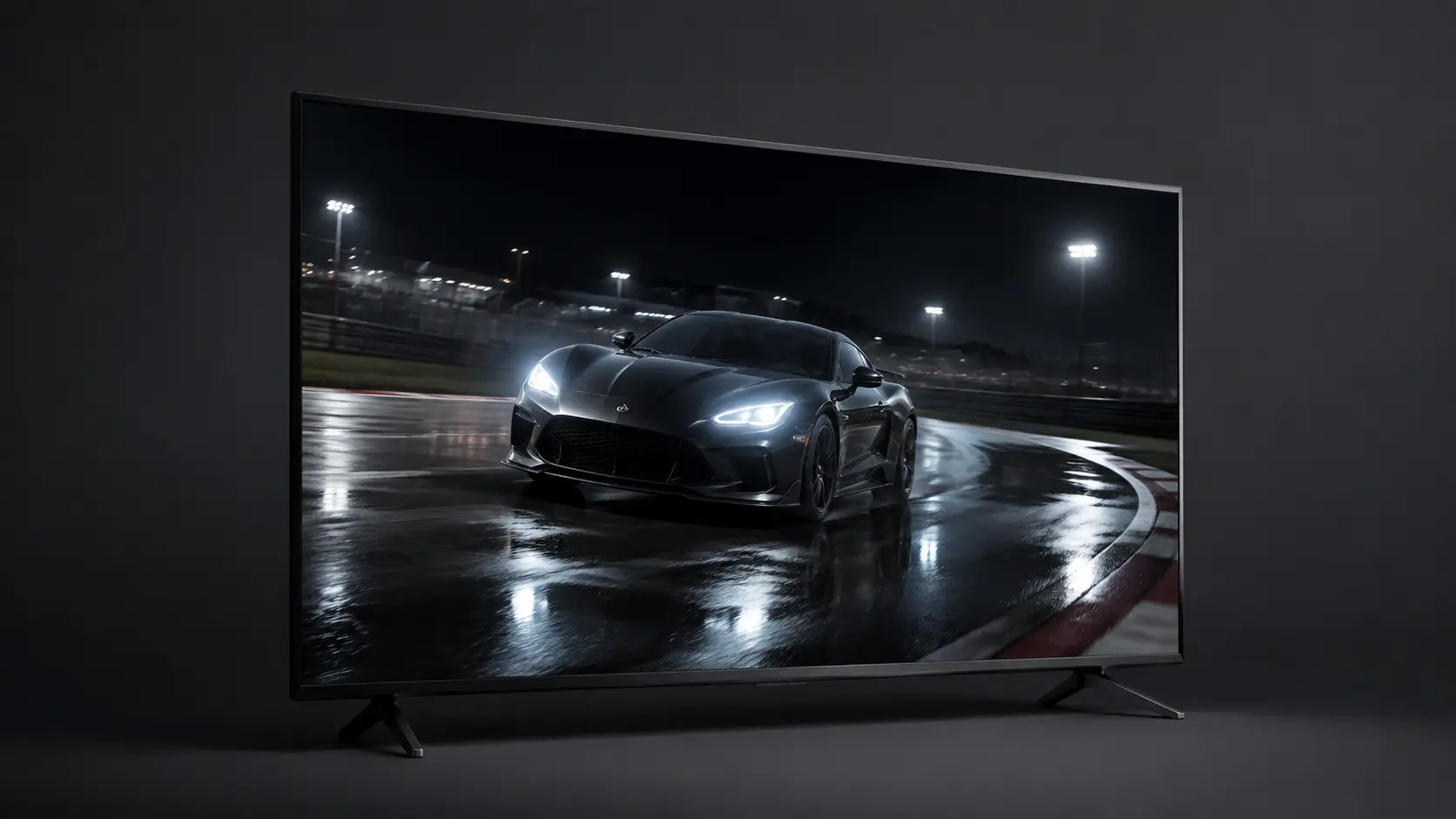
Mini LED is often the stronger choice for HDR gaming because darker scenes can keep more contrast while good effects remain intense.
That does not automatically make every Mini LED television a better gaming TV.
Important gaming features include:
- 120 Hz or Higher: Supports smoother motion at higher frame rates.
- HDMI 2.1: Important for newer consoles and gaming PCs.
- VRR: Helps reduce screen tearing when frame rates change.
- Low Input Lag: Keeps controller actions responsive.
- Game Mode: Reduces unnecessary processing during play.
A QLED television with strong gaming features can be a better purchase than a Mini LED model with limited ports or a slower panel.
2. Movies
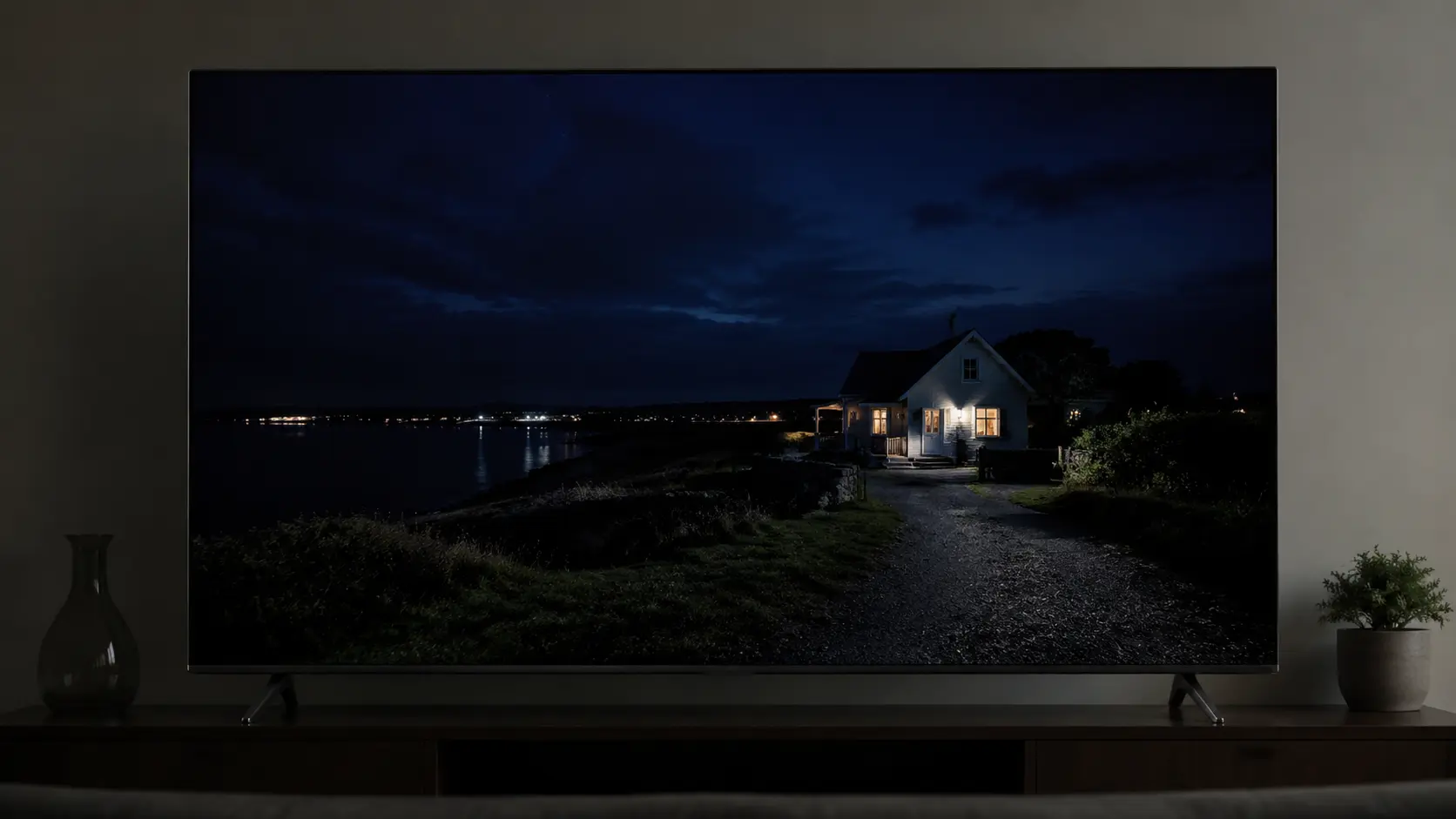
Mini LED usually makes more sense for movies watched in a dark room.
Better local dimming can make black bars, shadows, and night scenes appear darker while preserving bright highlights.
QLED works well for casual streaming and family movies, especially in brighter rooms. Models with basic backlighting may show lighter blacks when the lights are turned off.
3. Sports
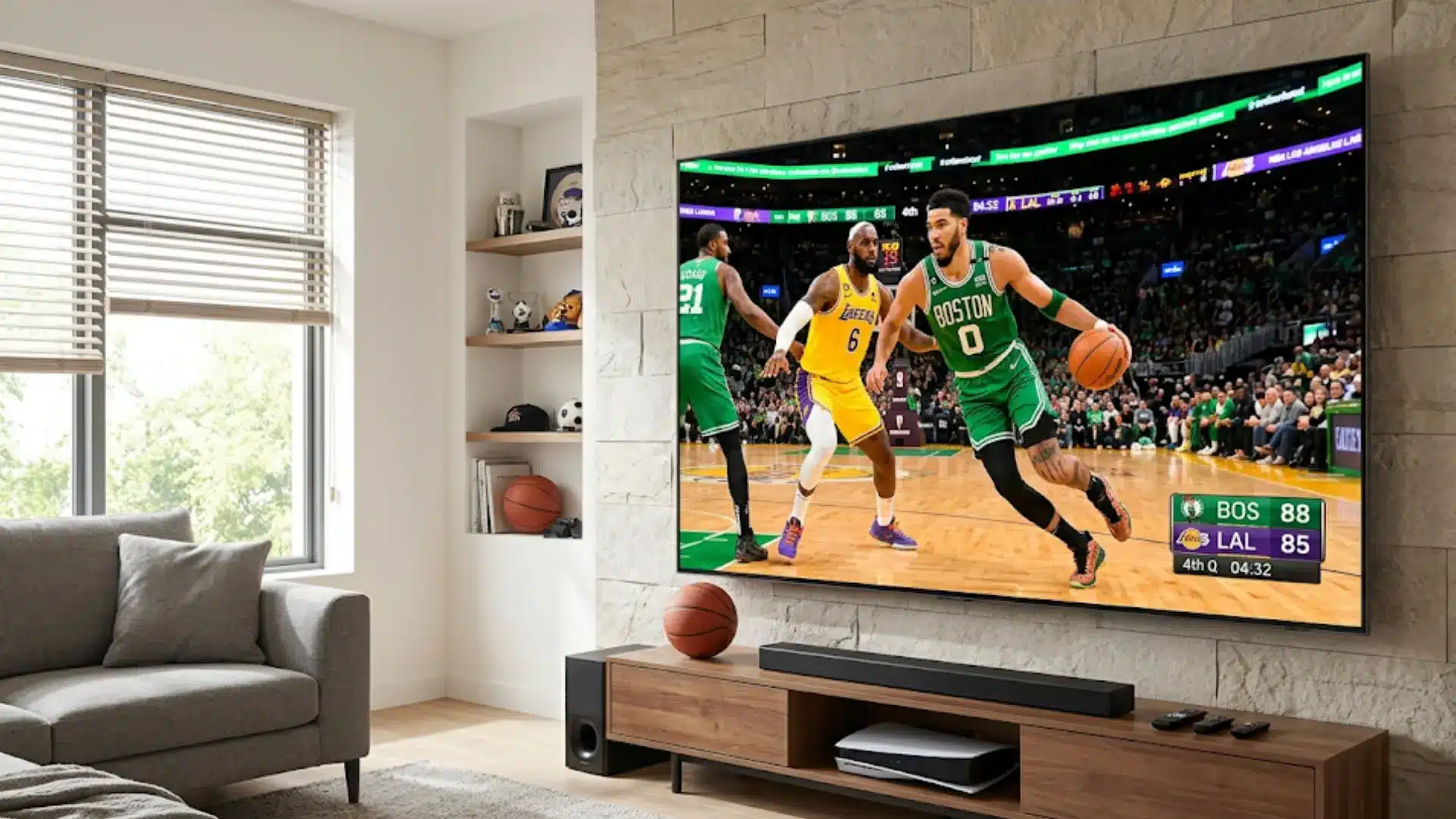
QLED is well suited to sports because bright fields, uniforms, graphics, and daytime broadcasts benefit from strong color and brightness.
Mini LED also performs well, but backlight technology is not the main factor for fast action.
A 120 Hz panel and good motion processing matter more when watching football, basketball, racing, or other quick-moving sports.
Price and Value: Is Mini LED Worth Paying More For?
Price differences come from backlight complexity, but the better value depends on screen size, viewing habits, and the features you need.
| Factor | QLED | Mini LED |
|---|---|---|
| Starting Price | Usually lower, with entry models around $250–$500 | Entry models may cost around $350–$700 |
| Premium Price | Higher-end models can exceed $1,000 | Premium models can cost well above $1,000 |
| Why It Costs More | Can use simpler LED backlighting | Uses many smaller LEDs, added dimming control, and more complex processing |
| Best Value For | Sports, news, cable, casual streaming, and larger screens on a tighter budget | HDR movies, detailed games, nighttime viewing, and stronger dark-scene performance |
| Worth Paying Extra? | Better when advanced backlighting is not a priority | Often worthwhile when better light control and HDR performance matter |
| Price Variables | Screen size, brand, model year, features, and sales affect cost | Screen size, brand, model year, features, and sales affect cost |
Mini LED justifies its premium for demanding viewing, while QLED often gives stronger value when budget or screen size matters.
Lifespan and Burn-In
Both technologies use LCD panels, so permanent image retention is generally less of a concern than it is with self-emissive display technologies.
Static news logos, game HUDs, scoreboards, and menus do not automatically make QLED or Mini LED unsuitable for long viewing sessions.
Neither label guarantees a longer lifespan.
Durability depends more on:
- Build Quality: Internal components and cooling systems vary between models.
- Heat: Poor airflow can increase operating temperatures.
- Brightness Settings: Running the backlight at maximum output creates additional heat.
- Daily Usage: More operating hours mean more wear over time.
- Power Stability: Electrical surges can damage internal components.
Leaving space around the television for airflow and using sensible brightness settings can reduce unnecessary stress on the hardware.
Which Is Better for Your Eyes?
Neither technology is automatically better for eye comfort.
Screen brightness, viewing distance, reflections, room lighting, flicker behavior, and viewing time can all affect how comfortable a television feels.
A very bright screen in a dark room can become tiring even if the TV uses an advanced backlight.
Strong reflections can cause similar problems because the eyes constantly adjust between the image and surrounding glare.
For comfortable viewing, match the screen brightness to the room and sit at a suitable distance for the TV size.
Features such as warmer color settings, light sensors, and adjustable brightness may also be useful depending on the model.
Mini LED vs Neo QLED
Neo QLED is Samsung’s name for certain televisions that combine quantum-dot technology with Mini LED-style backlighting.
It is not a completely separate type of display.
The quantum-dot layer manages color, while the smaller LEDs behind the LCD panel control light.
Other brands may use different names for similar systems, which is why product branding can become confusing.
Instead of judging a television by the largest label on the box, check its backlight type, local-dimming performance, refresh rate, ports, reflections, and processing.
What Is QD-Mini LED?
QD-Mini LED combines quantum dots with Mini LED backlighting. The quantum dots improve color, while the smaller LEDs provide finer control over contrast and brightness.
This combination can offer:
- Strong color at high brightness
- Deeper-looking blacks
- Better local dimming
- Strong HDR performance
- Lower burn-in risk than self-emissive displays
Performance still varies between models. More dimming zones or a premium label do not guarantee better results if the processing, panel quality, or motion handling is weak.
Pros and Cons
Both display types have clear strengths and limits. This quick table compares the main trade-offs without repeating the technical details already covered above.
| Technology | Pros | Cons |
|---|---|---|
| Mini LED | Better contrast, deeper blacks, strong HDR performance, and high brightness for both daytime and dark-room viewing. | Usually costs more, can still show blooming, and picture quality depends heavily on processing and panel design. |
| QLED | Strong color, lower starting prices, good bright-room performance, and a wide choice of screen sizes and models. | Black levels vary, blooming can appear on cheaper models, and overall quality differs greatly between product lines. |
Mini LED favors contrast and HDR, while QLED focuses more on color and value. The better option depends on budget, room lighting, and viewing habits.
Which One Should You Buy?
Choose QLED if price, screen size, bright-room viewing, and everyday content matter most. It is a practical option for sports, streaming, cable, and family television without requiring premium backlighting.
Choose Mini LED if movies, HDR, dark-room viewing, and visually demanding games are higher priorities. Its finer lighting control can produce a more noticeable improvement in contrast.
A QD-Mini LED television is worth considering when both strong color and better backlighting matter.
I would compare exact models before paying more for any display label. Local dimming, refresh rate, reflections, HDMI support, processing, warranty, and price can have a bigger effect on satisfaction than the technology name alone.
Conclusion
The Mini LED vs QLED decision is easier once each technology’s role is clear. QLED improves color, while Mini LED gives an LCD screen better control over its backlight.
I prefer QLED when value, screen size, sports, and daytime viewing matter more. Mini LED makes greater sense for HDR, nighttime movies, and games where contrast is easier to notice.
A model using both technologies can provide a strong balance of color and light control. Check the full specifications and tested performance before paying more for a premium label.
Frequently Asked Questions
Is Mini LED Better Than QLED?
Mini LED usually provides better contrast and black levels, while QLED focuses on color and often costs less. The stronger option depends on the TV model and viewing conditions.
What Is the Main Disadvantage of Mini LED?
Price is one drawback, and blooming can still appear around small bright objects because each dimming zone controls several pixels rather than individual pixels.
Can a TV Use Both Technologies?
Yes. QD-Mini LED televisions combine quantum dots for color with smaller LED backlights for more precise light control.
Does Mini LED Last Longer Than QLED?
There is no guaranteed winner. Heat, build quality, brightness, daily operating hours, ventilation, and internal components have a larger effect on durability.
Is Mini LED Better for Gaming?
It can provide stronger HDR and darker black levels, but refresh rate, HDMI 2.1, VRR, input lag, and Game Mode performance are more important when comparing gaming TVs.