



People don’t really think about how much water their dishwasher uses until a bill or a comparison brings it up.
So, how many gallons of water does a dishwasher use per cycle, and why does that number vary?
The answer is more practical than it seems. It connects to how the machine works, how you use it, and even how old it is.
Here in this post, I’ll walk you through real usage ranges, how dishwashers manage water internally, and what actually affects consumption. You’ll have a clear idea of what to expect and how to make smarter use of your machine.
Let’s start with the typical usage across different dishwasher types.
How Many Gallons of Water Does a Dishwasher Use per Cycle?
A dishwasher uses far less water than most people think. The exact amount depends on the model and its age:
- Modern dishwashers, especially Energy Star models, use around 2 to 4 gallons per cycle.
- Standard models typically fall between 3 and 5 gallons per cycle.
- Older dishwashers made before the mid-1990s can use 9 to 15 gallons per cycle.
All of these numbers refer to a full wash cycle, not water used per minute.
Energy Star is a certification from the U.S. Environmental Protection Agency. Dishwashers that earn it use 4 gallons or less per cycle. It’s the easiest way to confirm a machine meets current efficiency standards before you buy.
When shopping for a new machine, the Energy Star label is the fastest way to confirm it meets current efficiency benchmarks.
Why There Isn’t One Fixed Number
No single number covers every dishwasher because usage depends on how the machine operates. Different cycles pull different amounts of water, and many models adjust automatically based on how dirty the load is. Because of this, water use is always shown as a range.
What “Per Cycle” Really Means
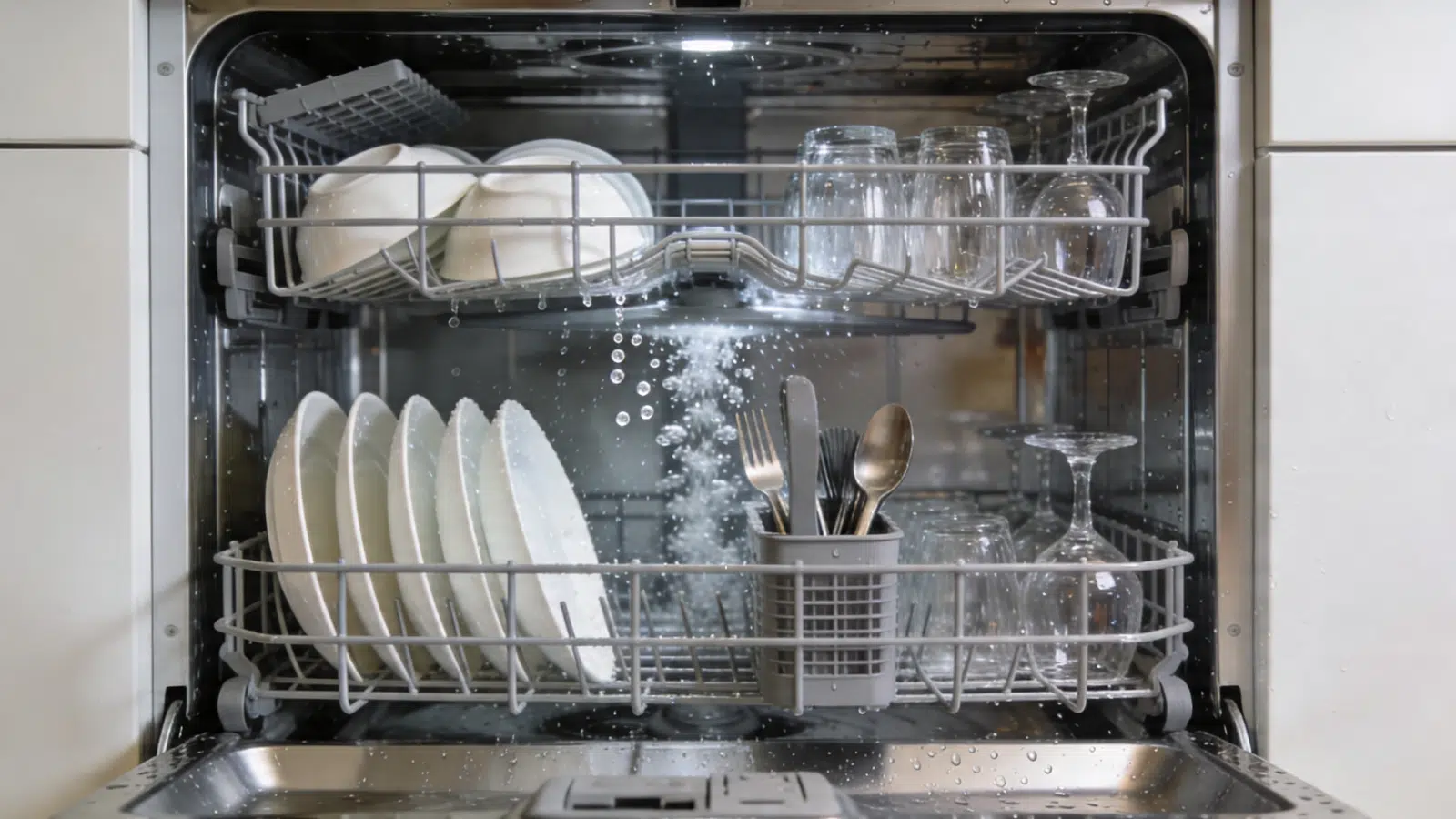
Most people picture a dishwasher drawing fresh water the entire time it runs. That’s not how it works. The machine fills with a small amount of water at the start of each stage, then sprays, collects, filters, and reuses it. Fresh water is only added at specific points, which is why total usage stays low even on longer cycles.
Where People Usually Get It Wrong
A long cycle with multiple wash and rinse stages looks wasteful from the outside. But runtime and water usage are not the same thing. The machine is designed to reuse water throughout, which keeps total consumption well below what most people expect.
Why Modern Dishwashers Use Less Water Than Expected
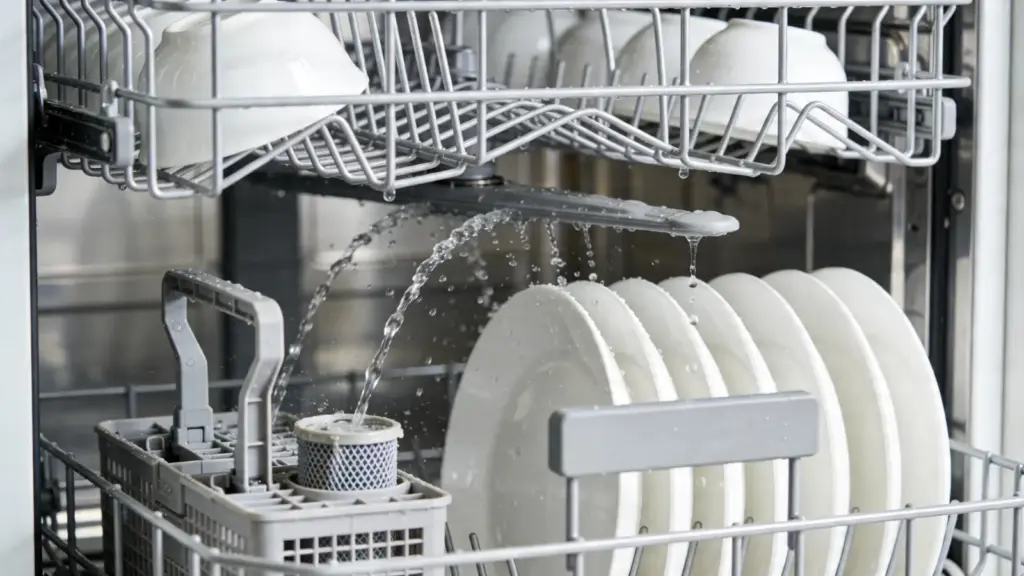
Modern dishwashers work as a closed system, not like a running tap. A small amount of water fills at the start of each stage, then gets sprayed, collected, filtered, and reused. Fresh water only comes in during specific points, like the final rinse.
That’s why a 2-hour cycle can still use just 3 to 4 gallons total.
In 2013, the U.S. Department of Energy made this efficiency mandatory. Any dishwasher made after that date must use no more than 5 gallons per cycle. Energy Star models go further, capping usage at 4 gallons or less.
That said, this system only works well when the machine is maintained. A clogged filter means dirty water gets recirculated instead of being cleaned, and the machine may run longer to compensate. A quick filter rinse once a month keeps the reuse system doing its job.
Dishwasher vs. Hand-Washing Water Usage
Dishwashers and hand washing use water in very different ways, which is why their total usage is not the same.
A modern dishwasher typically uses about3 to 4 gallons per full load, as it reuses the same water throughout the cycle. The water is sprayed, collected, filtered, and used again, which keeps overall consumption low.
In contrast, hand washing can use 15 to 27 gallons or more per load. The higher end applies when the tap runs continuously throughout washing and rinsing, a common habit. Even filling the sink once uses around 5 gallons, still more than most modern dishwashers use for a full cycle.
The key difference is control. Dishwashers limit and reuse water, while hand washing often wastes more due to the constant flow.
What Factors Change Dishwasher Water Usage
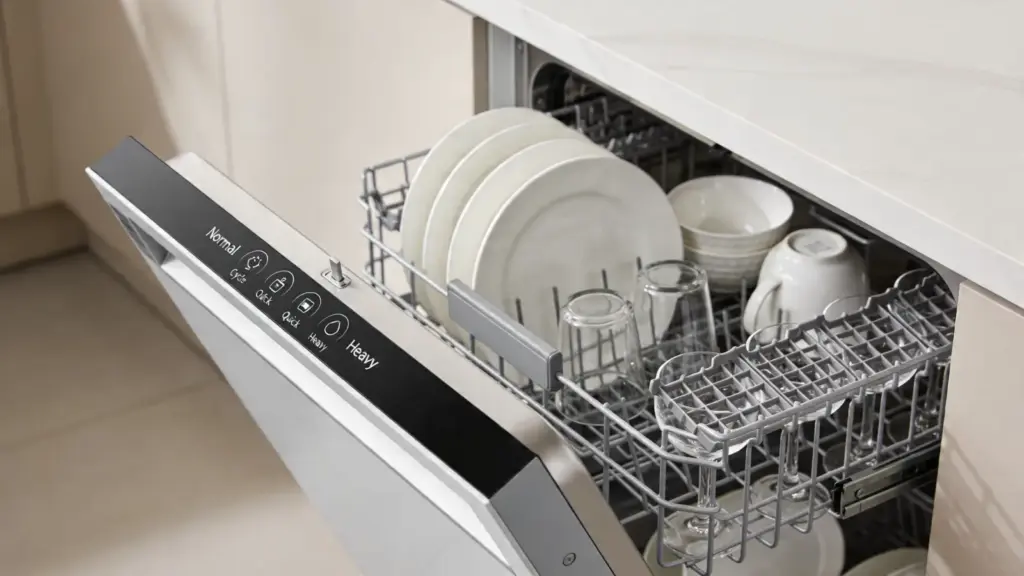
The amount of water a dishwasher uses is not fixed. It changes based on settings, load, and how the machine responds to the dishes inside.
Cycle Type and Settings
Different cycles directly affect water usage. Heavy cycles use more water because they run longer and spray more intensely to clean tough stains.
Eco or light cycles reduce water by using shorter or optimized spray phases. The more intense the cycle, the more water is added during each stage.
Soil Sensors and Smart Adjustments
Modern dishwashers often include sensors that detect how dirty the dishes are. Based on this, the machine adjusts water levels and cycle time.
This helps avoid using extra water on lightly soiled loads. However, if sensors fail or misread the load, the machine may use more or less water than needed.
Load Size and Efficiency
Running a full load helps you get the most out of each cycle, since the same water cleans more dishes. When you run smaller loads, the dishwasher still uses a similar amount of water, so efficiency drops.
Water use does not decrease evenly with fewer items, which is why frequent half-loads can lead to higher overall water usage.
Quick Summary of Dishwasher Water Usage
If you just want a clear snapshot, this table breaks down typical water use across different methods and dishwasher types.
| Type of Washing | Water Usage per Cycle |
|---|---|
| Modern Dishwashers | 2 to 4 gallons |
| Average Models | 3 to 5 gallons |
| Older Dishwashers | 9 to 15 gallons |
| Hand Washing | 15 to 27+ gallons |
As you can see, modern dishwashers stay efficient mainly because they reuse water during the cycle. In most cases, running a full load uses less water than washing the same dishes by hand.
Simple Ways to Use Less Water Per Load
A few small habits can bring your usage down without any extra effort.
- Skip the pre-rinse. Modern dishwashers are designed to handle food residue. Scrape off large pieces, but rinsing under the tap adds 6 to 20 gallons before the cycle even starts.
- Run full loads only. The machine uses nearly the same amount of water whether it’s half full or completely full. Waiting for a full load cuts your water use per dish significantly.
- Use the eco or light cycle. For everyday loads that aren’t heavily soiled, the eco setting uses less water and still cleans well.
- Clean the filter regularly. A clogged filter forces the machine to work harder and recirculate dirty water less effectively. A quick rinse once a month keeps it running efficiently.
Conclusion
Looking at how many gallons of water a dishwasher uses per cycle gives you a clearer picture of how efficient modern appliances have become.
The real value comes from understanding how your everyday choices influence that efficiency over time.
Simple adjustments, like choosing the right cycle or avoiding unnecessary steps, can add up without changing your routine much. I’ve noticed that once you pay attention to these details, it becomes easier to reduce waste without effort.
If you want to make your kitchen more water-conscious, start applying these small changes and track the difference in your next few cycles.
Frequently Asked Questions
How many gallons of water does an Energy Star dishwasher use?
Most Energy Star dishwashers use around 3 to 4 gallons of water per cycle, depending on the model and selected wash setting.
Does a dishwasher use less water than washing dishes by hand?
Yes. Modern dishwashers usually use far less water than hand washing, especially when the sink tap runs continuously during rinsing.
Why do dishwasher cycles take so long if they use little water?
Modern dishwashers clean by spraying and reusing small amounts of water repeatedly instead of constantly pulling fresh water, which keeps usage low.
Do older dishwashers use more water than newer models?
Yes. Older dishwashers can use 10 to 15 gallons or more per cycle, while newer models are designed to stay under federal efficiency limits.