





Many people use ovens daily, but fewer stop to ask what a convection oven means and how it actually changes cooking.
The answer goes beyond just having a fan inside.
It affects how heat moves, how quickly food cooks, and even how your final dish looks and feels. Small differences in airflow can lead to big changes in texture, moisture, and timing.
In this post, I’ll break down how convection and conventional ovens work, where each one fits best, and how to adjust your cooking for better results.
Let’s start by understanding what a convection oven really is.
What is a Convection Oven?
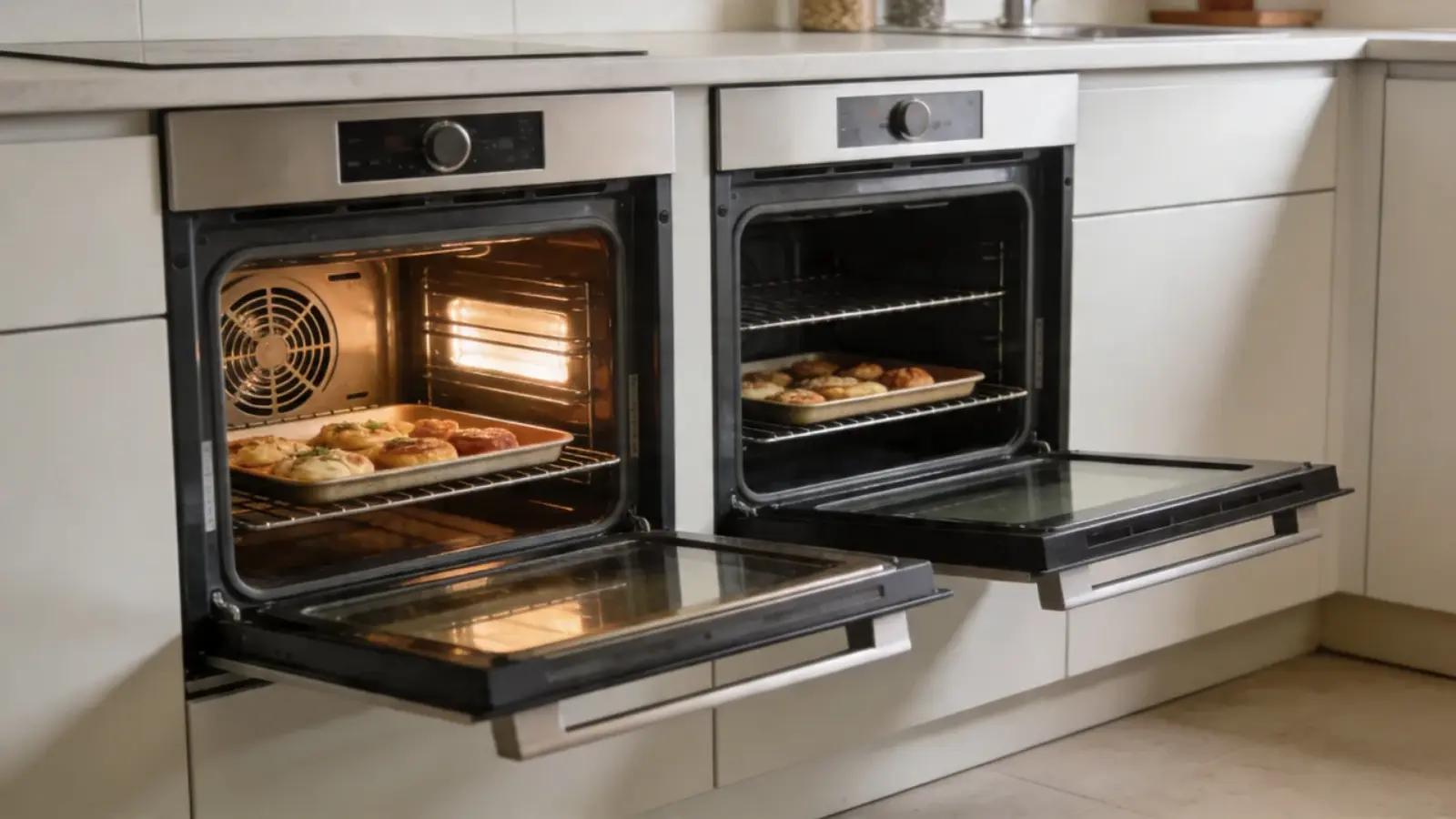
A convection oven uses a fan and exhaust system to move hot air around the food instead of letting it stay still. This constant airflow changes how heat spreads inside the oven.
Because the air is always moving, heat is distributed more evenly across the entire space. This allows food to cook evenly without needing to rotate trays.
The moving air also transfers heat faster, which is why cooking time is usually 10–20% shorter and the temperature can be lowered slightly. At the same time, airflow pulls moisture from the surface, helping food brown and crisp more effectively.
It’s not about stronger heat. The real difference comes from airflow and how it moves heat around the food.
What is a Conventional Oven?
A conventional oven uses heating elements at the top and bottom to generate heat, but it does not move the air inside. As a result, heat stays mostly still and builds up in certain areas.
In this setup, hot air rises and settles naturally, which can create uneven temperature zones. Some parts of the oven may be hotter than others, so rotating trays is often needed for even cooking.
Since the air is not circulating, heat transfer happens more slowly. Food takes longer to cook, but it also retains more moisture, making it better for dishes that need gentle and steady heat.
It’s not less capable. The key difference is that it relies on static heat rather than airflow.
Core Difference: How Heat Moves Inside Each Oven
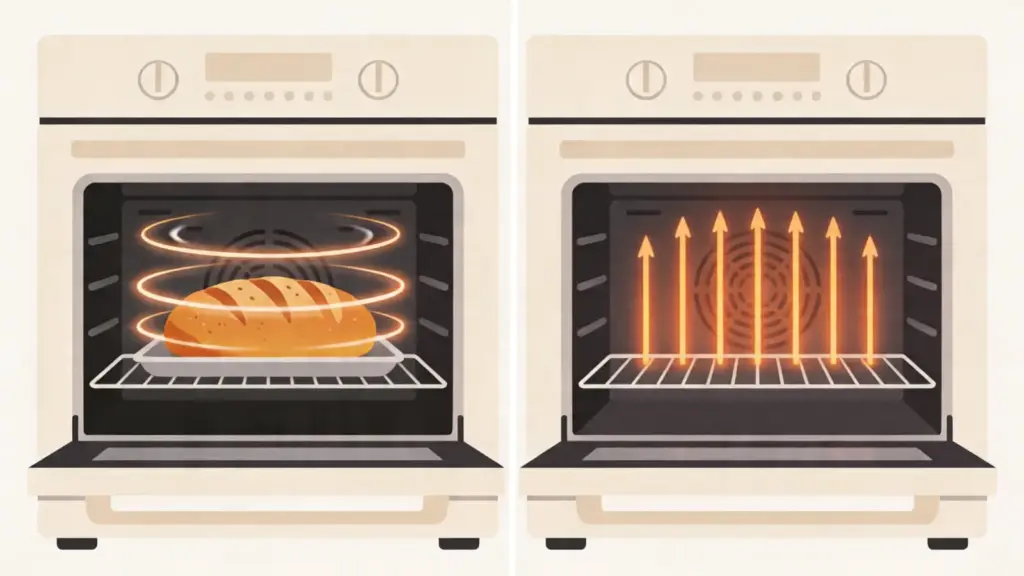
The main difference between convection and conventional ovens comes down to how heat moves inside the oven.
Static Heat vs. Forced Air
A conventional oven uses static heat, where hot air rises and settles in layers, staying mostly still. A convection oven uses a fan to force air movement, pushing hot air around continuously.
This active circulation spreads heat evenly throughout the oven, so all sides of the food receive consistent heat instead of certain spots becoming hotter than others.
Heat Consistency
In a conventional oven, still air creates uneven temperature zones, with some areas hotter than others. This can lead to inconsistent cooking.
In a convection oven, constant airflow distributes heat evenly across the entire space, so food cooks more uniformly without needing to rotate trays.
Cooking Speed
Moving air transfers heat more efficiently than still air, which speeds up cooking. This allows convection ovens to cook food faster and at slightly lower temperatures.
However, this faster heat transfer can dry out or overcook delicate foods if the temperature or time is not adjusted properly.
How Cooking Results Differ
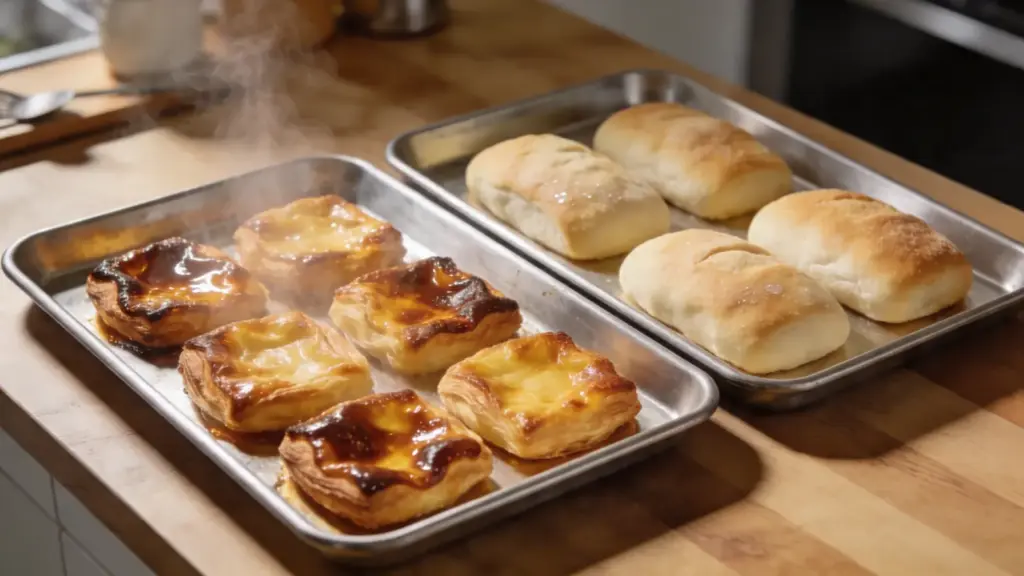
The way heat moves inside the oven directly affects how food turns out. This shows up in texture, moisture, and how evenly food cooks.
Texture
Convection ovens create a crisp and browned exterior because moving air speeds up surface heating. This helps form a crust on foods like roasted vegetables or cookies.
In a conventional oven, slower and gentler heat makes a softer texture. This works better for foods that need a light structure instead of a firm outer layer.
Moisture
The constant airflow in a convection oven pulls moisture away from the surface of the food. This helps with browning but can also dry out delicate dishes.
A conventional oven holds moisture inside the cooking space because the air is not moving. This helps foods stay soft and prevents them from drying too quickly.
Evenness
A Convection oven cooks food evenly across multiple racks because hot air circulates throughout the space.
In a conventional oven, the heat is uneven, so one tray may cook faster than another. This is why rotating pans is often needed.
Failure can happen in both. Cakes may collapse in convection due to fast airflow, while roasting in a conventional oven can turn soggy without proper heat circulation.
When Each Oven Type Works Best
Choosing between convection and conventional depends on how the food reacts to heat and airflow. Each type works better for specific situations.
Convection Oven Uses
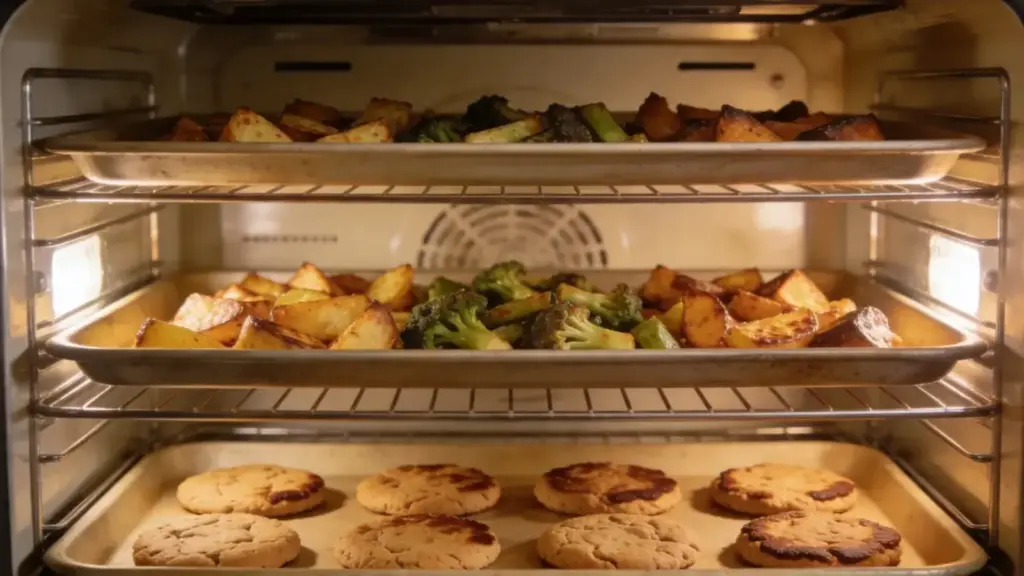
Convection ovens work best for foods that benefit from dry heat and browning. Roasting vegetables, meats, and baking cookies are good examples.
The moving air speeds up surface cooking, which helps create a crisp outer layer. It also allows multiple trays to cook evenly at the same time without rotating.
Conventional Oven Uses
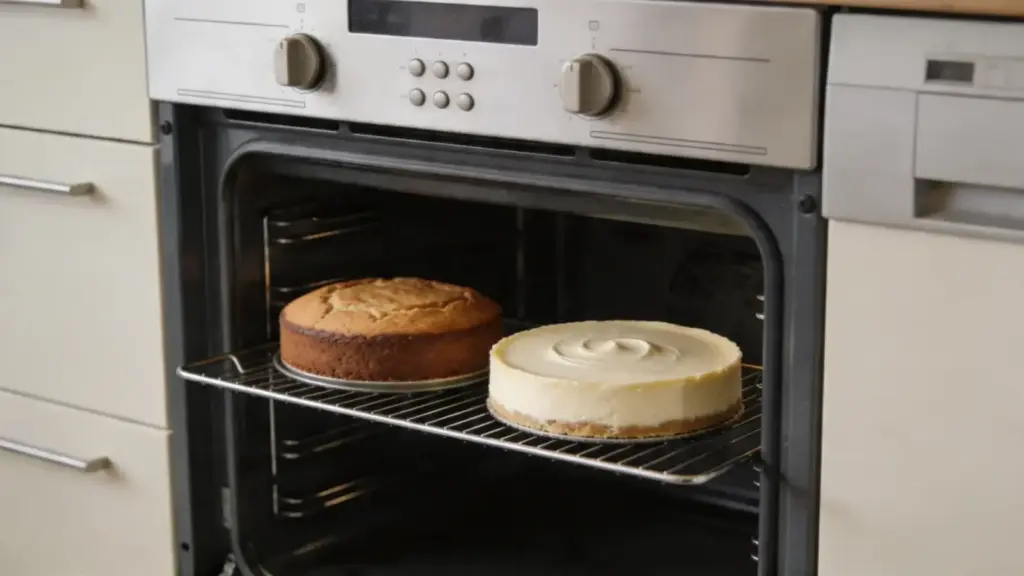
Conventional ovens are better for foods that need stable and gentle heat. Cakes, custards, and cheesecakes rely on moisture and slow cooking to hold their structure. The still air prevents the surface from setting too quickly, which helps avoid cracking or collapsing.
A common mistake is thinking convection is always better. It depends on the food. Using the wrong type can affect texture and final results.
Why Temperature and Time Differ
The difference mainly comes down to how heat reaches the food.
In a Convection Oven
Hot air moves constantly around the food. This moving air transfers heat faster, so the food cooks more quickly.
Because of this, cooking time is shorter, and the temperature usually needs to be lowered by about 25°F.
If you don’t adjust these settings, the outside can cook too fast and even burn before the inside is fully done.
In a Conventional Oven
The air stays still, so heat transfer is slower. The food takes more time to cook, which is why recipes are typically written for this type of oven.
The temperature usually stays the same as listed, and cooking happens more gradually.
Delicate foods can overcook faster in a convection oven due to the rapid heat flow, while dense foods may still need extra time to cook through, even with the added airflow.
How to Adjust Your Recipe for a Convection Oven
Most recipes are written for conventional ovens. When you switch to convection, two things usually need to change.
The simplest rule is this: lower the temperature by 25°F and start checking your food about 20% earlier than the recipe says.
So if a recipe calls for 350°F for 60 minutes, set your convection oven to 325°F and check for doneness around the 45-minute mark.
For meats and proteins, you can skip the temperature drop. Just check earlier, since the fan still speeds up cooking.
Keep in mind that results vary by oven model. When trying a recipe for the first time in convection mode, turn on the oven light and check without opening the door.
Convection Oven vs. Conventional Oven: Quick Comparison
Here is a quick side-by-side comparison to help you see the key differences clearly at a glance.
| Feature | Convection Oven | Conventional Oven |
|---|---|---|
| Heat Movement | Forced air with a fan | Static heat (no fan) |
| Heat Distribution | Even across the oven | Uneven, hot/cold spots |
| Cooking Speed | Faster (10–20%) | Slower |
| Temperature | Lower needed (~25°F less) | Standard recipe temperature |
| Texture | Crisp, browned exterior | Softer, gentler finish |
| Moisture | Dries surface faster | Retains more moisture |
| Best For | Roasting, cookies, crisp foods | Cakes, custards, delicate baking |
| Multi-Rack Cooking | Works well | Often uneven |
| Risk | Over-drying, overcooking | Soggy or uneven results |
Common Misunderstandings About Convection vs. Conventional Ovens
Here are some common misconceptions that can lead to wrong cooking results if not understood clearly.
- Convection is always better: It is not. It works best for crisping and roasting, but can damage delicate foods that need stable heat.
- Same recipe works the same in both ovens: Airflow changes how heat reaches food, so time and temperature often need adjustment.
- The fan only makes cooking faster: It also affects moisture and texture, which changes the final result, not just speed.
- Conventional ovens are outdated: They are still better for baking items that require gentle, even heat and moisture retention.
Understanding these differences helps you avoid mistakes and choose the right method for better cooking results.
Wrapping Up
Once you understand what does convection oven mean, cooking becomes more controlled and predictable.
It is not about choosing one oven over the other, but about knowing when each one works best. Airflow, heat movement, and timing all play a role in how your food turns out.
When you match the oven type to the dish and adjust your settings properly, you avoid common issues like uneven cooking or dryness.
A few small changes can improve your results more than you expect. Try adjusting your next recipe and notice the difference for yourself.
Frequently Asked Questions
What does a convection oven do differently?
A convection oven uses a fan to circulate hot air, which helps food cook faster and more evenly compared to a conventional oven with still air.
When should you not use a convection oven?
You should avoid using a convection oven for delicate foods like cakes, soufflés, and custards, as the airflow can cause uneven rising or drying.
Does a convection oven cook food faster?
Yes, convection ovens usually cook food 10–20% faster because moving air transfers heat more efficiently, reducing overall cooking time.
Is a convection oven better than a conventional oven?
It depends on the food. Convection ovens are better for crisping and roasting, while conventional ovens work better for baking items that need steady, gentle heat.