

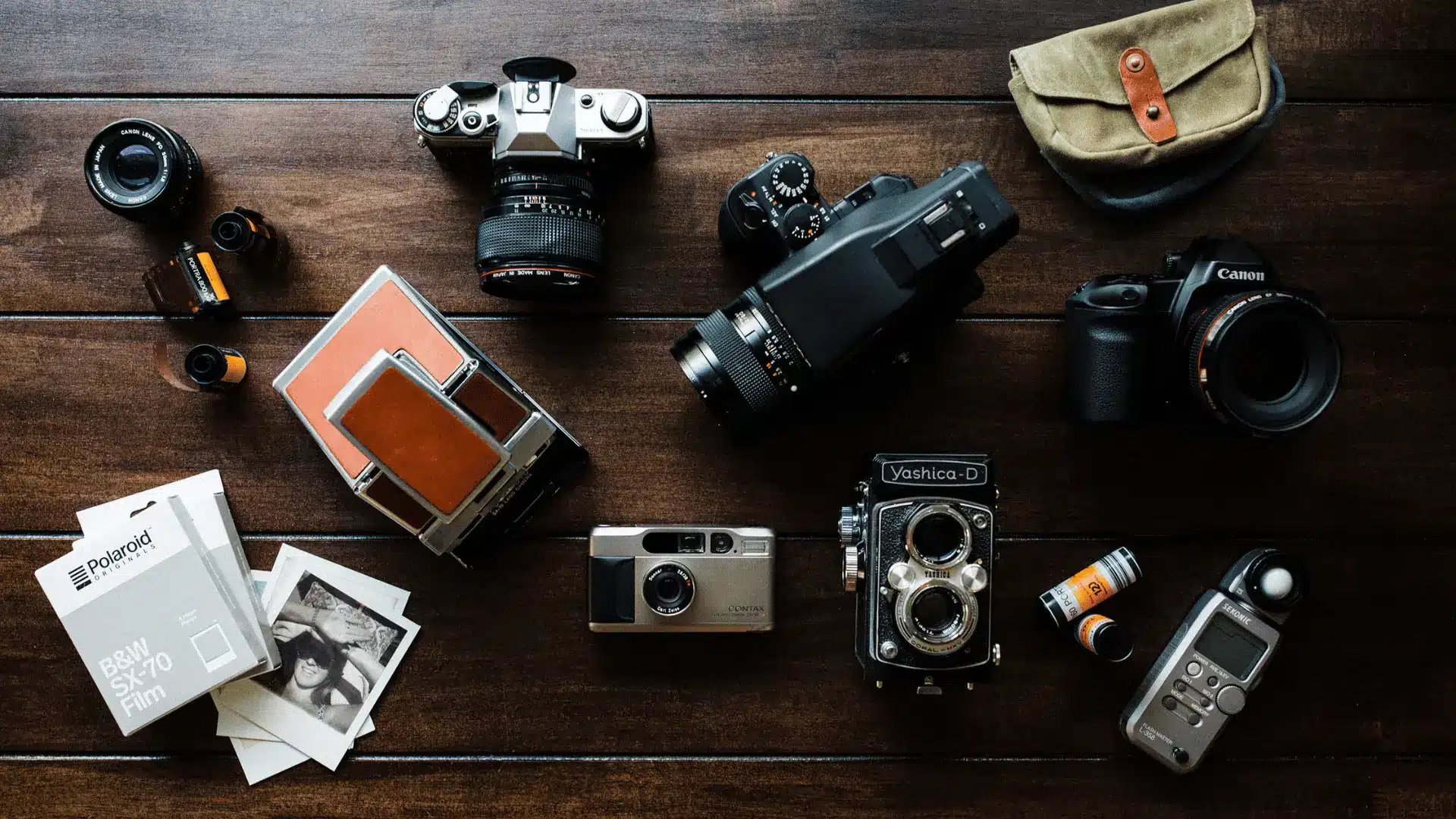



Choosing a film camera should feel exciting, not like sorting through decades of confusing models. If you are unsure which features matter, it is easy to overpay or buy a camera that needs costly repairs.
I compared the best film cameras for different budgets, formats, and shooting styles so you can make a confident choice.
You can see which models suit beginners, travel, street photography, professional work, and medium-format shooting.
I also explain camera types, buying checks, lens costs, repair access, and trusted places to shop. These practical details can help you find a dependable camera that fits your skills, budget, and preferred way of shooting.
What Makes a Film Camera Worth Buying?
A good film camera should work reliably and fit your preferred shooting style. Check the light seals, shutter speeds, battery compartment, exposure meter, and film advance before buying.
Format also matters. Half-frame cameras provide more shots per roll, 35mm models balance cost and image quality, while medium-format cameras produce larger negatives.
Consider how much control the camera offers, from fully manual settings to autofocus and automatic exposure. Lens prices and availability can make an affordable body costly over time.
Older models may also require specialist repairs, so confirm that technicians and replacement parts remain available.
Your full budget should include the camera, lens, batteries, film, processing, and scanning. A well-maintained mid-range model often offers better value than an untested premium camera.
Best 35mm SLR Film Cameras
35mm SLRs are where most people start and where most people find what they’re looking for. The category runs from bare-bones manual bodies to fully automated professional systems, all sharing one thing: you see exactly what the lens sees before you shoot.
The nine picks below span every budget and shooting style in the format.
1. Canon AE-1 Program
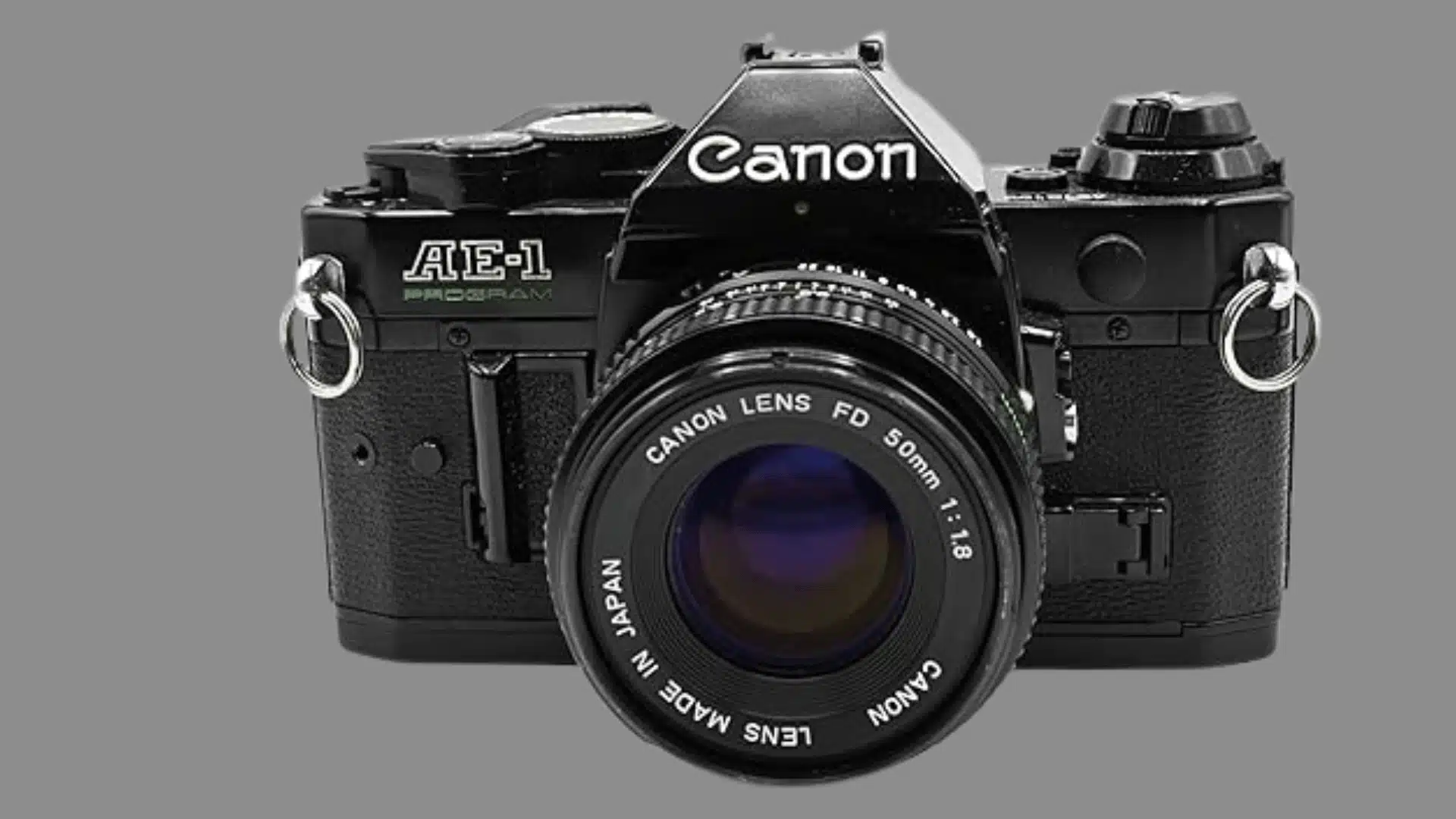
The Canon AE-1 Program makes exposure simple, handling the technical settings so you can focus on framing and timing instead.
- Program mode selects both shutter speed and aperture automatically
- Broad, affordable selection of Canon FD-mount lenses
- Common issues include shutter squeal and worn light seals on neglected units
Before buying, ask whether the body has been tested or serviced recently. A well-maintained example still ranks among the easiest, most affordable ways to start shooting 35mm film today.
2. Nikon FM2
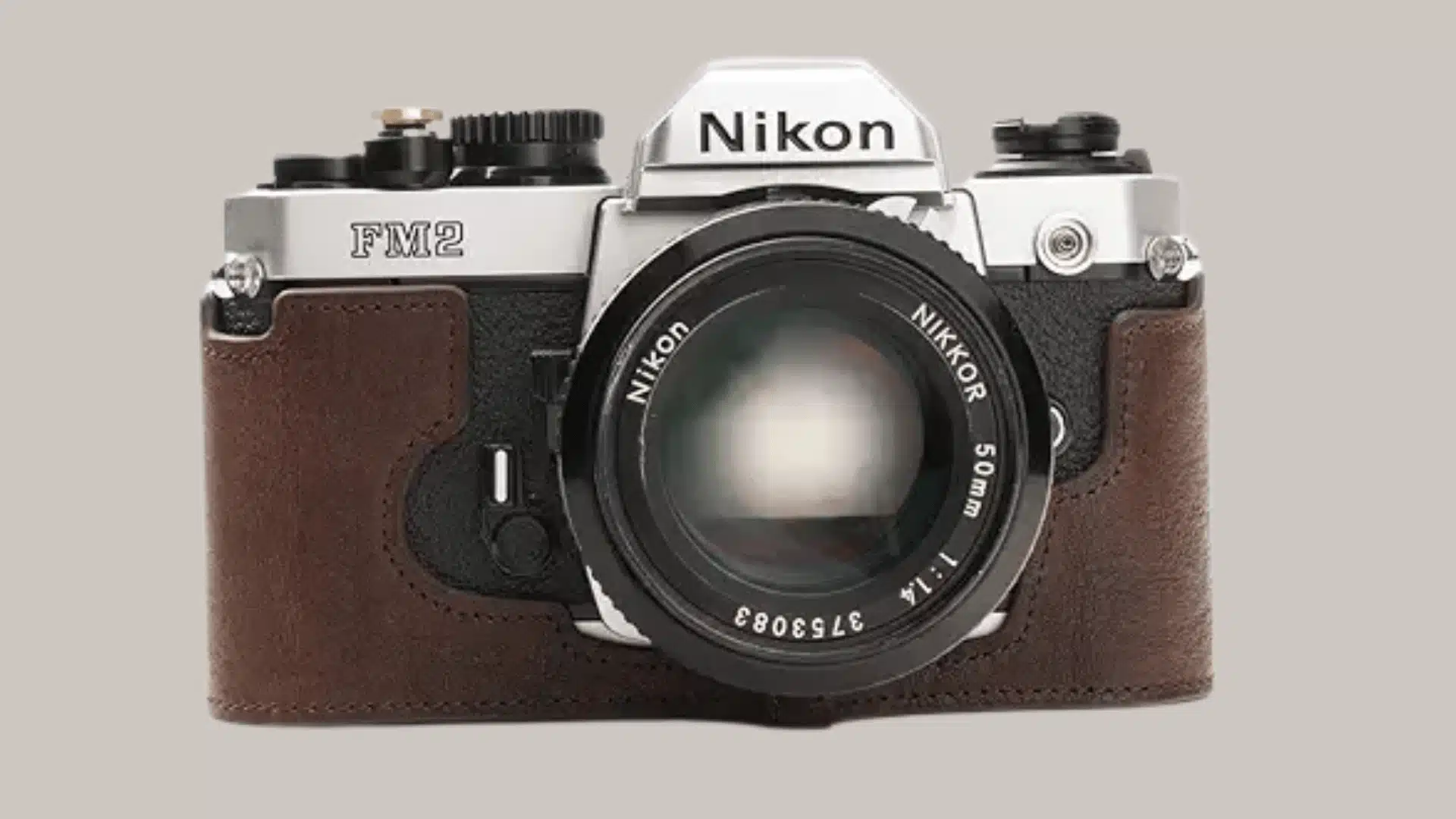
The Nikon FM2 can fire without batteries because its shutter runs on springs and gears rather than electronics.
- Fully mechanical shutter, dependable in cold weather or on long trips
- Batteries only power the built-in light meter, not the shutter itself
- Top shutter speed reaches 1/4000 second
- Compatible with Nikon’s large F-mount lens catalog
If reliability matters more to you than automation, the FM2 remains an excellent, nearly bulletproof choice for everyday shooting in almost any condition.
3. Pentax K1000
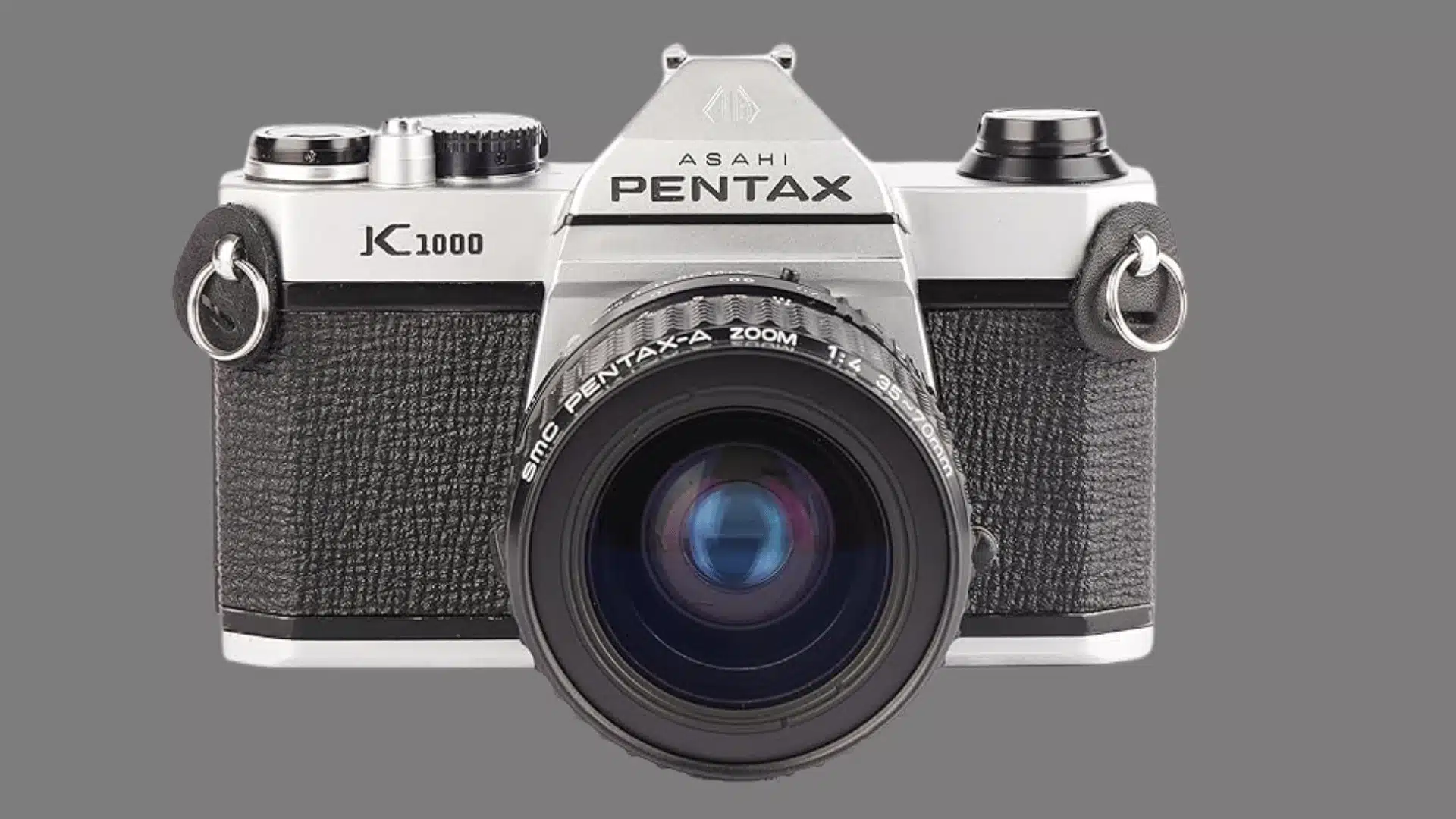
The Pentax K1000 keeps photography simple, giving you full manual control paired with a straightforward center-the-needle meter.
- No automatic exposure modes, so you set aperture and shutter speed yourself
- Simple match-needle metering shows when exposure is balanced
- Widely used to teach photography students for decades
That hands-on process teaches exposure fundamentals quickly. If you want to understand how film actually works instead of relying on automation, this is the camera to start with.
4. Canon EOS Elan 7
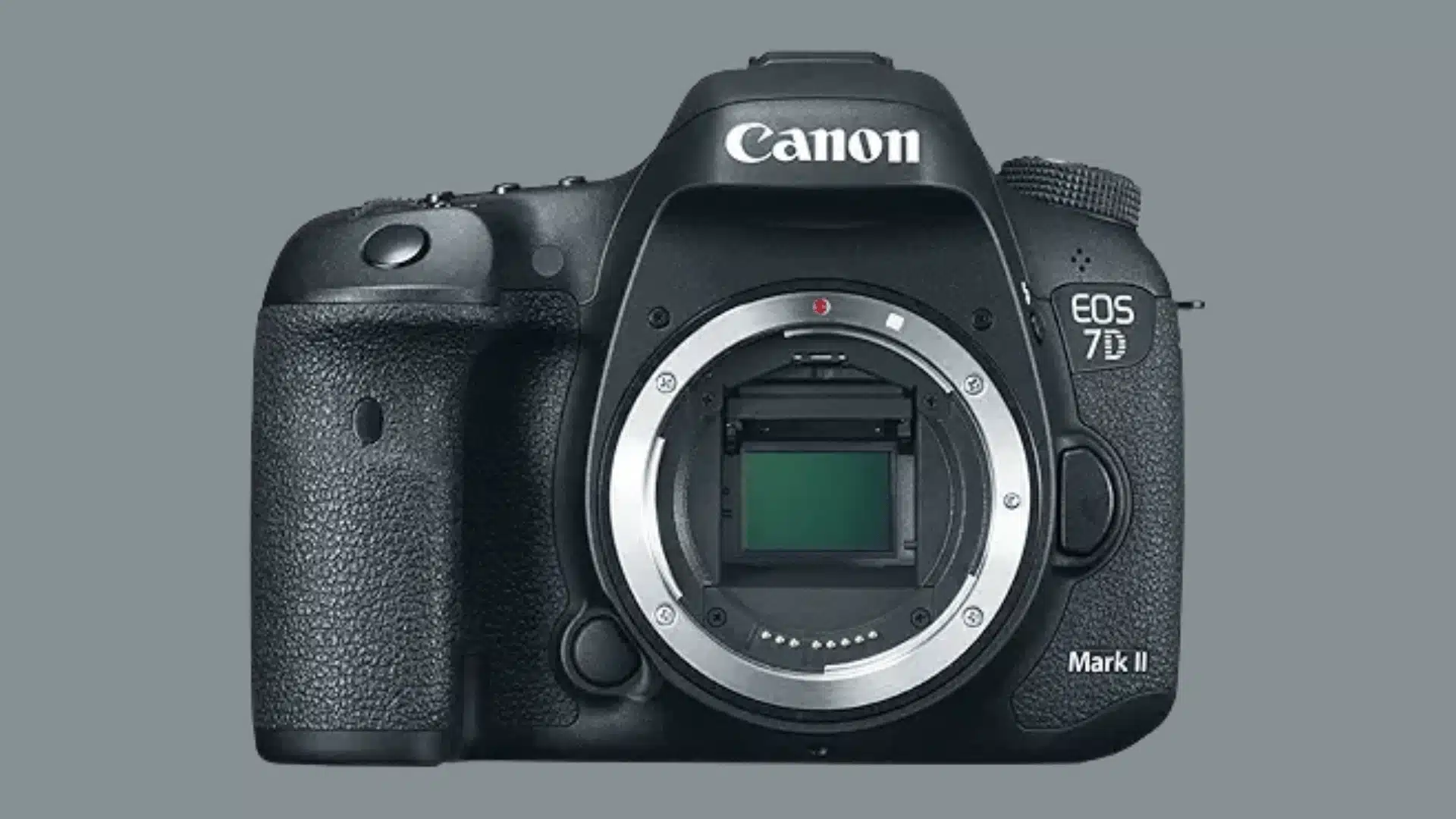
The Canon EOS Elan 7 works with modern Canon EF lenses, including autofocus glass still used on several current digital cameras.
- Compatible with autofocus EF lenses shared across Canon’s digital lineup
- Lets existing Canon shooters move between film and digital without new glass
- Clean bodies often sell for around $200
That makes it especially useful if you already own Canon lenses. You get capable autofocus, familiar controls, and an affordable, low-friction entry into shooting 35mm film.
5. Nikon FE2 / FE
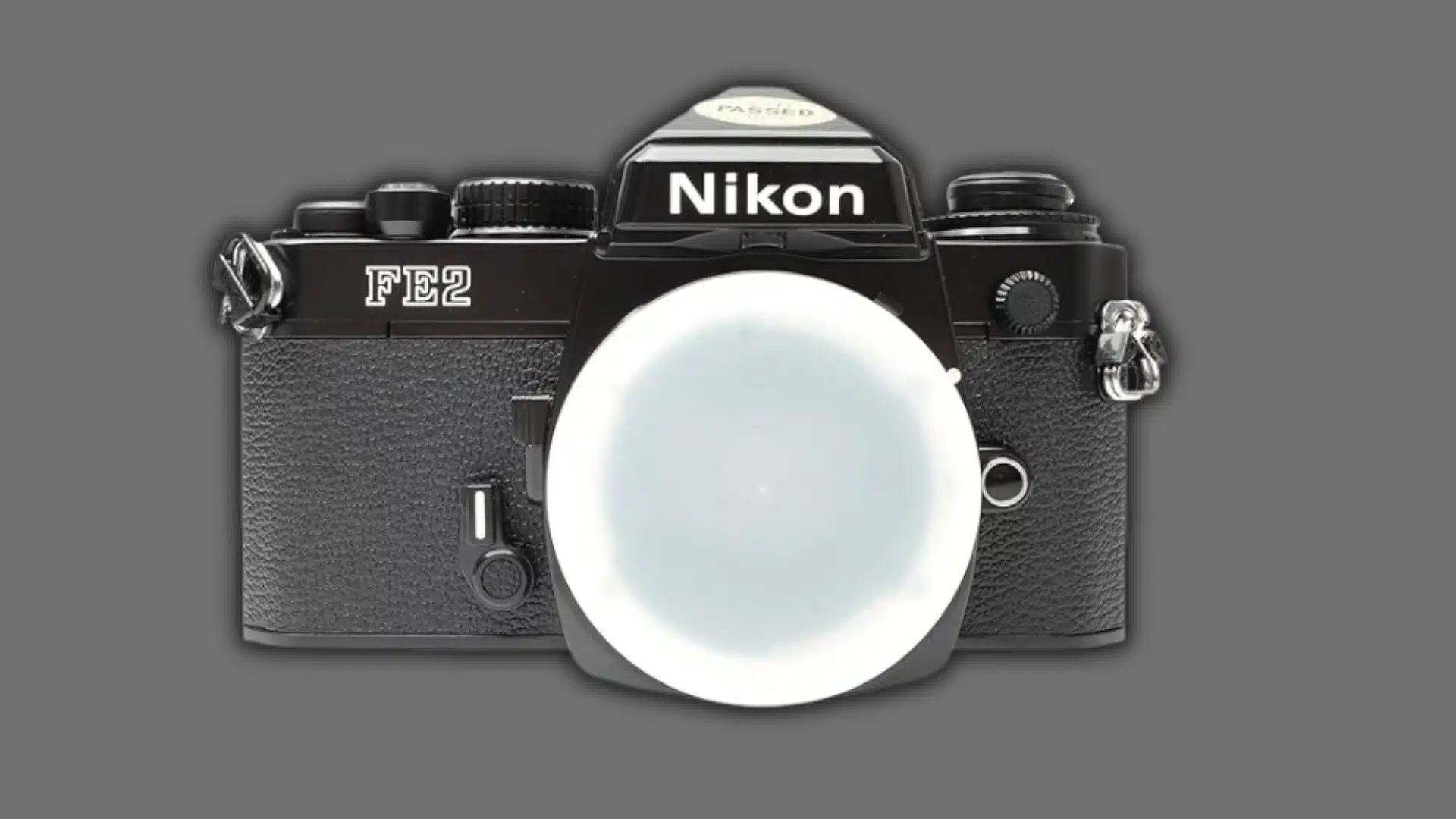
The Nikon FE and FE2 offer more exposure assistance than the FM2 while keeping controls clear and easy to follow.
- Aperture-priority mode: you set the aperture, the camera picks shutter speed
- Full manual override available whenever you need it
- Uses Nikon’s F-mount lens system
Both cameras make practical additions to an existing Nikon kit. They suit photographers who want some automated help without giving up hands-on creative control entirely.
6. Nikon F3
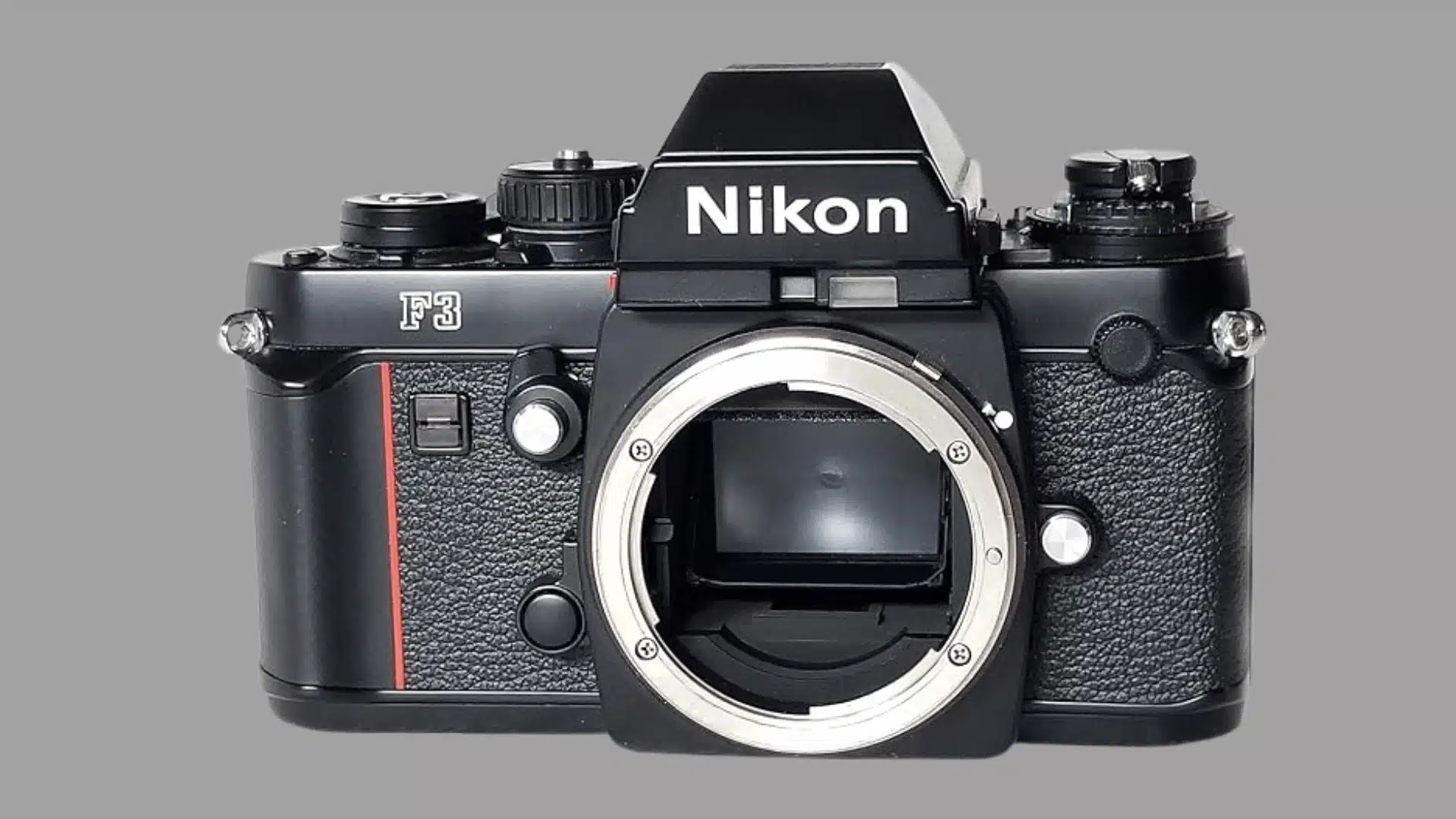
The Nikon F3 served as Nikon’s professional flagship for more than fifteen years, and its build quality still impresses in regular use.
- Titanium shutter blades built for heavy professional use
- Interchangeable viewfinders adapt the body to different assignments
- Not the simplest option for a first-time film shooter
It rewards photographers who already know their workflow. Buy the F3 when you want a rugged, adaptable body built to handle serious, demanding shooting conditions.
7. Olympus OM-1
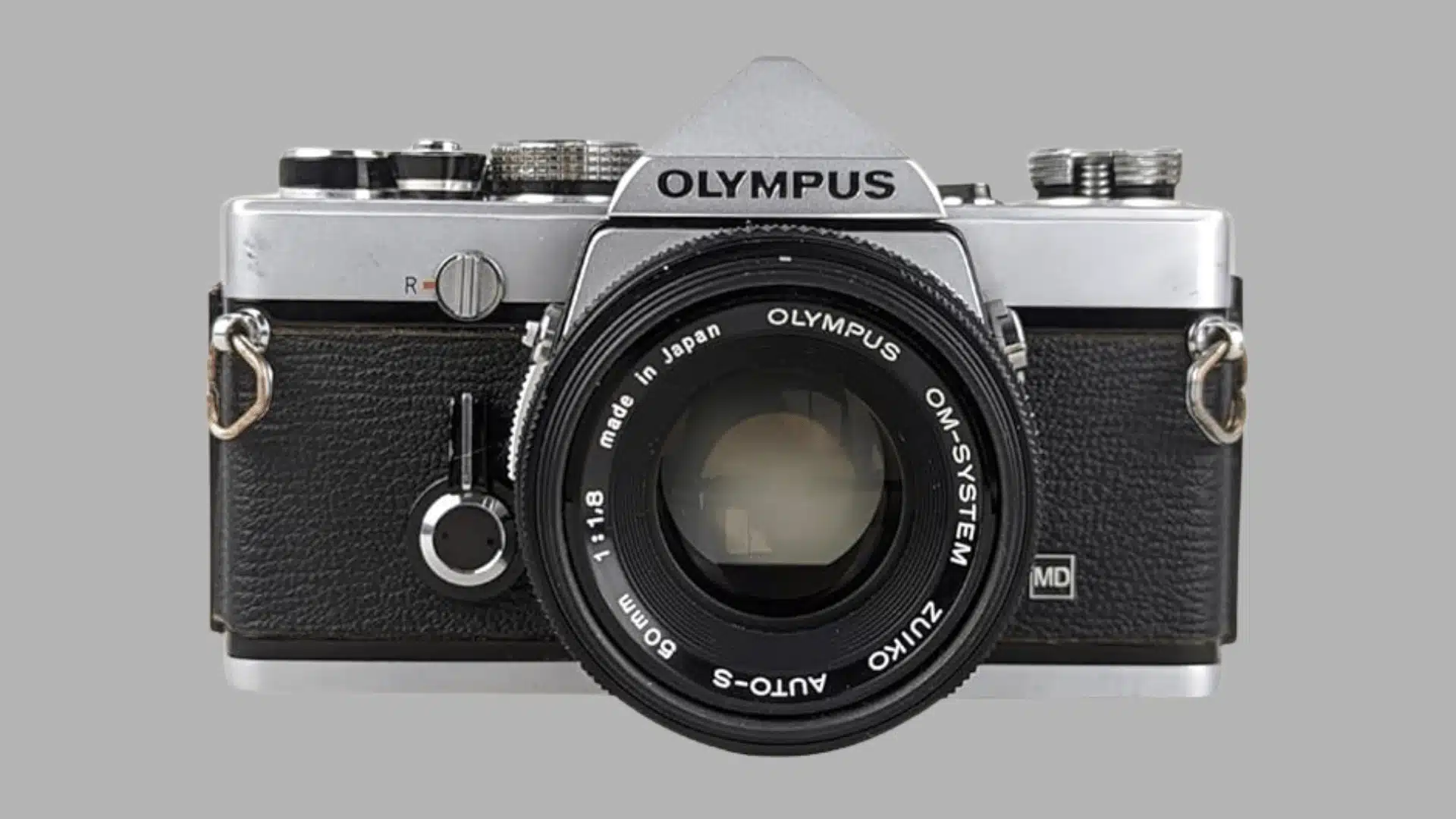
The Olympus OM-1 feels noticeably smaller and lighter than most SLRs from its era, making it easy to carry all day.
- Fully mechanical shutter fires without batteries
- Batteries are needed only for the built-in light meter
- Compact, sharp, reasonably priced Olympus OM lenses
Choose the OM-1 when dependable, no-fuss operation matters more than automation. It’s a lightweight option for photographers who don’t want to carry a bulky camera body.
8. Minolta SRT-102
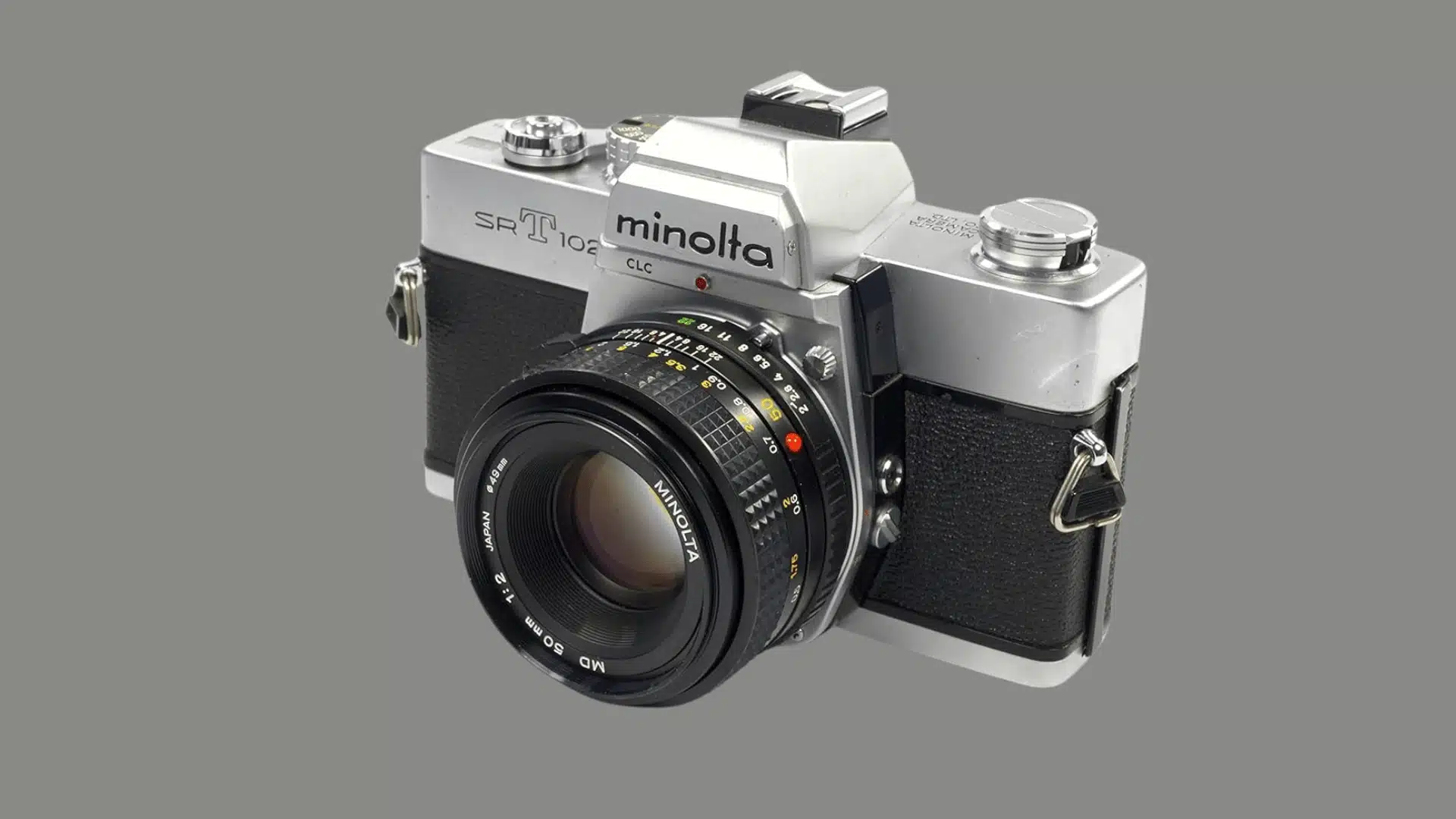
The Minolta SRT-102 often costs less than comparable Nikon or Canon bodies, mainly because it lacks the same collector demand.
- Fully mechanical operation with a clear match-needle meter
- Access to excellent Rokkor lenses that outperform their used prices
- Lower cost than similarly capable Nikon or Canon bodies
For a dependable manual SLR without paying extra for a bigger name, check the SRT-102 before settling on a more famous, pricier alternative.
9. Pentax Spotmatic
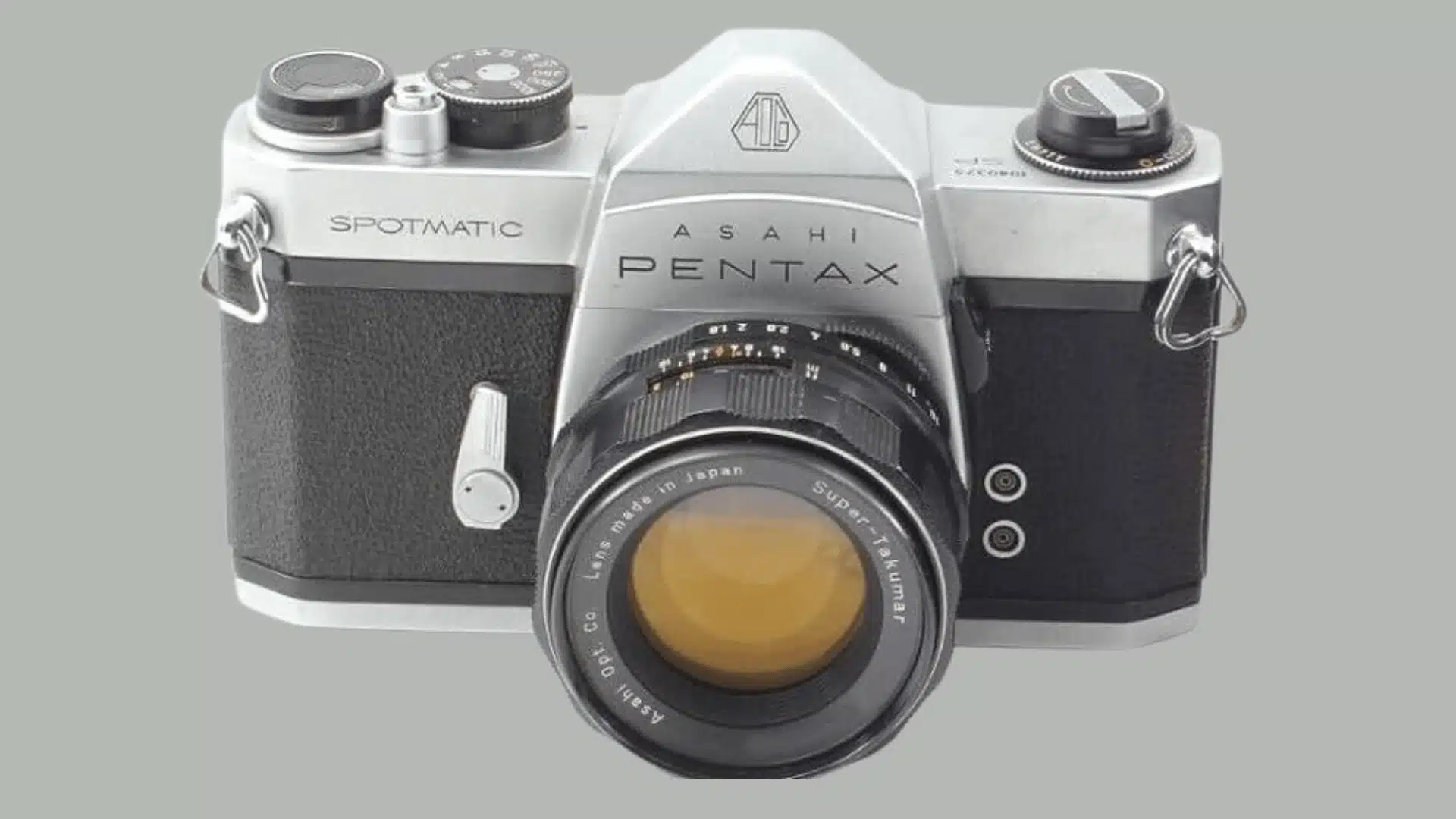
The Pentax Spotmatic uses the M42 screw mount, opening the door to a huge range of affordable lenses from multiple manufacturers.
- M42 mount supports lenses from many different brands
- Uses stop-down metering, which darkens the viewfinder while metering
- Takes some practice to use metering comfortably
That process takes getting used to, but the wide lens selection makes it worthwhile. It’s a strong pick for budget-minded photographers focused on manual shooting.
Best Point-and-Shoot Film Cameras
Point-and-shoots handle exposure, focus, and film advance without you touching a setting. That makes them the lowest-friction way into film photography, but the category runs from sub-$50 half-frame bodies to four-figure compacts with professional-grade optics.
The six picks below cover the full range honestly.
10. Olympus Stylus Epic
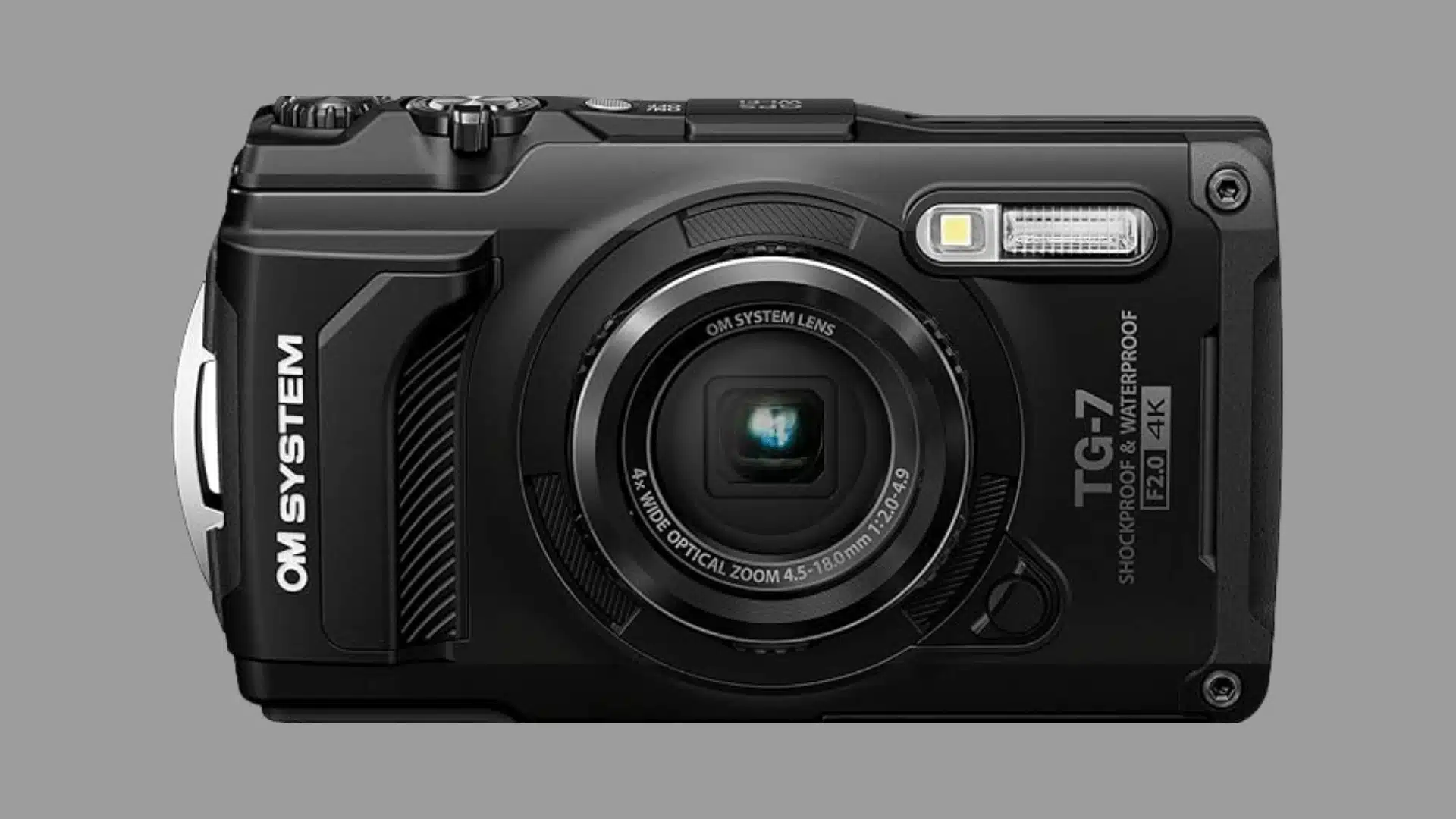
The Olympus Stylus Epic is small enough for a jacket pocket and splash-resistant enough for casual travel and street photography.
- Fixed 35mm f/2.8 lens delivers surprisingly sharp, clean results
- Splash-resistant, pocketable body suited to everyday carry
- Prices have risen as clean examples grow more popular
Its compact lens outperforms what you’d expect from such a small point-and-shoot. Check current listings, but consider it when portability matters more than manual control.
11. Contax T2
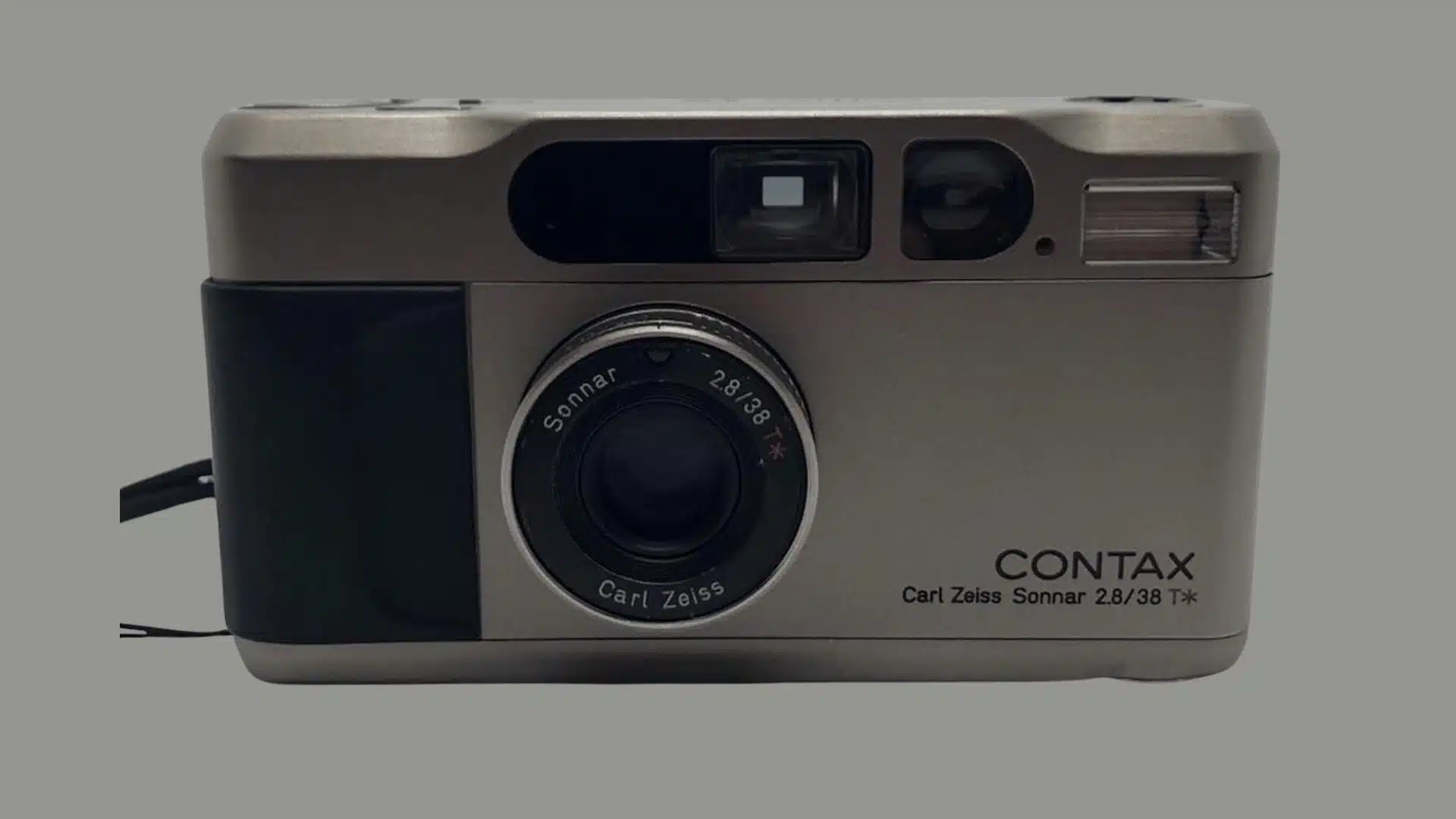
The Contax T2 pairs a dedicated Zeiss Sonnar 38mm f/2.8 lens with a premium compact body built for high-quality everyday shooting.
- Zeiss Sonnar lens produces crisp detail and a distinctive rendering
- Premium, compact, luxury-grade build quality
- Clean examples now sell well above $1,000
That price won’t suit everyone shopping on a budget. Consider the T2 when you value its optical character, compact size, and luxury build in equal measure.
12. Kodak Ektar H35N
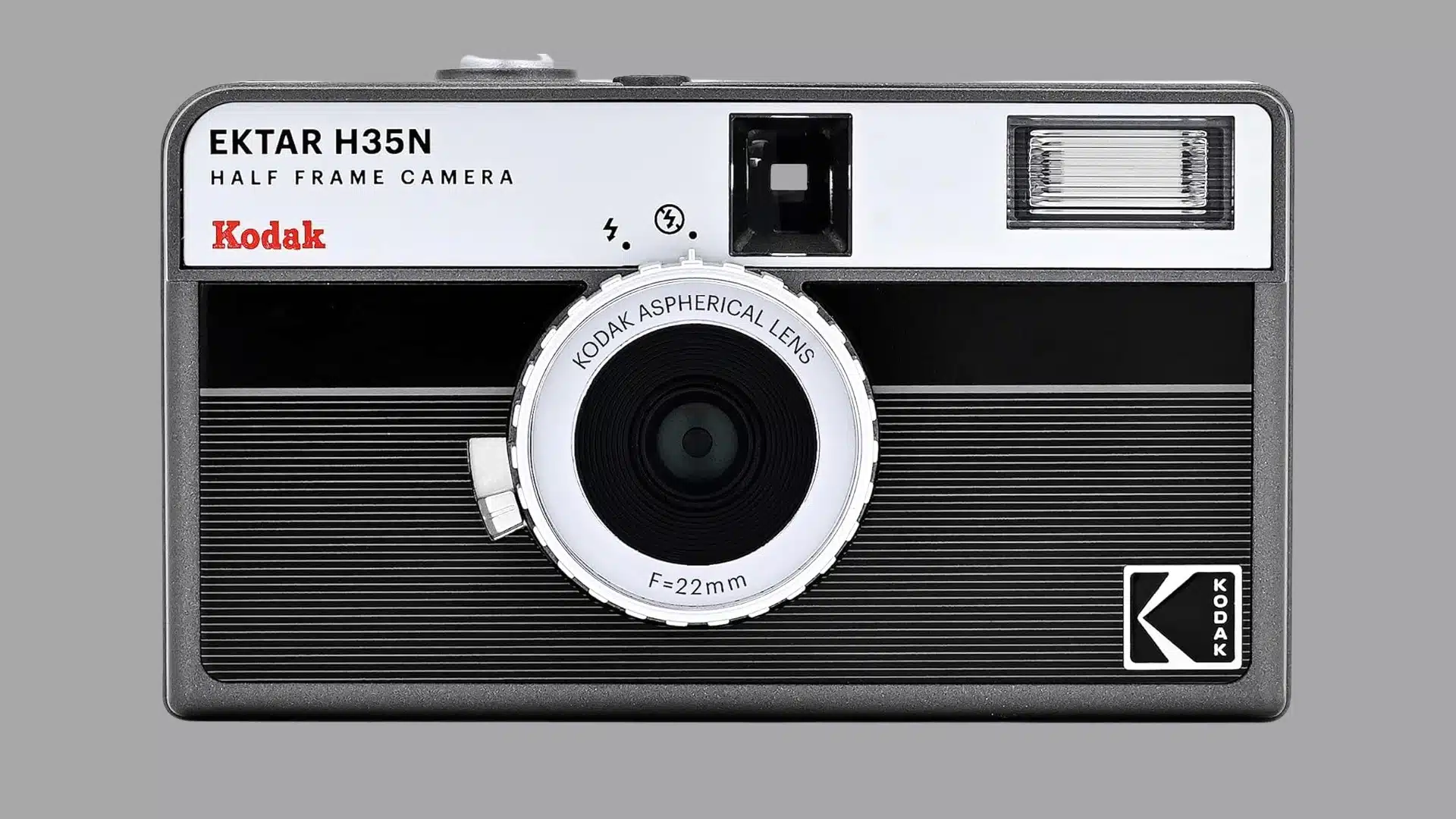
The Kodak Ektar H35N is a half-frame camera, so each standard 35mm exposure holds two pictures instead of one full frame.
- A 36-exposure roll can produce about 72 images
- Lowers the cost of experimenting while learning film photography
- Smaller negatives show more visible grain when enlarged
The tradeoff shows up mainly in larger prints. It still works well for digital sharing, contact sheets, and smaller prints where fine grain matters less.
13. Olympus Pen EE-3
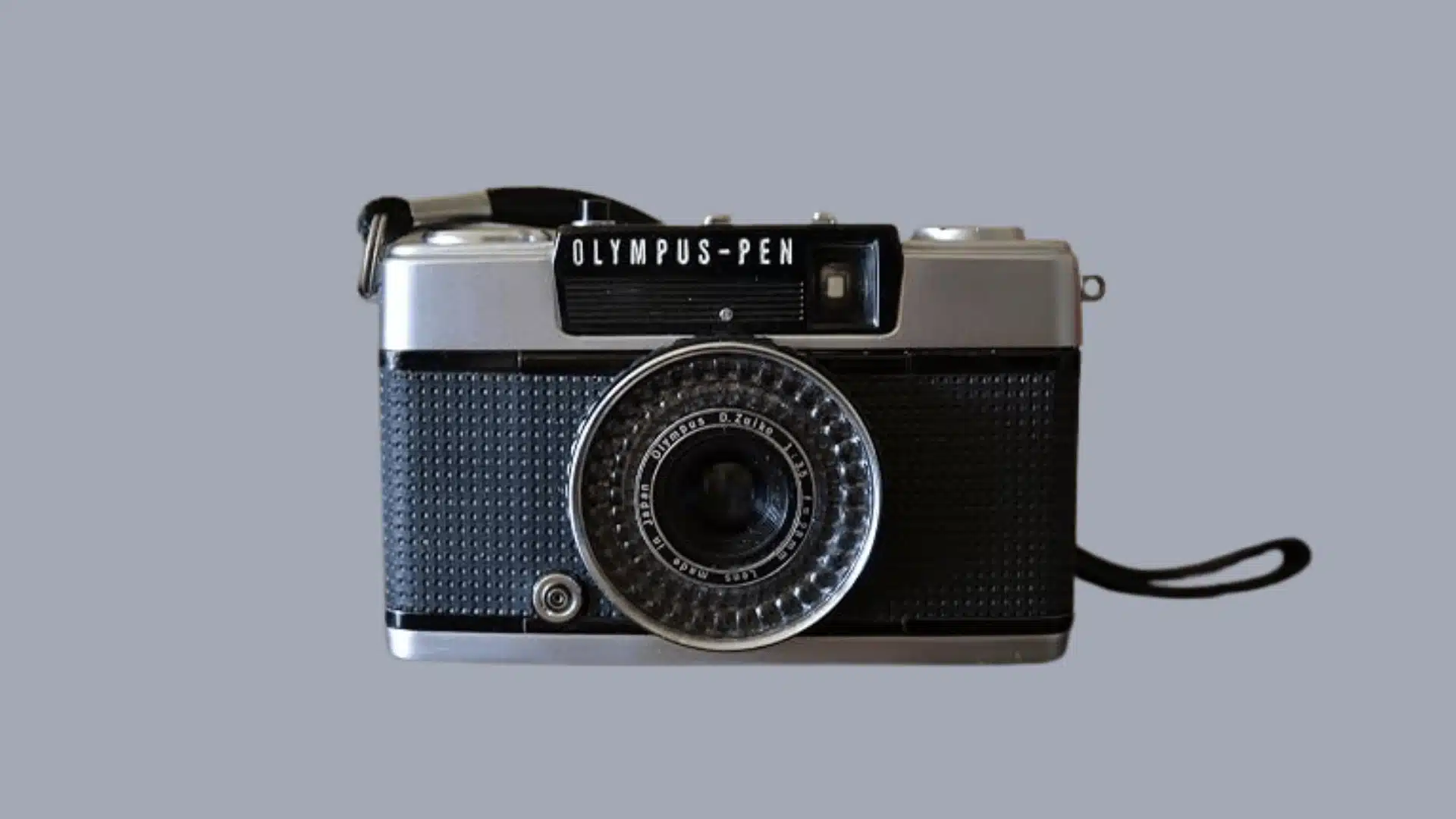
The Olympus Pen EE-3 uses a selenium light cell, so it needs no batteries for metering or automatic exposure.
- Selenium cell powers metering without any batteries
- Half-frame format roughly doubles the shots per roll
- Compact size makes it easy to carry everywhere
The automatic system works best outdoors or in bright conditions. Indoors, its limited low-light ability can make exposure noticeably less consistent and reliable.
14. Fujifilm Natura S
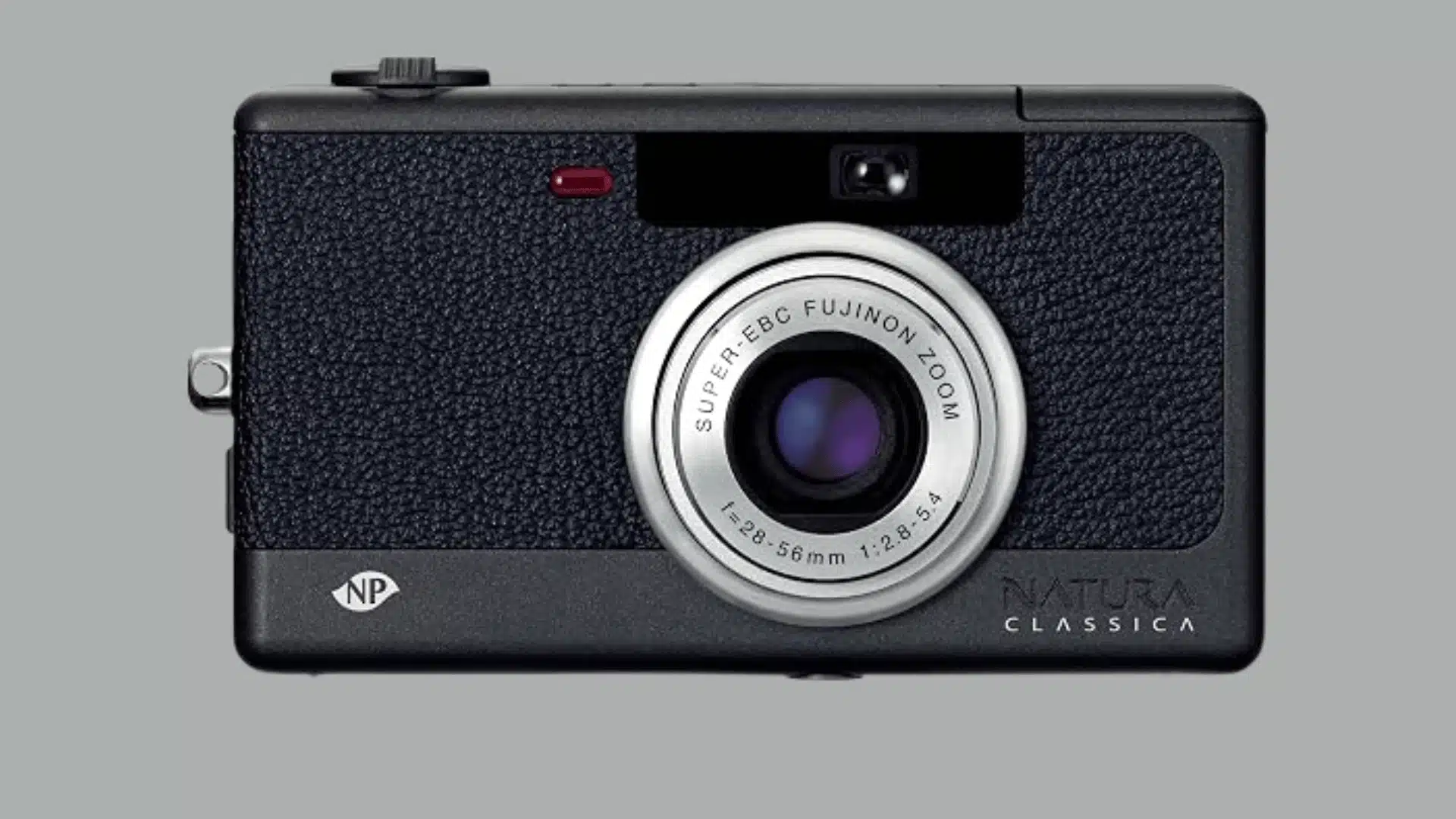
The Fujifilm Natura S was built for available-light photography, using a fast 24mm f/1.9 lens that performs well in dim settings.
- Fast 24mm f/1.9 lens suited to low-light shooting
- Wide view works well for travel, interiors, and night streets
- Mainly sold in Japan, so clean units are hard to find
That scarcity also pushes prices upward outside Japan. For compact, low-light shooting without flash, this camera still remains genuinely special and hard to replace.
15. Holga 135BC
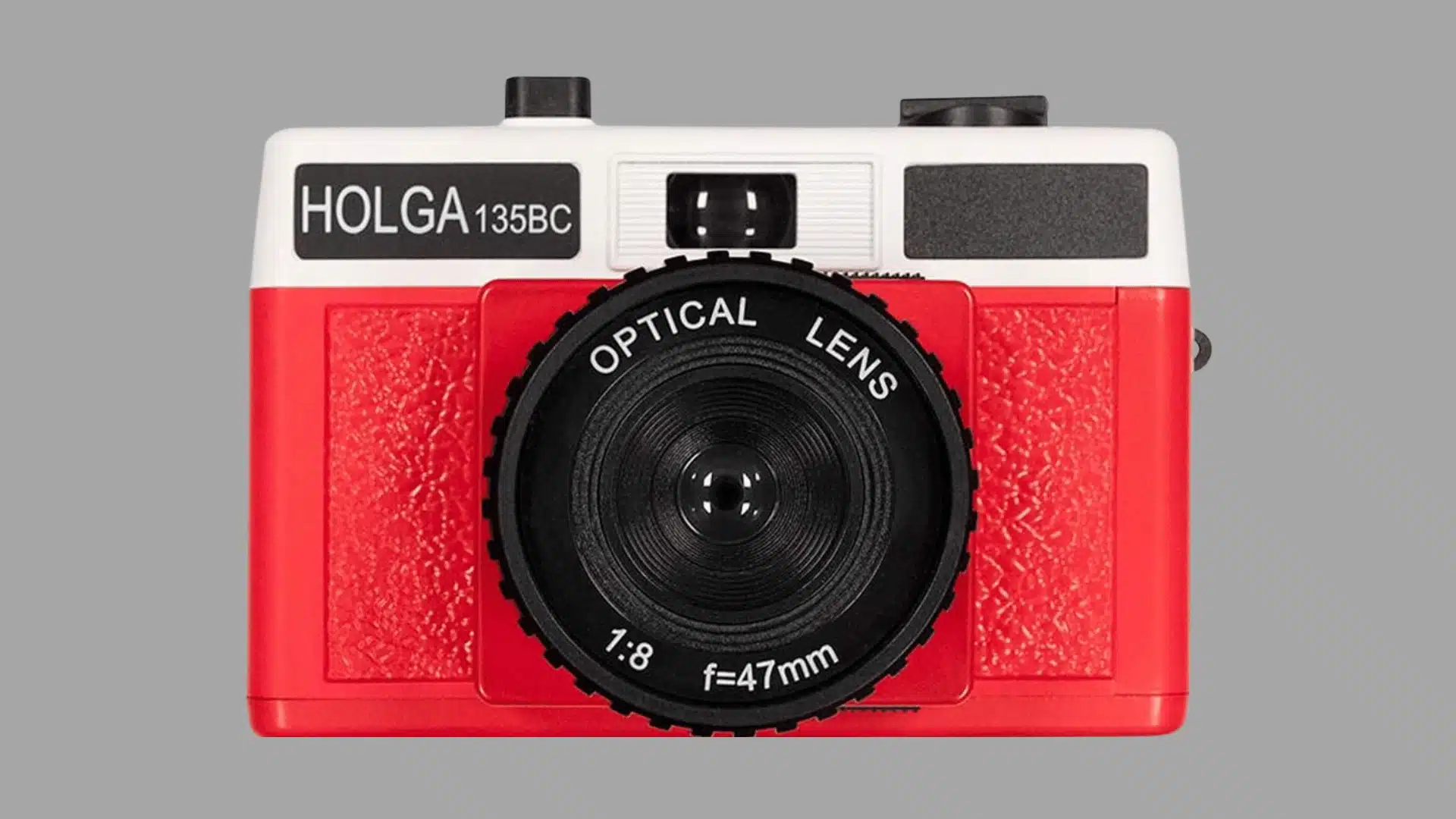
The Holga 135BC uses a plastic body and plastic lens, creating soft corners, heavy vignetting, and occasional light leaks in photos.
- Plastic lens produces soft edges and heavy vignetting
- Occasional light leaks add unpredictable variation to each roll
- Inexpensive and simple to operate
Those flaws are part of its charm, encouraging playful shooting over precision. Try it when you want unpredictable, characterful results without worrying about technical perfection.
Best Rangefinder Film Cameras
Rangefinders are built differently from SLRs: no mirror, no through-the-lens viewing, no reflex mechanism. That makes them physically slimmer and mechanically quieter, which matters more in some situations than any spec on a data sheet.
These two picks reflect the honest range of what rangefinder shooting actually is.
16. Leica M6
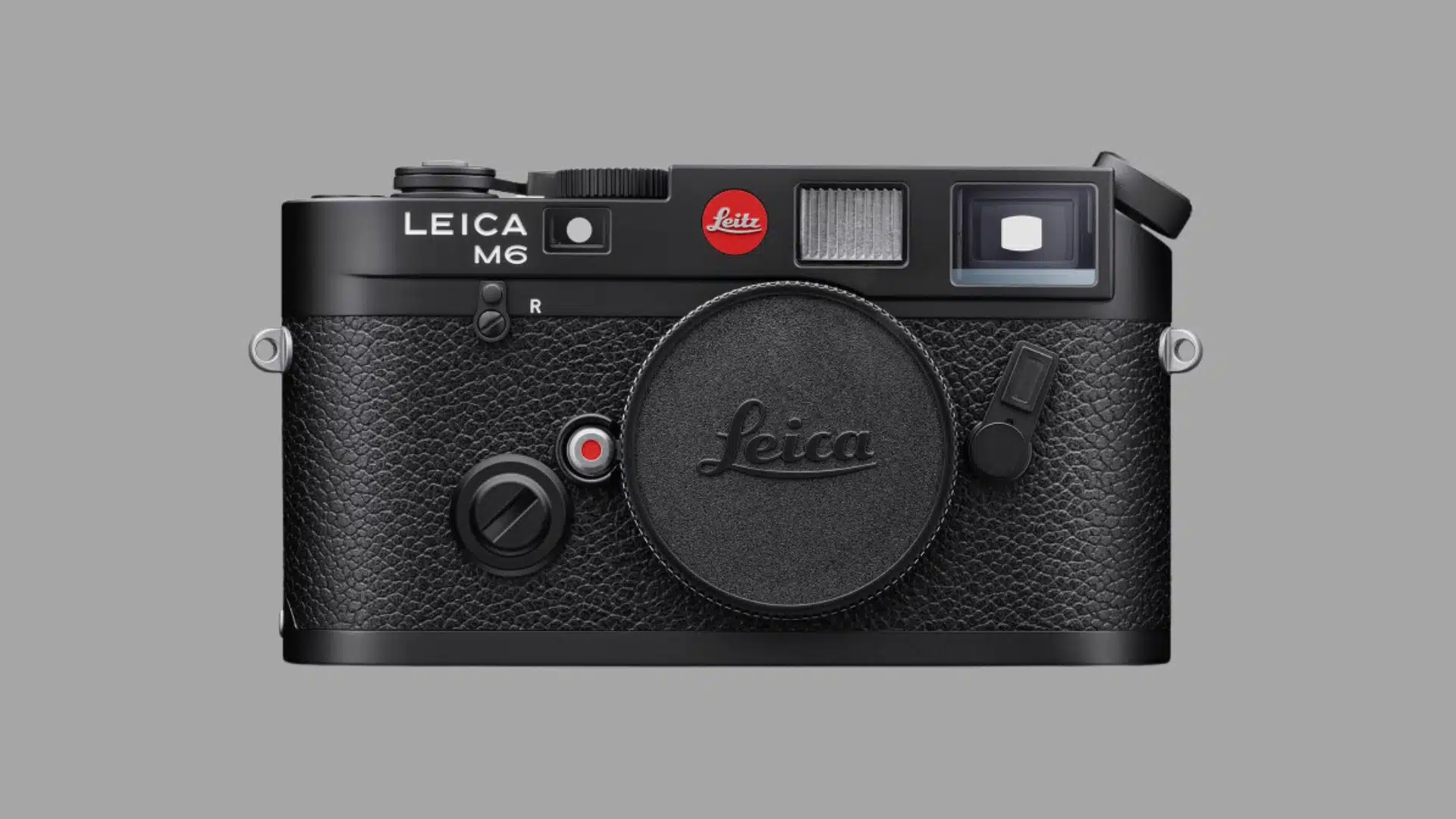
The Leica M6 is a fully mechanical rangefinder with a bright viewfinder and framelines that extend slightly beyond the final image.
- Framelines show beyond the captured frame, revealing action before it enters
- Fully mechanical build with no reliance on electronics
- Clean examples typically cost well above $2,000
That wider view helps you watch people or movement before pressing the shutter. It suits committed rangefinder users better than beginners just testing the format.
17. Canonet QL17 GIII
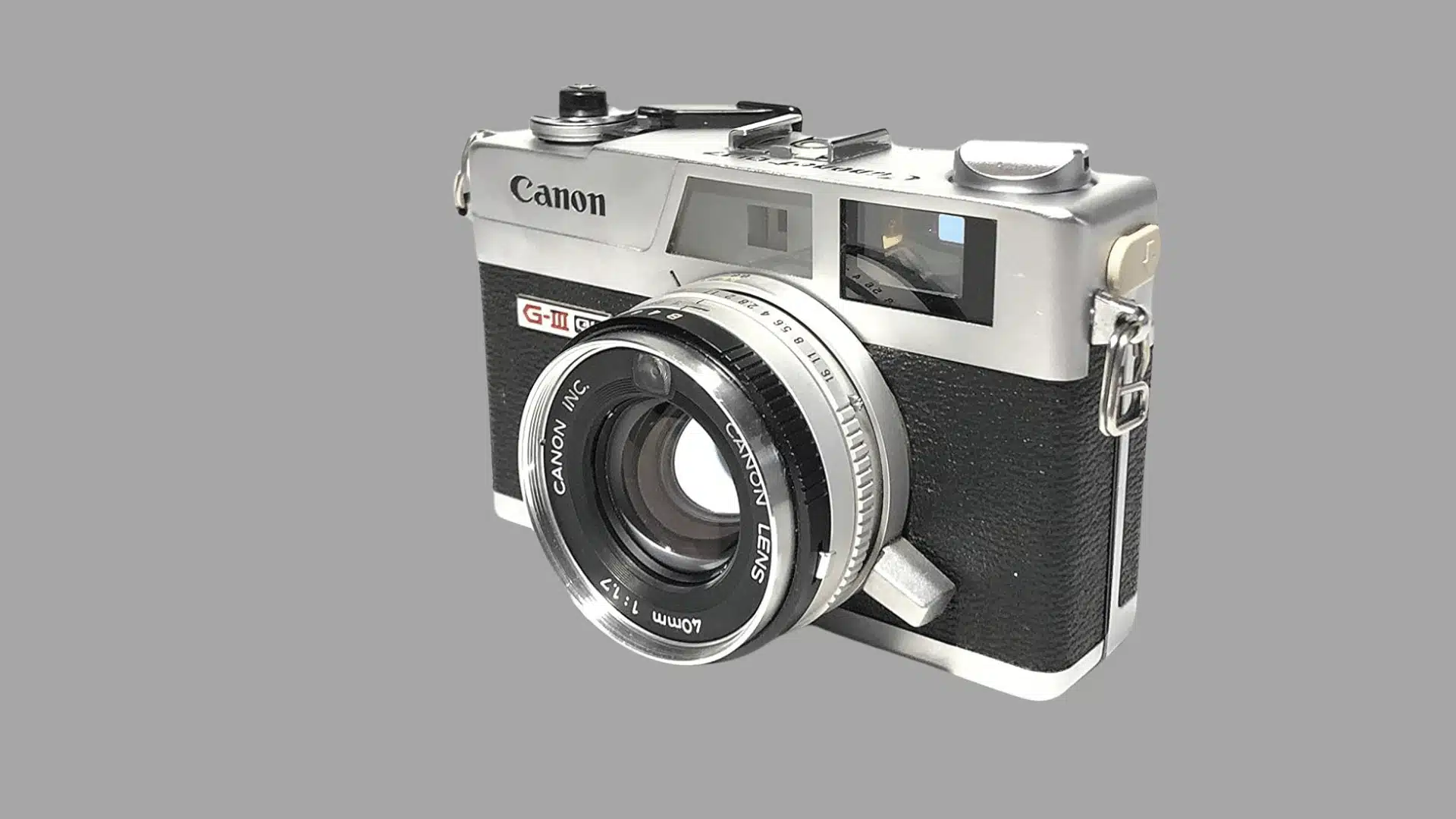
The Canonet QL17 GIII offers a genuine rangefinder experience without the price of a Leica or a full lens collection.
- Fixed 40mm f/1.7 lens is sharp and bright in most light
- Aperture-priority exposure helps you work quickly as light changes
- No interchangeable lenses, keeping the system simple
You can’t swap lenses, but that simplicity can actually help beginners. It’s a sensible way to decide whether rangefinder shooting genuinely suits your style.
Best Medium Format Film Cameras
Medium format produces a physically larger negative than 35mm. That difference shows up in large prints and high-resolution scans, finer grain, greater detail, and more room to work with in post. At smaller output sizes, it’s largely invisible.
These three picks cover the realistic range of who medium format actually serves.
18. Mamiya 645 Pro
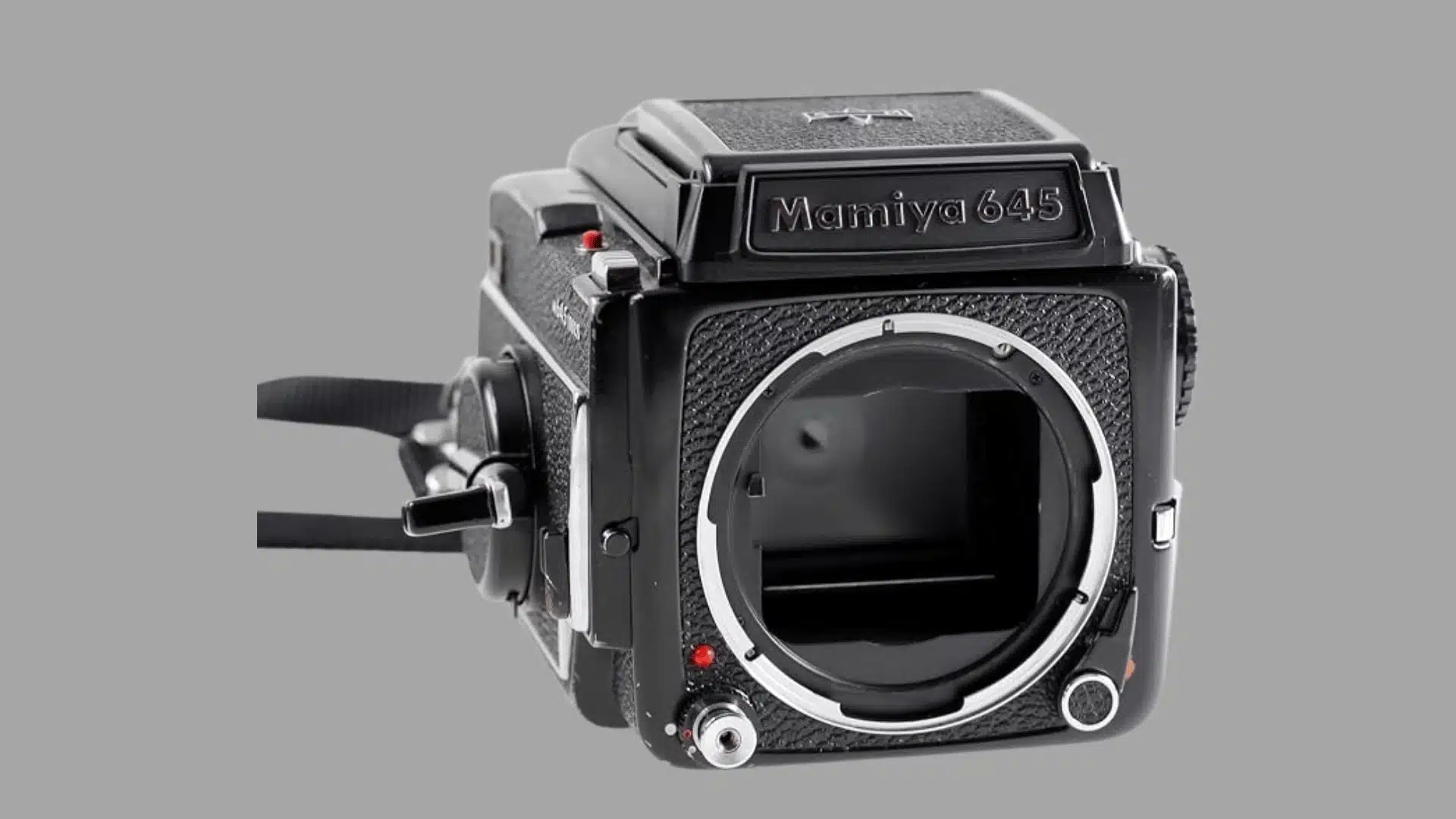
The Mamiya 645 Pro uses a 6×4.5cm negative, giving medium-format detail while producing more shots per roll than larger formats.
- Around 15 or 16 frames per 120 roll
- Interchangeable backs let you switch film mid-roll
- Used prices vary with condition and included accessories
That balance of image quality and film economy makes it a forgiving entry point. It suits photographers moving up from 35mm without a steep cost jump.
19. Hasselblad 500C/M
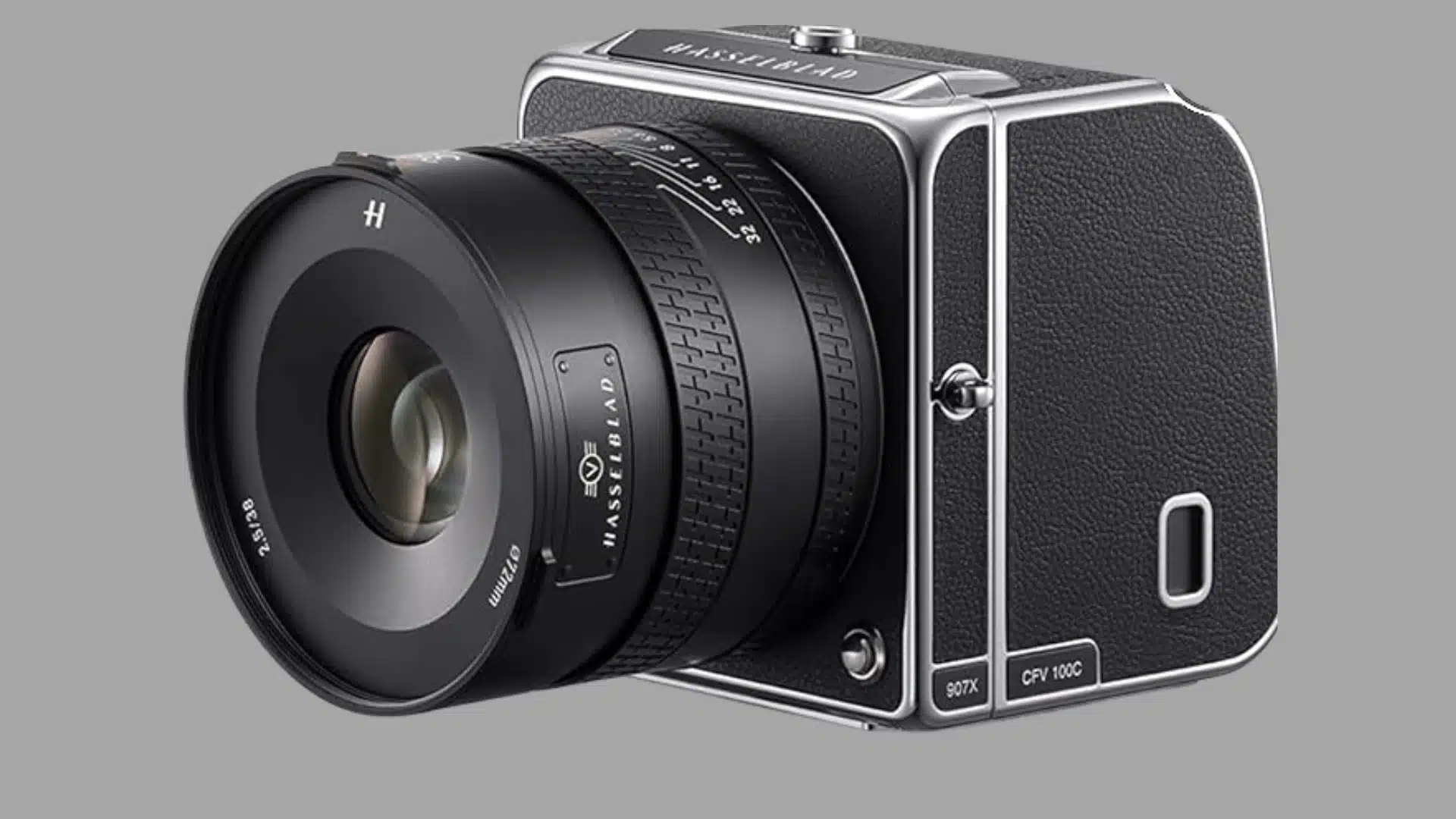
The Hasselblad 500C/M is a fully mechanical medium-format system with interchangeable lenses, film backs, and viewfinders for different shooting needs.
- Modular design lets individual parts be serviced instead of replaced
- Heavy build encourages slower, more deliberate composition
- Best suited to tripod-based work rather than handheld shooting
It performs best for portraits, landscapes, and studio sessions where you can set up carefully. It’s less practical for quick, spontaneous handheld photography.
How to Choose Your First Film Camera
Your first film camera should match your budget, preferred level of control, and access to affordable lenses, film processing, and dependable repair services.
- Set Your Budget: Include the camera body, lens, batteries, film, processing, scanning, and possible repairs in your expected total cost.
- Choose Your Controls: Pick manual settings for hands-on learning or automatic exposure and autofocus for a simpler shooting experience.
- Select a Format: Choose half-frame for more exposures, 35mm for general use, or medium format for larger negatives and finer detail.
- Check Lens Costs: Review the price, condition, and availability of compatible lenses before committing to a particular camera system.
- Consider Battery Use: Mechanical cameras often work without batteries, while electronic models may stop functioning if their components fail.
- Review Repair Options: Choose a model that experienced technicians can service and that still has replacement parts available.
Comparing these factors before buying can help you avoid unexpected expenses and find a camera that remains practical as your photography skills develop.
Where to Buy a Film Camera
A film camera can be purchased from specialist used-camera dealers, local camera stores, online marketplaces, photography forums, community groups, estate sales, and thrift stores.
Dealers and camera shops often charge more, but they may test equipment, describe faults, and include a short warranty. Online marketplaces offer wider choices, but buyers should study seller feedback, photos, and condition ratings carefully.
Forums can provide fairly priced equipment from experienced photographers, though buyer protection varies. Estate sales and thrift stores may have low-cost finds, but cameras are often untested.
Always check the return policy, service records, shutter operation, light seals, meter accuracy, lens condition, and battery compartment. Clear listings and documented maintenance reduce the risk of paying for a camera that needs immediate repairs.
Conclusion
The right film camera is not always the most famous or expensive model. It is the one that matches your budget, preferred controls, film format, and shooting habits.
I recommend comparing camera condition, lens costs, battery needs, repair access, and seller protection before paying.
A beginner may prefer the simple Canon AE-1 Program, while an experienced photographer may value the Nikon F6, Leica M6, or Hasselblad 500 Series.
The best film cameras offer reliable operation, practical features, and room to develop your skills. I hope these comparisons make your choice easier and help you avoid a costly mistake.
Share your favorite model below, or read more related camera reviews before making your final decision.
Frequently Asked Questions
What Is the Best Film Camera for Beginners?
The Canon AE-1 Program is the most consistent beginner recommendation. Program mode handles exposure automatically, the FD lens catalog is affordable, and good examples are still findable used. Buy a serviced one. Shutter squeal and failed light seals are common on unserviced bodies and will affect your results from the first roll.
Are Film Cameras Worth Buying in 2026?
Yes, if You Know What You’re Buying Into. Film Has Real Costs: The Stock, the Processing, and The Scanning or Printing. Those Costs Add Up Quickly. If You’re Drawn to The Process and The Results, It’s Worth It. If you’re chasing a Look You’ve seen online, a Film Simulation on A Digital Camera Gets You Closer for less.
Where Is the Best Place to Buy Used Film Cameras?
Keh Camera Is the Most Reliable Source for Graded, Tested Bodies with A Return Policy. eBay Has the Widest Selection but Requires More Scrutiny. Read Descriptions Carefully and Check Seller Feedback. Local Markets and Charity Shops Still Turn up Working Cameras at Low Prices, but the condition is unpredictable. For a First Purchase, Keh Is the Lower-Risk Option.
Do Film Cameras Work with Modern Lenses?
Some do. The Canon EOS Elan 7 accepts any Canon EF lens made today. Nikon F-mount bodies like the FM2 and FE2 accept a wide range of Nikon glass across decades of production. Most other film camera systems use mounts that have been discontinued, so modern lens options are limited or require adaptation. Check mount compatibility before assuming your existing glass will cross over.