






Once I lost power during a storm and just sat there in the dark, phone dying, fridge slowly warming up. It’s a helpless feeling, and honestly, most people don’t think about backup power until it’s already too late.
Generators work, sure, but they’re loud, messy, and need fuel nobody wants to deal with at 2 a.m. That’s where things have quietly changed.
Newer battery options now offer a quieter, simpler fix for outages, camping trips, and everyday emergencies.
So which ones actually hold up when it matters? Let’s look at the best portable power stations worth considering
What is a Portable Power Station?
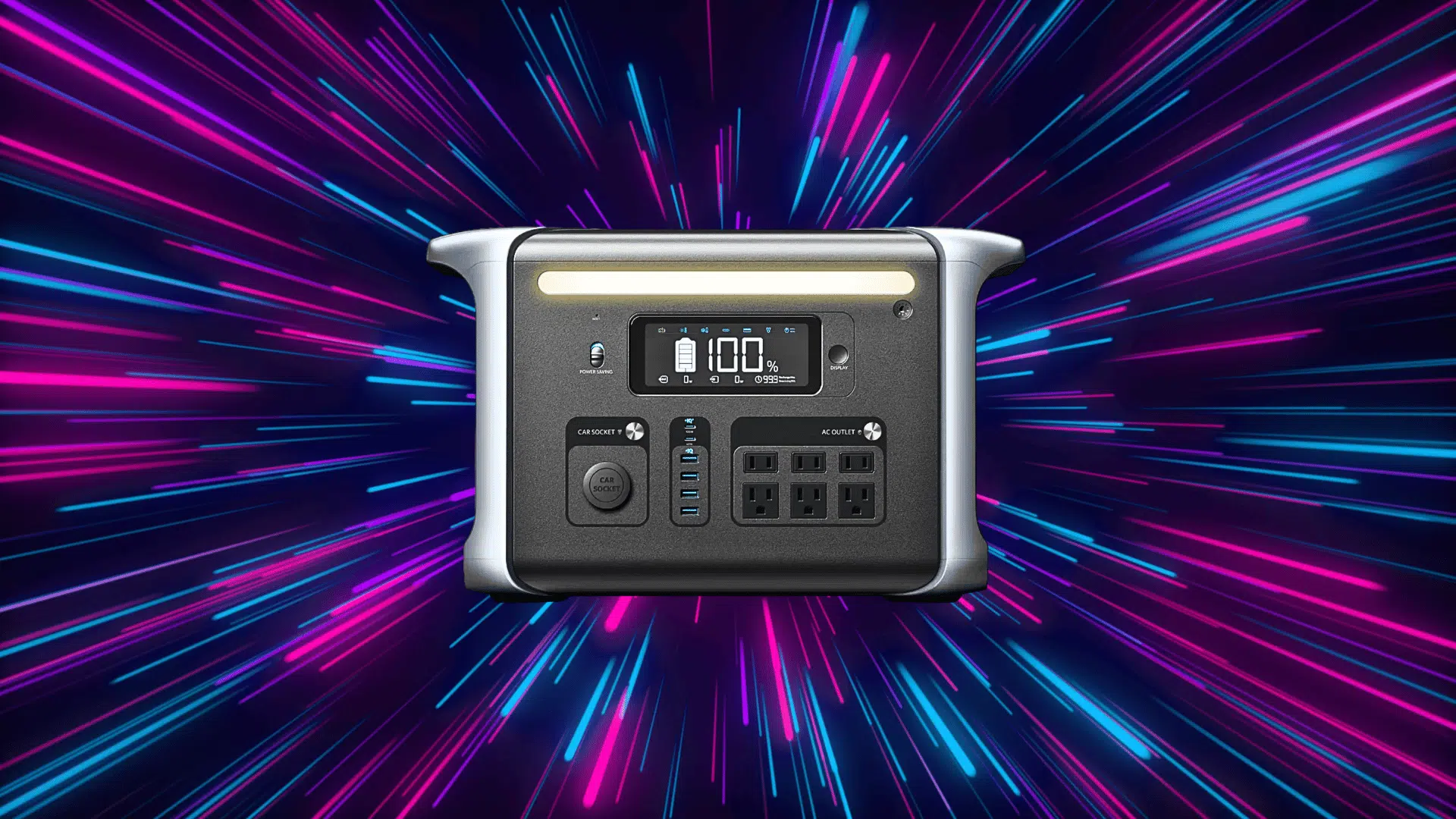
A portable power station is a rechargeable battery unit that stores electricity for later use. It can power or charge devices through AC outlets, USB ports, USB-C ports, and 12-volt car sockets.
Most models can be recharged from a wall outlet, vehicle charger, or compatible solar panel. Unlike gas generators, they run quietly, produce no exhaust during use, and require no fuel.
Portable power stations work well for quiet, indoor-friendly backup power, while a backup generator is better suited to longer outages and high-demand appliances. This comparison helped me understand how they differ in daily use.
Battery capacity is measured in watt-hours, while output is measured in watts. These ratings help show how long the unit may run and which devices it can safely support.
Are Portable Power Stations Better Than Gas Generators?
Portable power stations work well for quiet, indoor-friendly backup power, while gas generators are better suited to longer outages and high-demand appliances. This comparison helped me to understand how they differ in daily use.
| Factor | Portable Power Stations | Gas Generators |
|---|---|---|
| Power Source | Rechargeable battery | Gasoline or propane |
| Noise Level | Runs quietly | Produces noticeable engine noise |
| Indoor Use | Safe indoors when used correctly | Must remain outdoors due to exhaust fumes |
| Power Output | Suitable for phones, laptops, lights, and small appliances | Can support larger appliances and power tools |
| Runtime | Limited by battery capacity | Runs as long as fuel is available |
| Maintenance | Requires little routine maintenance | Needs fuel checks, oil changes, and engine care |
| Operating Cost | Can recharge from a wall outlet or solar panels | Requires ongoing fuel purchases |
| Environmental Impact | Produces no direct fumes during use | Releases exhaust and carbon emissions |
| Starting Method | Starts with a button | May use a pull cord or electric start |
| Ideal Use | Camping, short outages, indoor backup, and electronics | Long outages, job sites, and heavy appliances |
Best Portable Power Stations You Should Know
Choosing the best portable power station depends on how much power you need, where you plan to use it, and which devices you want to run.
1. EcoFlow DELTA 2
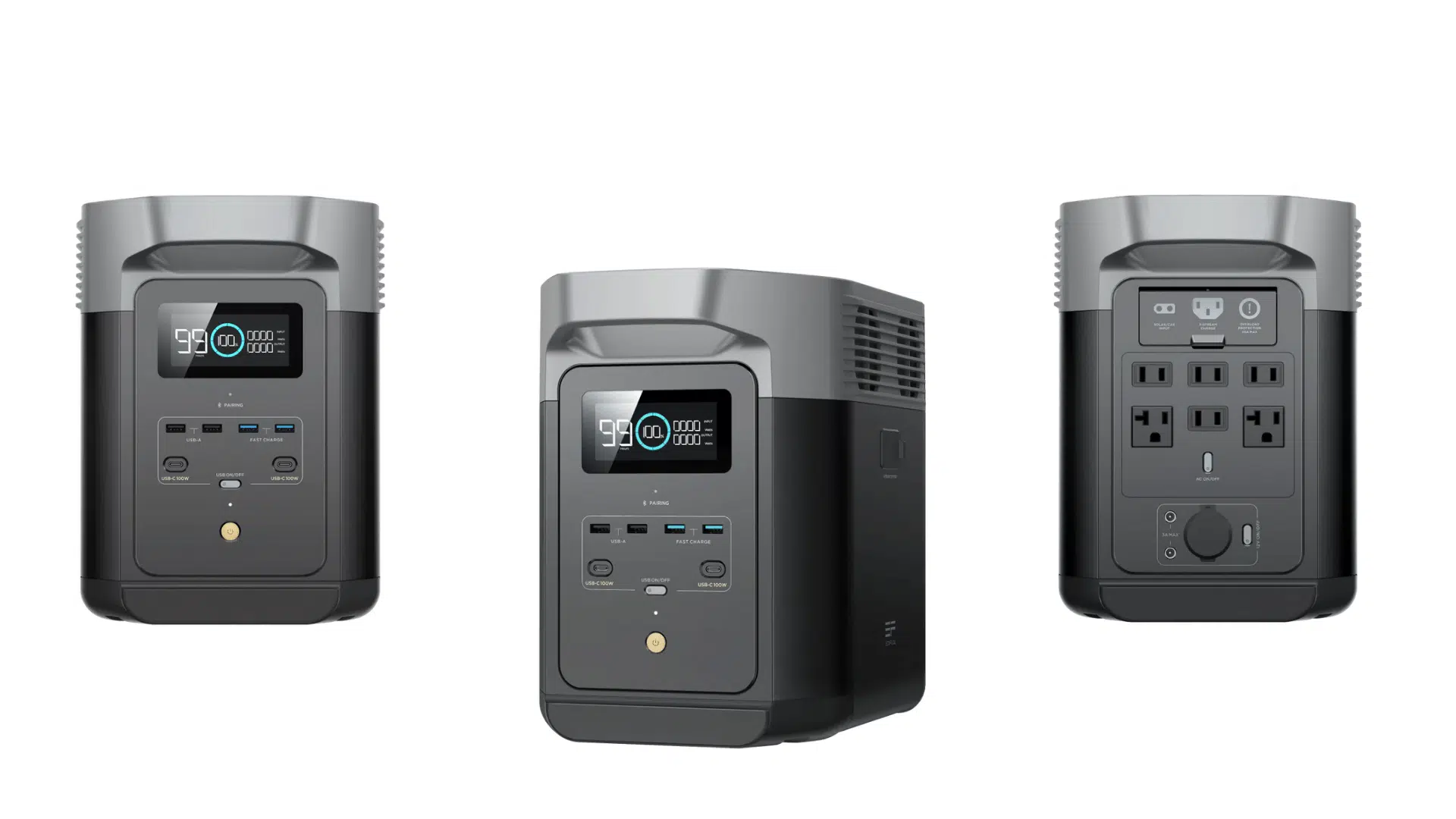
Image Source: ECOFLOW
The EcoFlow DELTA 2 is a mid-size unit made for home outages, camping, and road trips. Its LiFePO4 battery supports frequent charging, while the mobile app allows remote power checks and setting changes.
- Price: $400-$500
- Battery Capacity: The 1,024Wh battery can support phones, laptops, lights, refrigerators, and small appliances for short periods.
- AC Output: Its 1,800W output can handle many household and camping devices at the same time.
- X-Boost Support: X-Boost can run certain high-wattage devices with power demands of up to 2,200W.
- Expandable Storage: Extra batteries can raise the total capacity to 3kWh for longer backup use.
- Solar Charging: The unit accepts up to 500W of solar input for charging away from wall outlets.
- Port Selection: AC outlets, USB-A, USB-C, and DC ports enable the connection of various devices.
- Best for: Anyone who needs one unit for both household outages and outdoor stays.
User Reviews:
“To each his own…but running AC with these seems wasteful on limited power. Seems a few fans would be more practical….but that’s me. I have the d2 it runs my fridge about 9 hours with nothing else hooked up….with my solar panels I can get 500w in so as long as the sun is out I can run indefinitely but not to run an ac.” – Community, Reddit
“Get a kill-a-watt, a plug counting energy consumption. Run whatever you want to run on battery for 2-3 days, and calculate the average consumption. Compare that to the battery capacity, subtracting 20% of conversation loses. 100W from a 1000Wh battery is 10 hours – 2 hours (20% rule).” – Reddit
2. Jackery Explorer 1000 Plus
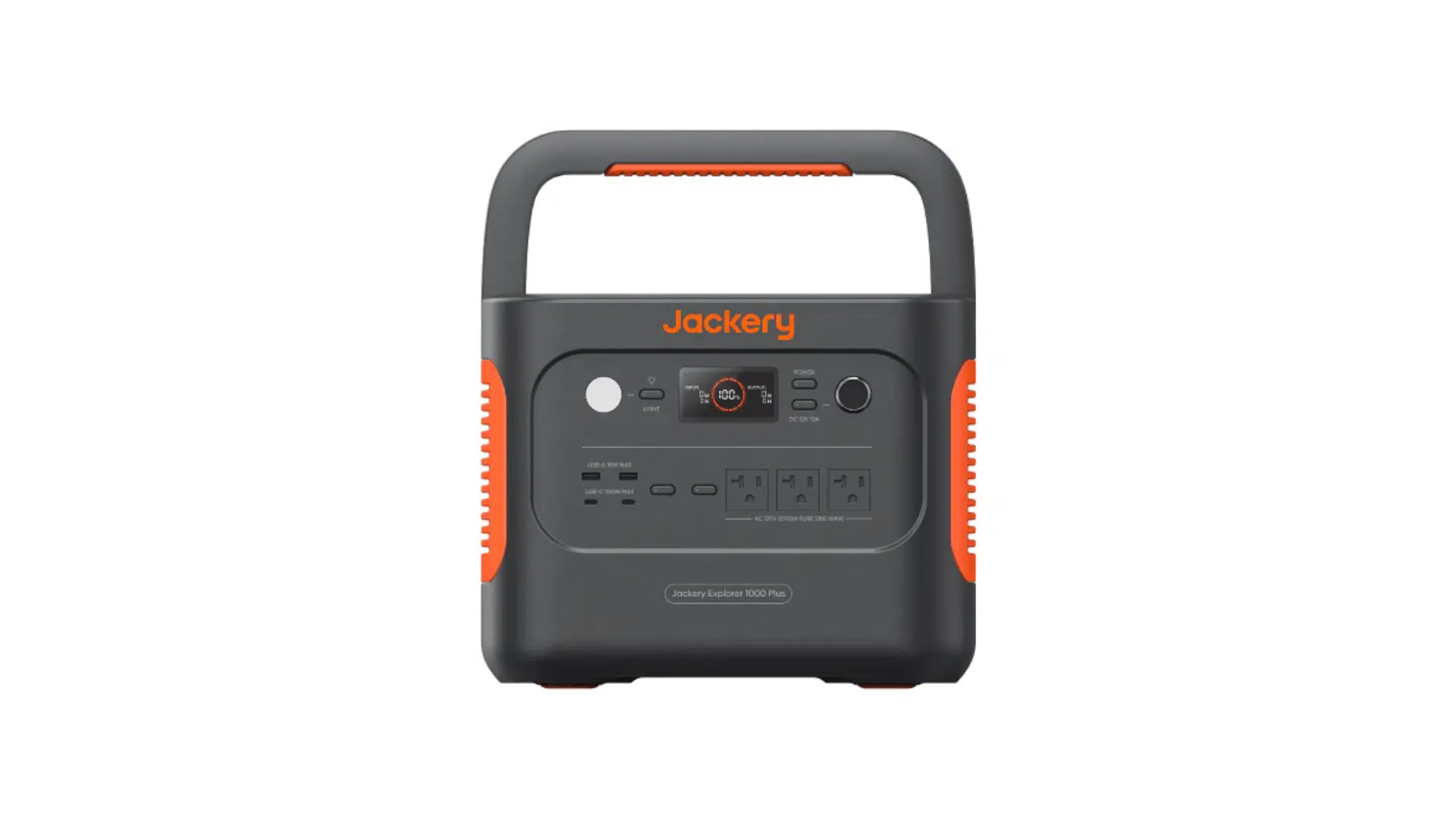
Image Source: Jackery
The Jackery Explorer 1000 Plus is built for longer camping trips, RV use, and backup power during outages. It weighs about 32 pounds and uses a durable LiFePO4 battery that can handle regular charging over many years.
- Price: $900-$1000
- Battery Capacity: The 1,264Wh battery can supply power to lights, laptops, portable refrigerators, and other common devices.
- AC Output: A 2,000W rated output and 4,000W surge rating allow it to run many appliances and power tools.
- Expandable Storage: Extra battery packs can increase total storage up to 5kWh for longer backup periods.
- Fast Wall Charging: A full recharge takes about 1.7 hours through an AC outlet.
- Solar Input: It accepts up to 800W of solar input when paired with compatible panels.
- Charging Ports: Three AC outlets, two USB-C ports, two USB-A ports, and a 12V car port support several devices.
- Best for: Anyone who needs higher output and expandable battery storage for RV trips, extended camping, or home outages.
User Reviews:
“I have this! I use it everyday to recharge my phone, fans for my propane cook stove, hand warmers, lantern and electric toothbrush. Charges itself in a wall socket less than an hour, usually once every 8-10 days.” – Hope Holz Salmon, Facebook
“The jackery 1000 is like 85ah battery. This will maybe cover your power needs for a day, but how do you plan to charge that when it’s low? For the cost of the jackery thing, i could put 200 ah of power solar, and charging. Add about $700 for each 200 ah battery and you could run for days without sun or running the engine.” – teamgravyracing, Reddit
3. BLUETTI AC180
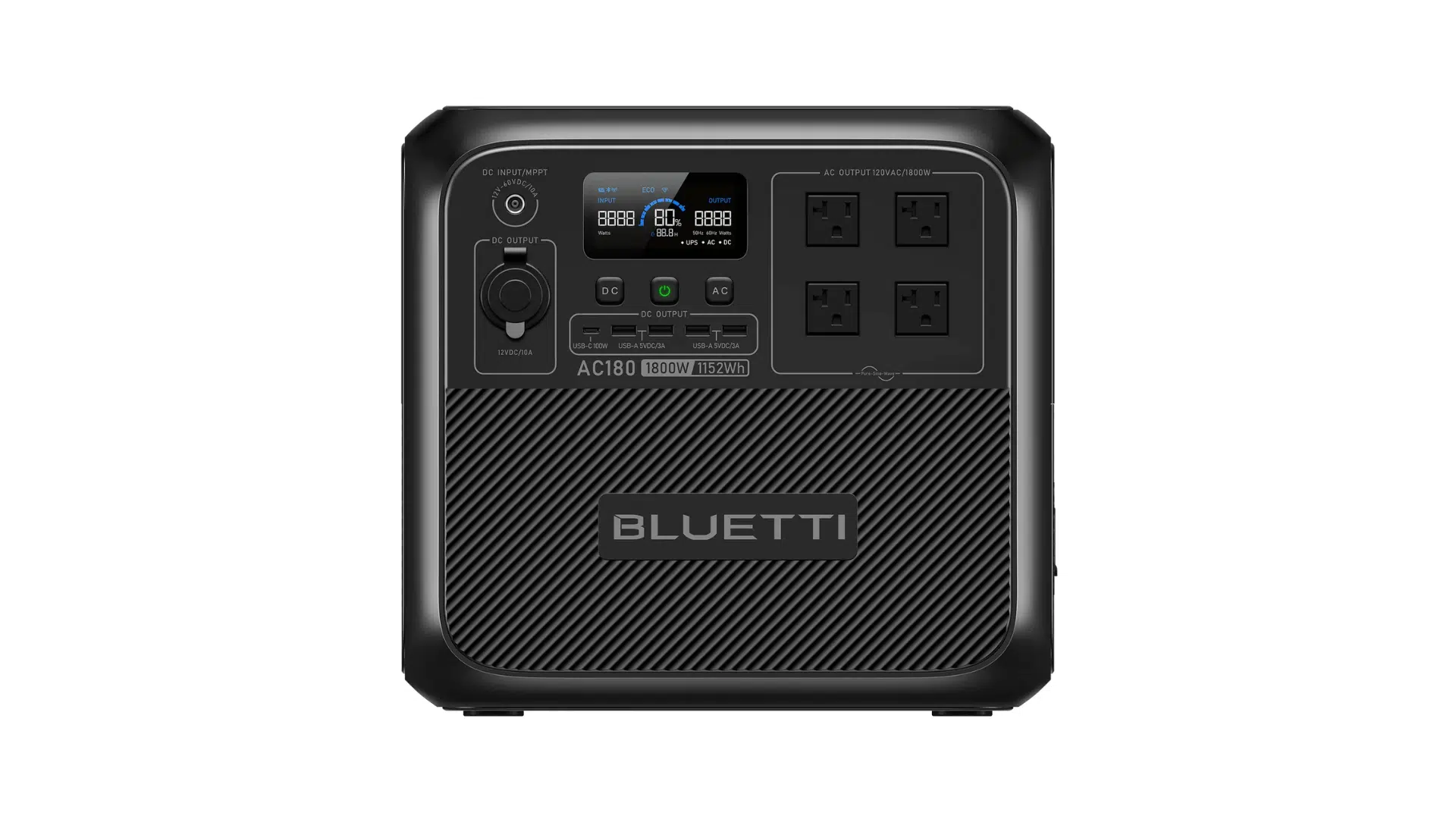
Image Source: Bluetti
The BLUETTI AC180 is a compact power station for short outages, outdoor work, and camping.
It includes app controls, pass-through charging, and a built-in UPS function that can keep supported devices running when wall power fails.
- Price: $400-$500
- Battery Capacity: The 1,152Wh battery can support laptops, lights, refrigerators, fans, and small cooking devices.
- AC Output: Its 1,800W continuous output can run many household appliances and outdoor electronics.
- Power Lifting Mode: The unit can support certain heating devices rated up to 2,700W.
- Fast Recharging: A 1,440W AC input can recharge the battery from 0 to 80 percent in about 45 minutes.
- Solar Charging: It accepts up to 500W of solar input for use at campsites and remote locations.
- Output Options: Nine ports enable simultaneous charging of multiple AC, USB, USB-C, DC, and wireless devices to charge at once.
- Best for: Anyone who values fast charging and strong output in a compact unit for outages or outdoor use.
User Reviews:
“The bluetti ac 180 has been a massive disappointment. At the moment I’m ranting because it let me down with keeping my sump pump operational while I was away for the rainy weekend.” – Dayouf, Reddit
“i bought a 100W panel, a 55ah agm deep cycle battery (660wh), plus a nice battery box, and a few accessories, and spent like $350, and even that setup i can run for like 5 days without needing sunlight. i already run fans, charge phone and steam deck. i could add a laptop and small refrigerator and still be fine.” – Reddit
4. Anker SOLIX F1200
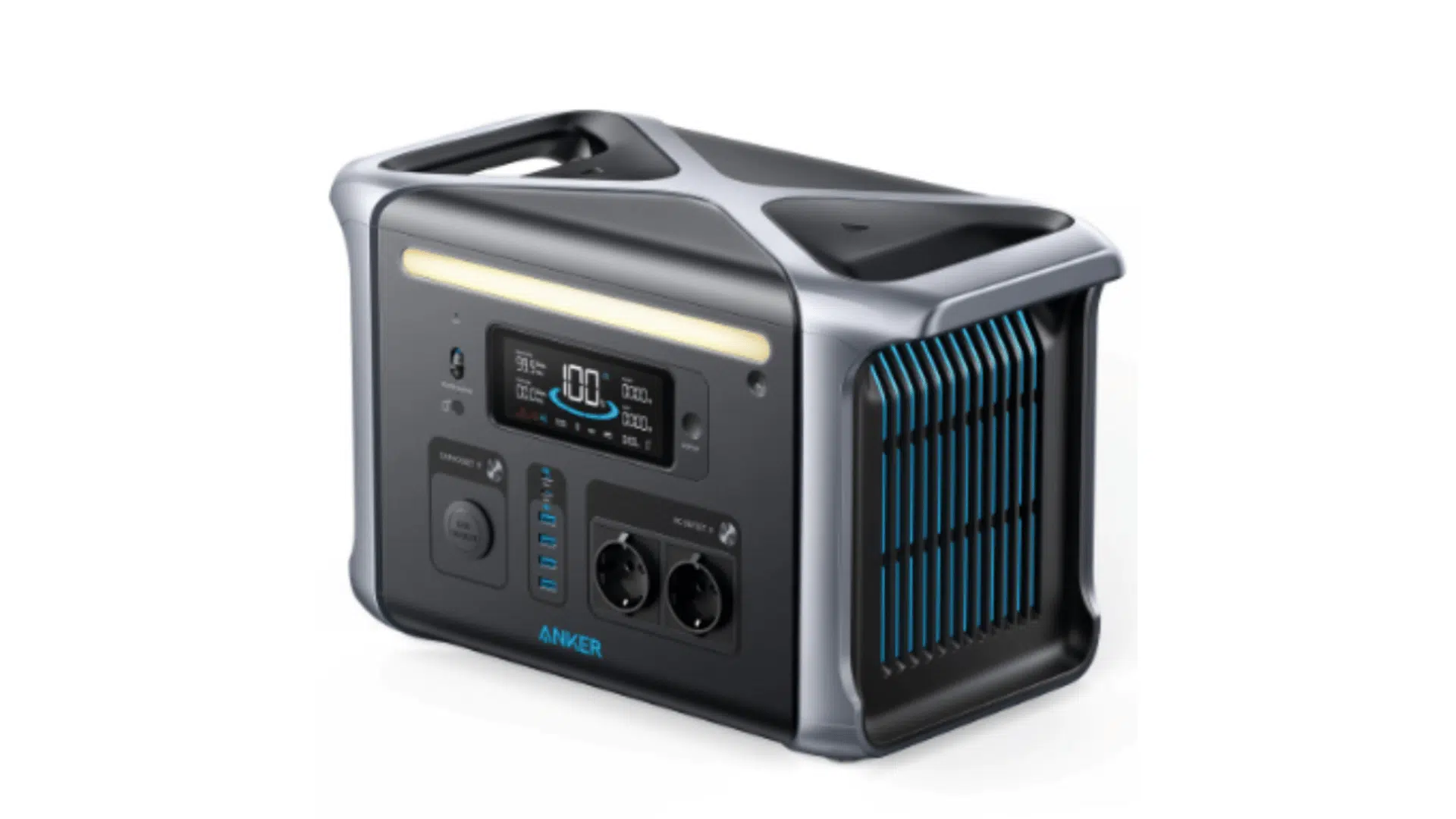
Image Source: Anker
The Anker SOLIX F1200 is made for frequent home backup, outdoor events, and longer camping stays.
Its LiFePO4 battery is rated for up to 3,000 charge cycles, and the sturdy case is designed to handle regular transport and repeated use.
- Price: $900-$1000
- Battery Capacity: The 1,229Wh battery can power laptops, lights, coolers, TVs, and select kitchen appliances.
- AC Output: Its 1,500W output supports most common electronics and many medium-power household devices.
- Surge Power: A higher surge rating helps the unit start appliances that briefly draw extra power when switched on.
- Fast Recharging: HyperFlash charging can refill the battery from 0 to 80 percent in about one hour.
- Battery Lifespan: LiFePO4 battery cells provide up to 3,000 charging cycles before capacity falls to 80 percent.
- Port Selection: Multiple AC outlets, USB-A ports, USB-C ports, and a car socket support several devices together.
- Best for: those who need a long-lasting unit for regular home backup, outdoor gatherings, or extended camping stays.
User Reviews:
“I’m between vans atm, so I’ve been charging my phone with mine for the last 2 months and it’s still on 48% lol.
I run my electric blanket on mine also when in the van. I think mine cost around £425 and I’ve added a solar panel which are great too.” – Nick Watts, Facebook
5. Goal Zero Yeti 500X
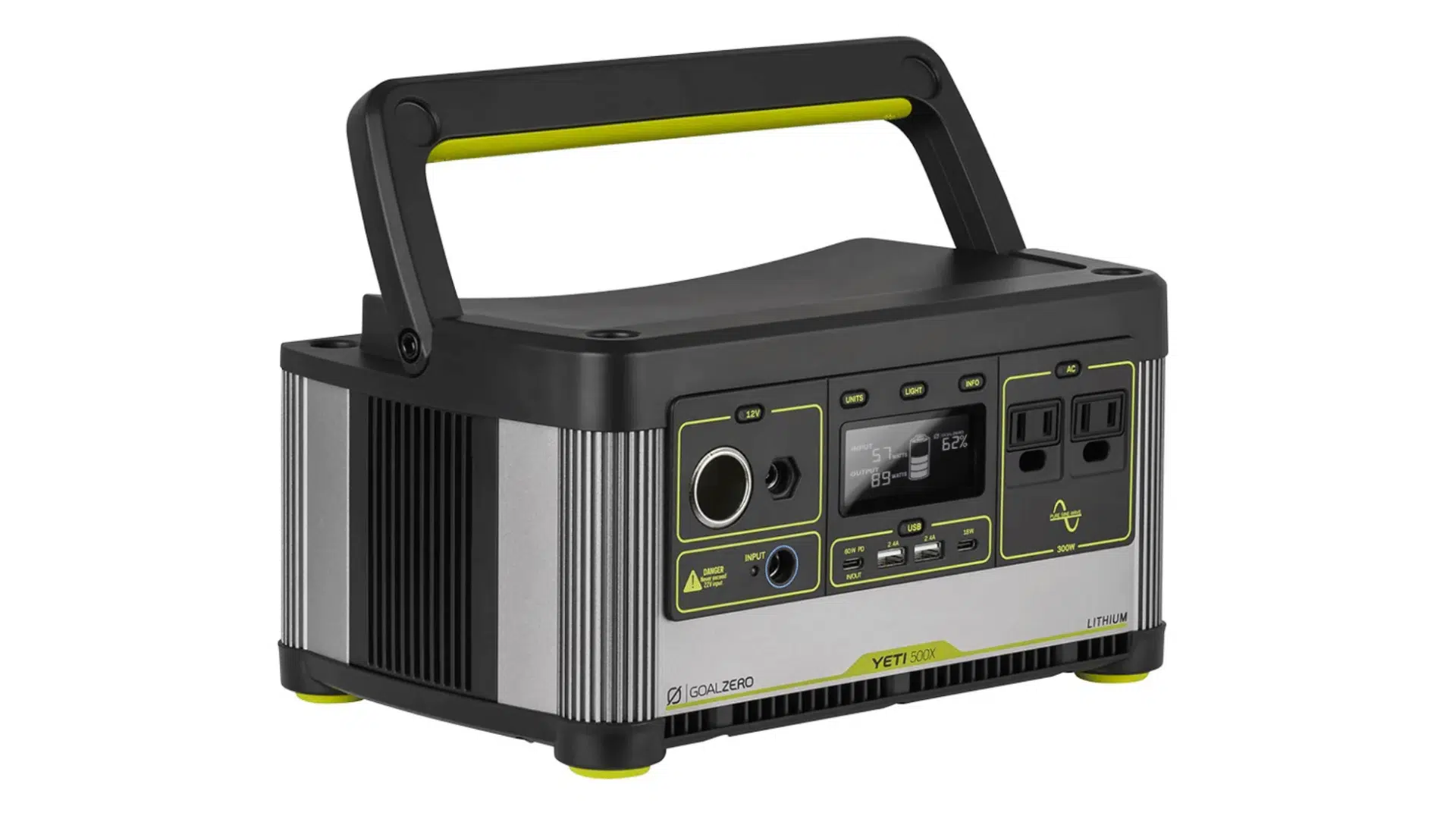
Image Source: GoalZero
The Goal Zero Yeti 500X is a lightweight unit for camping, photography, road trips, and basic emergency power.
Its compact body is easier to carry than larger models, making it more practical for users who mainly need to charge electronics and run small devices.
For much smaller charging needs, such as keeping a phone or other mobile device running, an Anker power bank may be enough instead of carrying a full power station.
- Price: $600-$700
- Battery Capacity: The 505Wh battery can charge phones, cameras, laptops, lights, and other low-power equipment.
- AC Output: Its 300W continuous output supports small electronics and selected portable appliances.
- USB-C Charging: A 60W USB-C Power Delivery port can charge compatible laptops and mobile devices.
- Solar Support: The unit can recharge through compatible Goal Zero solar panels during outdoor stays.
- Port Selection: AC, USB-A, USB-C, and 12V ports support a range of common device types.
- Portable Build: Its compact size and lower weight make it easier to store in a vehicle or carry around a campsite.
- Best for: People who need a light power station for phones, cameras, laptops, lights, and short outdoor trips.
User Reviews:
“This may or may not be helpful, but I have the Yeti 1000x, and I really enjoy it. I received it as a gift and know it is a spendy piece of equipment, so it’s hard to say if or not it was “worth it” but I’m glad I have it. It took a while to charge for the first time and I thought something was wrong with it, but it turned out to be an issue with power to the outlet I was using and I haven’t had any problems since.” – Reddit
6. Goal Zero Yeti 1500X
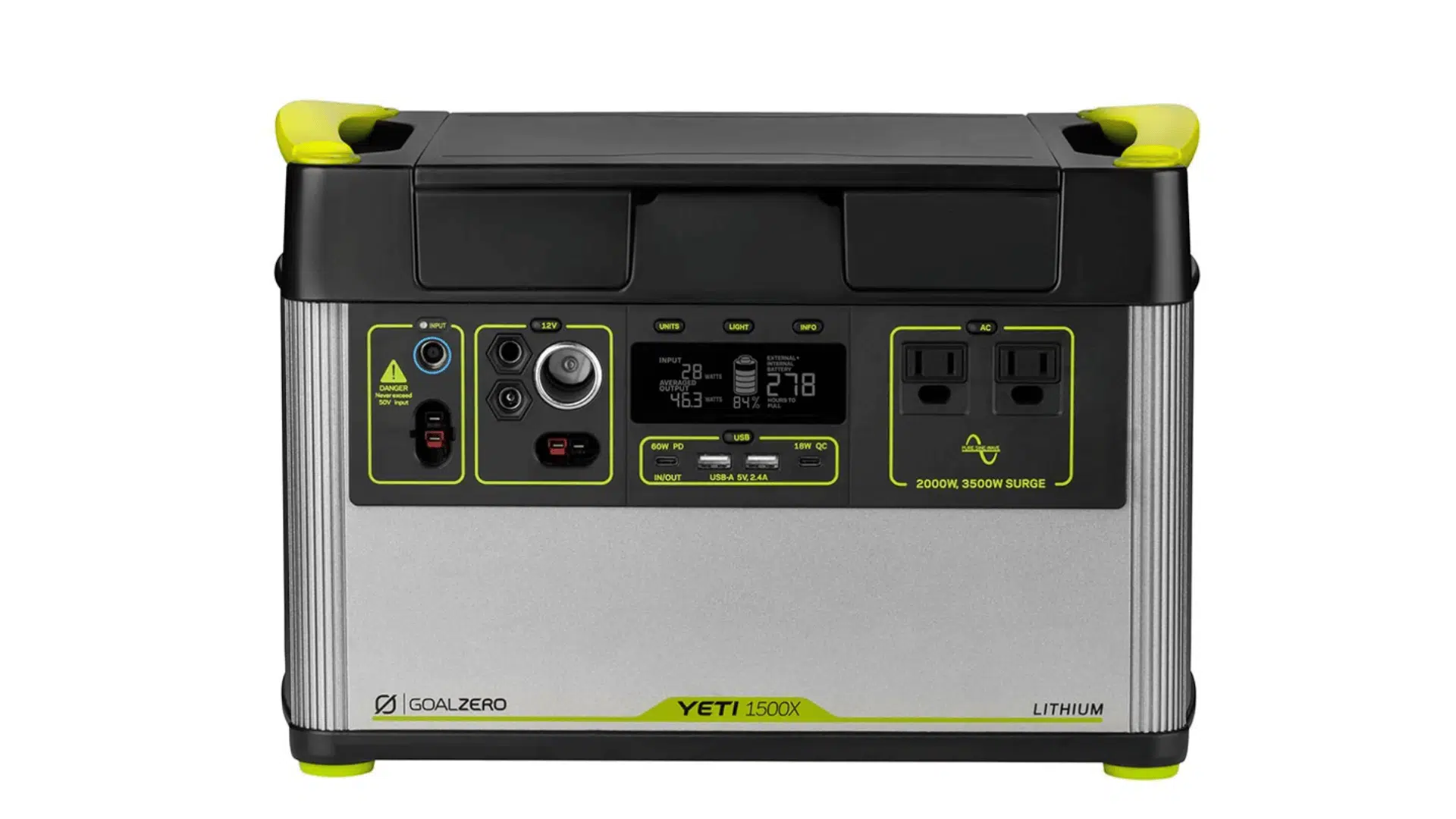
Image Source: GoalZero
The Goal Zero Yeti 1500X is a high-capacity power station made for users who need more stored energy for longer trips and backup situations.
Its larger battery can support multiple devices, making it useful for RV setups, outdoor work, and home essentials during outages.
- Price: $1,000-$2,000
- Battery Capacity: 1,516Wh battery provides extended runtime for laptops, lights, medical devices, small appliances, and outdoor equipment.
- AC Output: 2,000W inverter output allows it to power higher-demand electronics and selected appliances.
- Charging Options: Supports wall, vehicle, and solar panel charging for flexible power replenishment.
- Port Selection: Includes AC outlets, USB ports, USB-C ports, and 12V outputs for different devices.
- App Control: The Goal Zero app helps track battery level, power usage, and charging status from a smartphone.
- Expandable System: Can work with compatible accessories and batteries for increased power storage.
- Best for: Anyone who needs higher battery capacity for RV travel, long camping trips, and extended home backup.
User Reviews:
“I still have my Yeti 1500X and it has served me well on a camping trip and during a power outage! When I initially charged it out of the box, the cable got really hot…. Once it’s fully charged, the cable goes back to room temp so it shouldn’t be any issue leaving it plugged in all the time (as the directions say to do).” – limegreen373, Reddit
“Let’s talk about Goal Zero for a moment. If you’re considering their products for “safety” and “reliability,” think again! The Scott family found out the hard way when a Goal Zero lithium-ion battery MALFUNCTIONED, leaving them homeless and emotionally shattered. Who knew that when they advertised “powering adventures,” they meant “powering disasters”?” – Community, Reddit
7. EcoFlow DELTA Pro
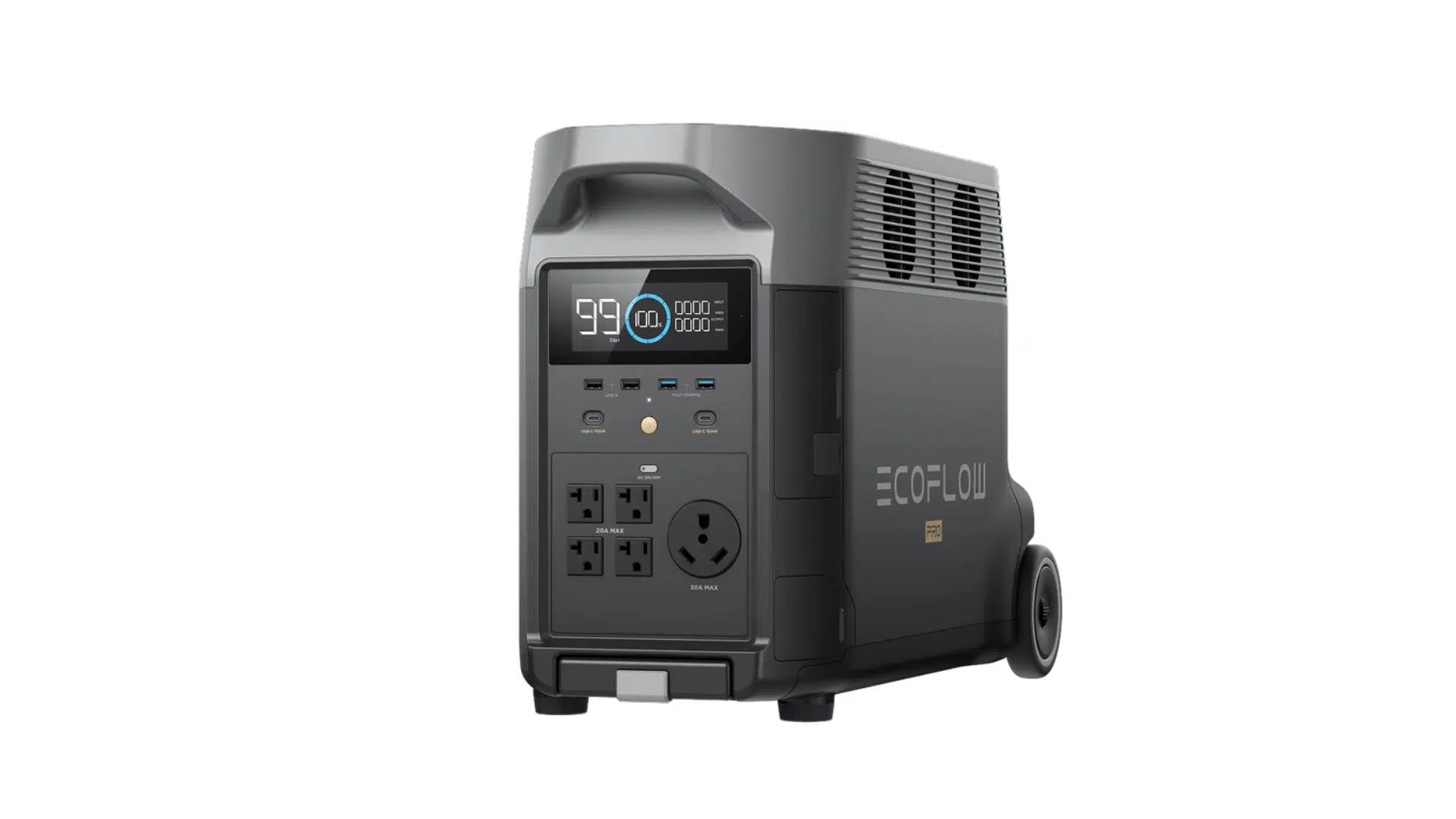
Image Source: US-EcoFlow
The EcoFlow DELTA Pro is a high-capacity power station built for serious backup needs, RV use, and off-grid setups. It offers a large battery system with strong output, making it suitable for running multiple devices and selected household appliances during longer outages.
It can also fit into a broader home energy setup using products such as the EcoFlow Smart Home Panel 2, which helps manage battery, solar, and grid power.
- Price: $1,000-$2,000
- Battery Capacity: 3,600Wh battery provides extended runtime for appliances, electronics, tools, and outdoor equipment.
- AC Output: 3,600W continuous output can support high-power devices with a 7,200W surge rating.
- Expandable Storage: Additional batteries can increase total capacity for longer backup periods.
- Charging Options: Supports wall, solar, car, and EV charging.
- Port Selection: Includes AC outlets, USB-A, USB-C, DC ports, and a high-power outlet for different devices.
- Smart Control: The EcoFlow app lets users monitor battery levels, power usage, and settings remotely.
- Best for: Anyone who needs a powerful backup unit for home appliances, RV setups, and long outdoor stays.
User Reviews:
“Real capacity delivered: 3630Wh (88.6% of rated: the best accuracy we’ve seen) Runs a full-size fridge for about 18 hours on a single charge. Powers 240V loads. Recharges in 3 hours.” – Brains Report, Facebook
“I’ve heard nothing but good things about the EcoFlow in terms of quality and customer service. I’d add though that your panel spec seems a little small. I’d probably at least double the panels, if not quadruple.” – maddslacker, Reddit
Which Portable Power Station is Best for Your Needs?
The models range from lightweight units for charging phones and cameras to high-capacity systems that can run appliances during longer outages.
| Recommended Model | Best For | Main Advantage |
|---|---|---|
| EcoFlow DELTA 2 | Home backup and camping | Balanced capacity output and expandable storage |
| Jackery Explorer 1000 Plus | RV trips | High output and storage expansion |
| BLUETTI AC180 | Fast charging | Reaches 80 percent in about 45 minutes |
| Anker SOLIX F1200 | Frequent use | Battery rated for up to 3000 cycles |
| Goal Zero Yeti 500X | Lightweight travel | Compact option for small electronics |
| Goal Zero Yeti 1500X | Extended backup | Larger battery for longer runtime |
| EcoFlow DELTA Pro | High power needs | Strong output for appliances and tools |
Expert Comparison of the Best Portable Power Stations
Comparing portable power stations side by side helps show the differences in battery capacity, output, charging speed, size, and overall performance.
Here is what the experts said:
“Between spiking energy prices, power outages, wildfires and other natural disasters, portable power stations are an affordable alternative to a backup gas generator and can help keep you powered up when you need it the most.” – Cnet
“Overall, the EcoFlow Delta 3 Plus stands out as the best unit for most people. It couples a high battery capacity, fast charging, and the full range of ports and outlets you’re likely to need. It also delivered a rapid 10ms UPS switchover, which means even during outages, your devices stay connected without dropping out.” – TechRadar
“last few years, we’ve been on a quest to find the best portable power stations while camping, road-tripping, beach bumming, and otherwise hanging out or working off the grid. Lead tester Karuna Eberl continually tests the newest units on dusty Baja overlanding routes, freezing Colorado nights, and humid Florida encampments.” – Karuna Ebral, GearJunkie
Key Takeaways From Expert Comparisons:
After comparing battery size, output, portability, charging speed, and real-world use, some models stand out for specific needs. These expert picks highlight which portable power stations perform best in different situations:
| Rank | Feature | Experts Choice |
|---|---|---|
| 1 | Best Overall Performance | EcoFlow DELTA 2 |
| 2 | Best for Extended Backup | EcoFlow DELTA Pro |
| 3 | Best for Camping and RV Use | Jackery Explorer 1000 Plus |
| 4 | Best Fast Charging Option | BLUETTI AC180 |
| 5 | Best Lightweight Option | Goal Zero Yeti 500X |
Tips for Choosing the Right Portable Power Station
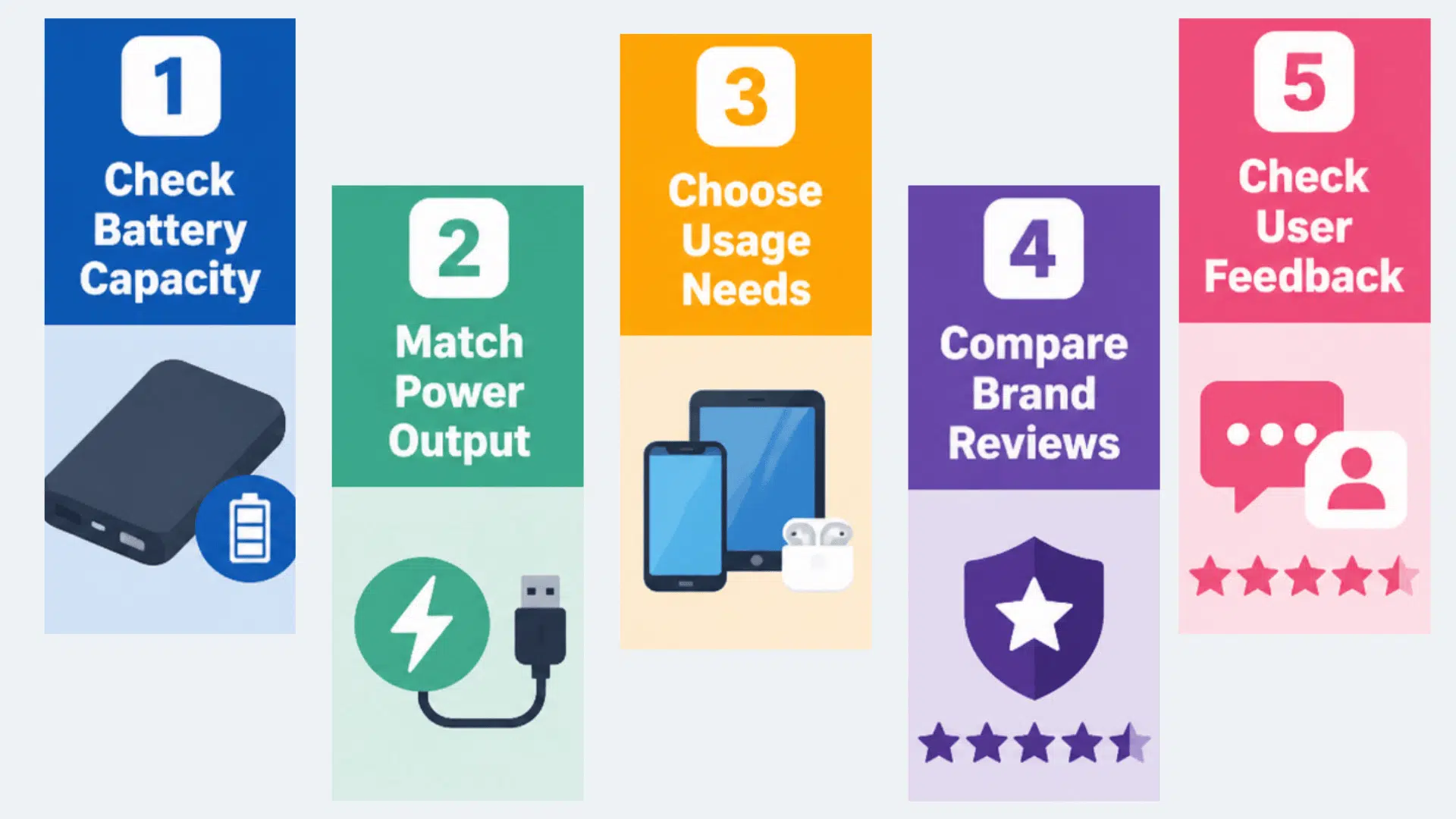
Based on user experiences and expert opinions, these factors can help you compare portable power stations before making a purchase:
- Check Battery Capacity First: Battery capacity, measured in watt-hours (Wh), determines how much energy a power station can store and how long it can run your devices.
- Match Output With Your Devices: Look at the watt output to make sure the unit can support the appliances, electronics, or equipment you plan to use.
- Choose Based on Your Actual Needs: The best power station depends on your use, such as camping, home backup, RV travel, or charging small electronics.
- Consider Battery Quality and Reliability: A durable battery system and a trusted brand can make a difference in long-term performance and daily use.
- Compare Brands and User Feedback: Reviews from real users can reveal details about battery life, customer support, and product performance over time.
Wrapping It Up
Picking a power station isn’t really about finding the “best” one out there; it’s about honesty with your daily habits and worst-case moments. Some folks buy one and forget about it for months; others rely on it more than expected.
Either way, that’s completely fine. There’s no universal winner here, just personal needs quietly deciding the outcome.
So before making a purchase, it helps to pause and ask one simple question: what’s the one moment this power station needs to show up for? That answer usually says more than any spec sheet ever could.
Frequently Asked Questions
How Long Do Portable Power Stations Last?
Most portable power stations last years with proper care, depending on battery type, charging habits, storage, and usage.
Can a Portable Power Station Run a Refrigerator?
Many high-capacity portable power stations can run a refrigerator during outages. Check the refrigerator’s starting and running wattage to ensure the unit can handle the load.
How Should You Store a Portable Power Station When Not in Use?
Store the unit in a cool, dry place and keep the battery charged according to the manufacturer’s recommendation.