


Have you tried bone conduction headphones and wondered why they feel different from regular earbuds?
Some people enjoy the open-ear design, while others notice pressure, tingling, or discomfort they did not expect.
I know how confusing mixed opinions online can be, especially when you are trying to understand if bone conduction headphones are safe.
In this blog, I’ll share real user experiences and common concerns to help you understand the possible bone conduction headphones side effects before using them daily.
What are Bone Conduction Headphones?
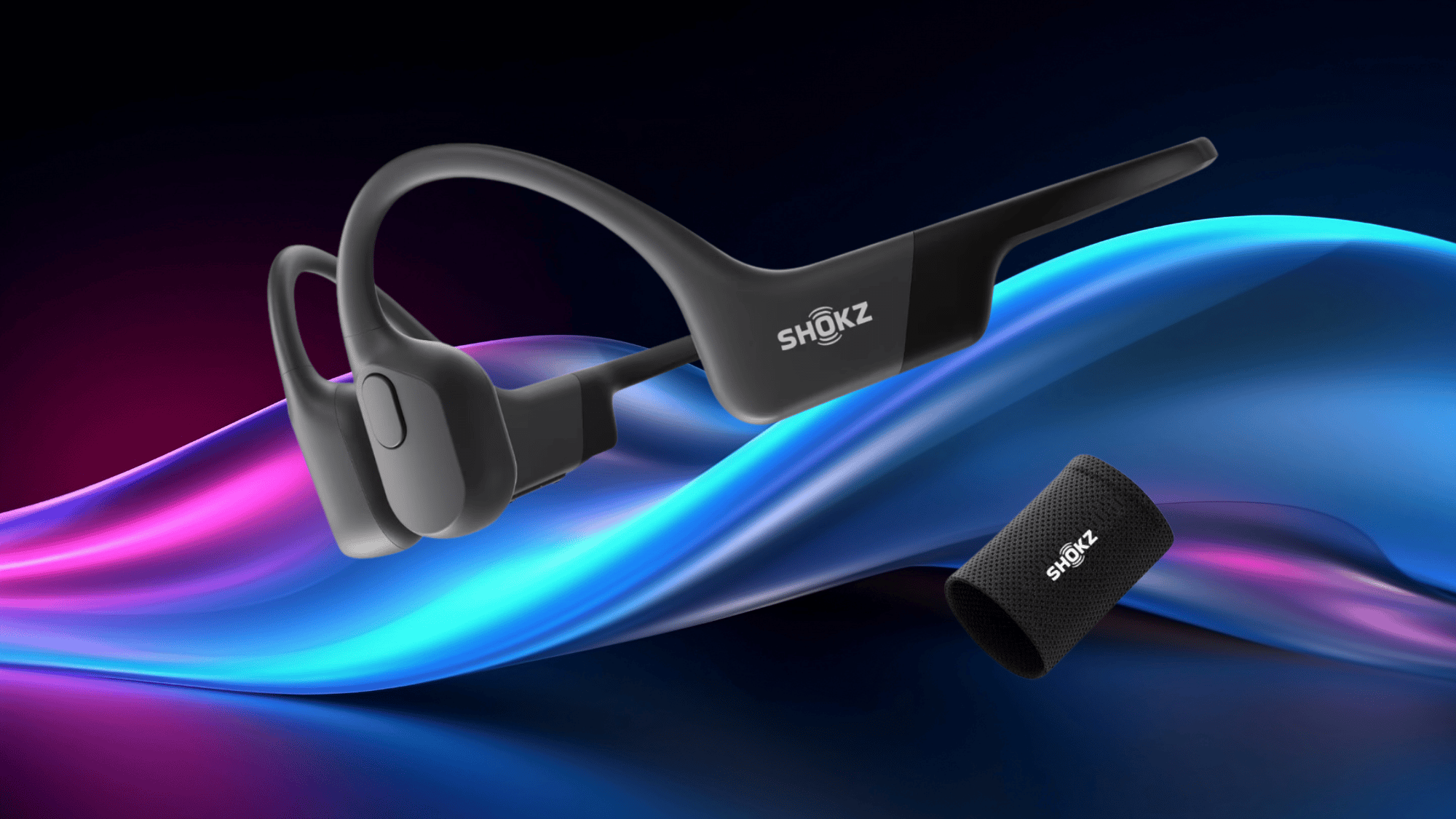
Bone conduction headphones are open-ear audio devices that sit near your cheekbones and send sound vibrations through the skull bones to the inner ear.
Unlike regular earbuds, they do not block the ear canal, helping users stay aware of nearby sounds.
The technology was first used in medical hearing devices before consumer models became popular in the early 2000s. Today, bone conduction headphones from brands like Shokz, H2O Audio, and Mojawa generally cost around $50 to $200, depending on the features.
They are widely available through brand websites, online retailers, and electronics stores, especially for running, cycling, and outdoor workouts.
Key Features of Bone Conduction Headphones
Bone conduction headphones send sound vibrations through the bones near your cheek and jaw instead of placing speakers inside your ears. Have a look at its key features:
- Open-Ear Design: The headphones rest near your temples, leaving your ear canals uncovered.
- Bone Vibration Technology: Sound reaches the inner ear through vibrations rather than standard air-based speakers.
- Better Awareness of Surroundings: You can hear traffic, announcements, and people while listening to audio.
- Lightweight Build: Most models use slim frames that sit around the back of the head.
- Wireless Connection: Bluetooth support allows pairing with phones, tablets, watches, and laptops.
- Sweat and Water Resistance: Many models can handle light rain and moisture during exercise.
- Built-In Controls: Buttons let you adjust the volume, pause audio, answer calls, and switch tracks.
- Integrated Microphone: A built-in mic supports phone calls and voice assistant commands.
Their open-ear structure makes them useful for workouts, commuting, and situations where you need to hear nearby sounds.
Common Bone Conduction Headphones Side Effects
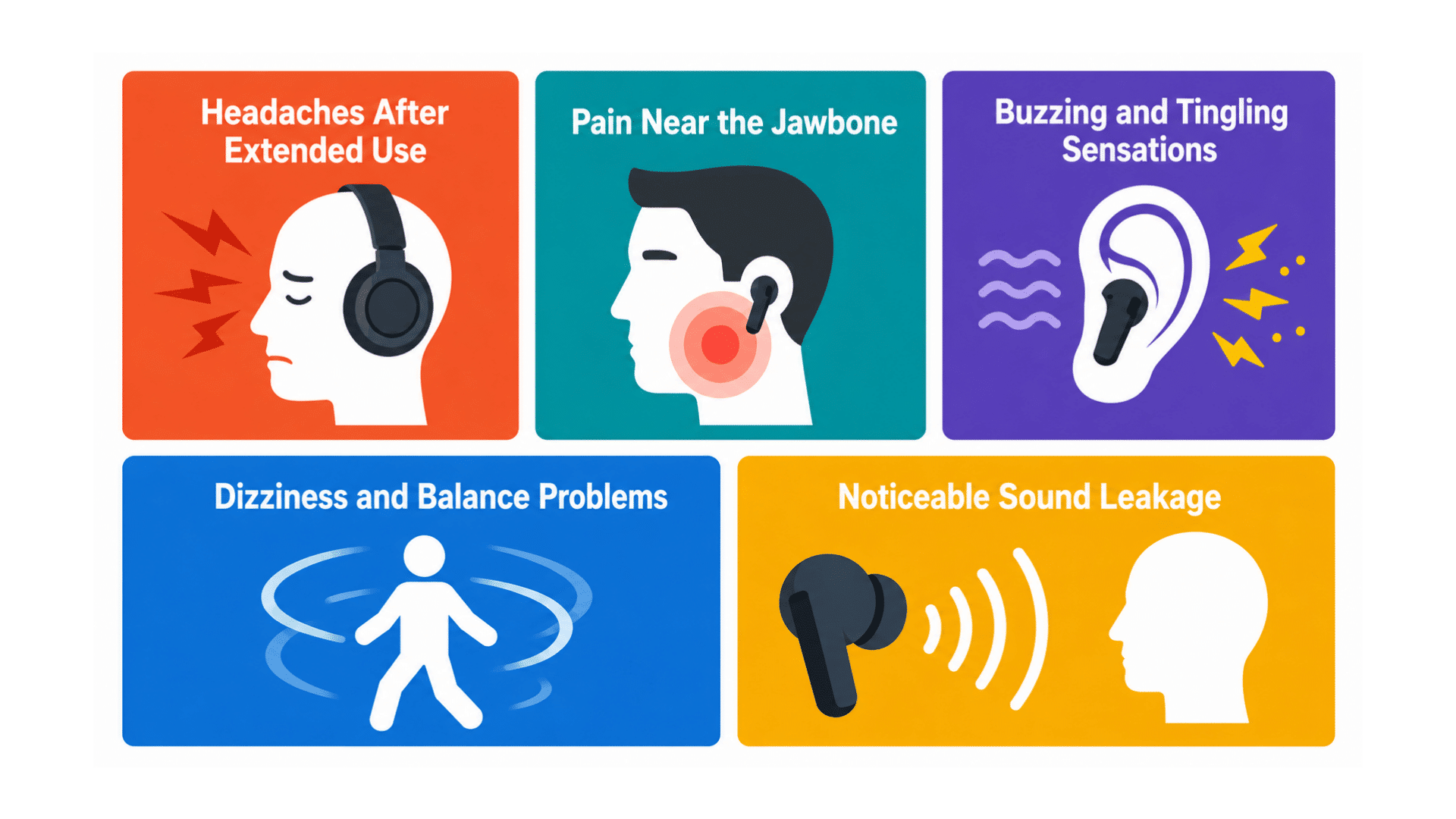
Bone conduction headphones may feel comfortable at first, but some users report issues related to pressure, vibration, fit, or prolonged wear.
These reactions can differ from person to person, so it helps to know what to watch for.
1. Headaches That Start Soon After Use
Some people develop a headache within minutes of wearing bone conduction headphones. This can happen even at a low volume if the user is sensitive to steady vibration around the sides of the head.
The discomfort may fade after removing the device, but repeated headaches suggest the fit or vibration level is not working well for that user.
What do the users say:
“I got target’s heyday ear cuff earbuds and they work great for an open ear tech without giving me headaches and let me hear my surroundings too.” – Facebook
“Mine cause me pain. I’m a migraine sufferer and I feel the pain where the conduction occurs.These headphones definitely trigger my migraines. I can’t leave them over my ears for any extended period of time. I don’t use earbuds either. The only headphones I can use are over the head headphones. The bone conduction headphones seem to target the exact spot or area where I feel my migraines. My migraines feel like a metal rod piercing the top of my head left side. Anyone experienced this?” – Reddit
2. Pain Near the Jaw and Cheekbone
Because the device sits close to the upper jaw, some users feel soreness when talking, chewing, or clenching their teeth.
Poor placement can also place extra pressure on the cheekbone.
This discomfort is more likely during long sessions. Ongoing jaw pain may indicate that the headphones are not a good fit for the user’s head shape.
What do the users say:
“My jaw hurt with bone conduction.. history of a bit of tmj apparently its a thing. I have soundcore regular headphones which has a hear through mode.” – Michelle Armstrong, Facebook
“Everything was cool till one day I took 2 hour long phone calls and listened to some music. My wisdom tooth root activated with nerve pain (incredibly painful) and TMJ symptoms on yawning started. Today is day 3 of not using the headphones and the tooth inflammation has subsided about 80% after lots of cold compress and ibuprofen but the TMJ is not going away.” – Reddit
3. Buzzing That Feels Too Strong
Bone conduction audio creates a light buzzing feeling against the skin. At higher volume levels, especially with bass-heavy sound, that sensation can become much stronger.
Some users adjust to it, while others find it distracting or unpleasant. Lowering the volume usually reduces the intensity.
What do the users say:
“I’m own airpods pro 2 and shokz openrun and trying to compare how damaging they are to hearing only in the context of wear during outdoor running (40 – 90 minute sessions)….. Are these too volume comparable when it comes to potential impact on hearing? I.e. 100% Shokz vs. 50-60% APP2 on the same device. It feels pretty clear to me bone conduction has way more impact on my hearing than ANZ airpods in my use case. But would love to hear thoughts and comments.” – Community Post, Reddit
“At best, what’s left to be conducted through your skin and bones is just residual bass, maybe less than 5%. Plugged my ears with proper earplugs and played music in the Shokz. Nearly NOTHING is left, and I assure most of it is just normal sound still leaking through the earplugs, and appropriately muffed.” – Reddit
4. Feeling Dizzy or Unsteady
A few users report dizziness, mild nausea, or a sense of imbalance while wearing these headphones. People with vertigo or inner-ear problems may react more strongly.
The device should be removed as soon as these symptoms appear. Dizziness that continues afterward needs medical attention.
What do the users say:
“Last week, somehow, the volume on my phone was set too high (75%) when I placed the headphones on my right ear to take a call. It was painfully loud…….He told me bone conduction, unlike regular sound conduction, is unilateral. The sound travels throughout your whole skull instead of only to the ear when the headphones are over.” – Community Post, titnnitustalk
“Shokz has a ap tp let you change and customize the setting of most of their devices. Depending on which one you have you can change it from full bone conduction to speaker only, or both.
Also the high the volume you are using the stronger the vibration. If you have trouble hearing at a lower volume, stick an ear plug in one ear and you will hear the music better.” – Jermy Dewitt, Facebook
5. Noticeable Sound Leakage
After prolonged use, some users report that regular sounds seem dull, sharp, or slightly altered for a short time. This may happen when the ears and brain become tired from steady sound exposure.
The effect should improve after rest. Ringing, muffled hearing, or lasting changes in hearing are signs to stop use and get a hearing check.
What do the users say:
“Hard no if you want sound quality. Ok for zoom calls if you also want to hear/talk to those around you.” – Dave Johnson, Facebook
My hearing issues are in the receptors themselves, as I had a bone-conduction test as well as via the ear canals and the results were similar. The brain certainly makes up for a lot but can only go so far – using the aids in the evening for TV after a day without, they’re initially too shrill and ‘sparkly,’ but after a couple of hours, all the ‘top’ disappears when I take them out – and so on…” – DSJR, Audio Science Review
Bone Conduction Headphones vs. Regular Headphones
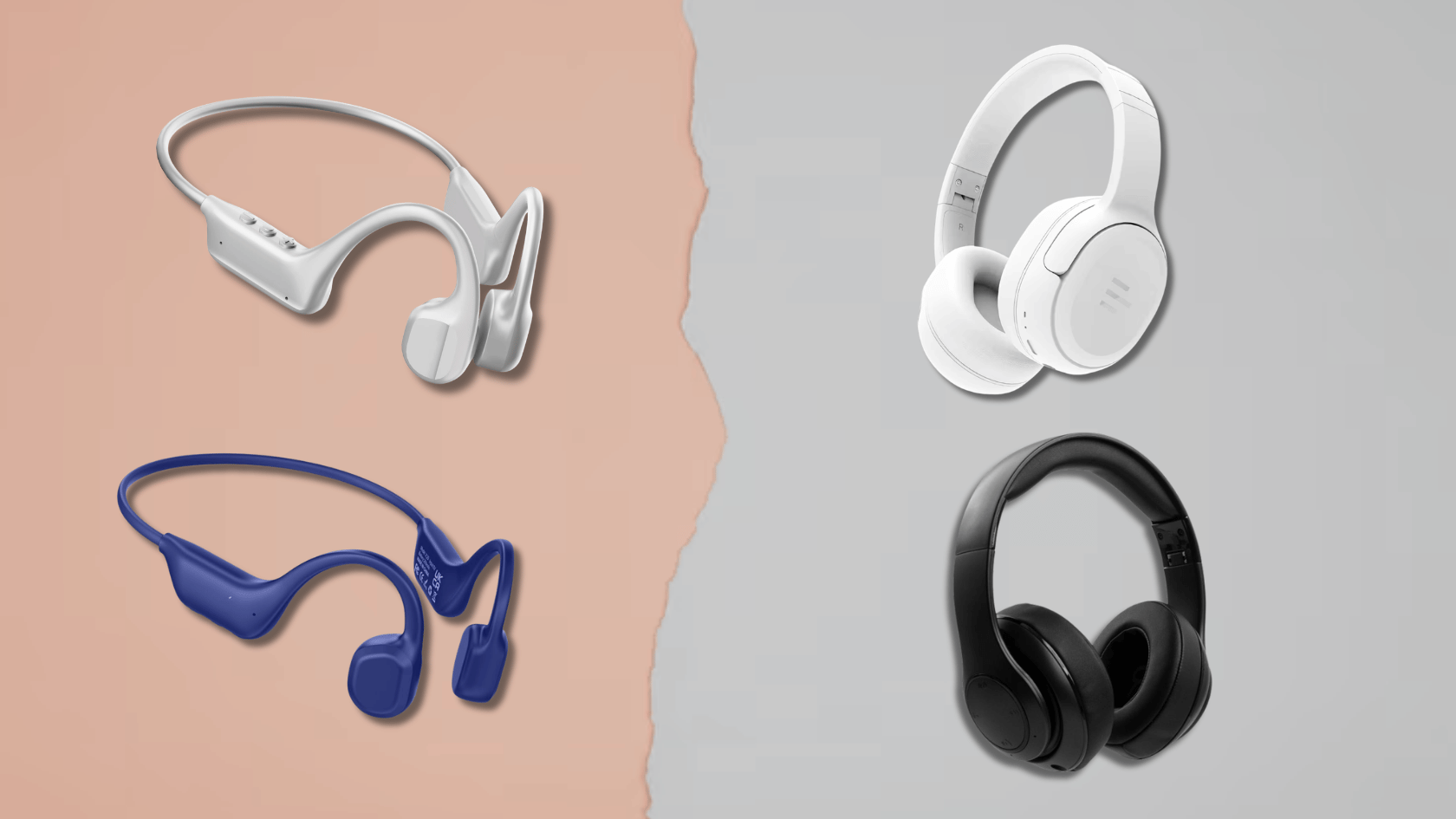
The table below compares bone conduction headphones with regular headphones by fit, comfort, sound quality, daily use, and possible drawbacks.
It gives you a quick overview before reviewing bone conduction headphones side effects.
| Comparison Point | Bone Conduction Headphones | Regular Headphones |
|---|---|---|
| Wearing Style | Rest outside the ears near the cheekbones | Sit inside the ear canal or cover the ears |
| Awareness | Make nearby sounds easier to hear | Block more outside noise |
| Comfort | May suit people who dislike in-ear pressure | May cause pressure during long listening sessions |
| Sound Quality | Clear for speech but weaker in deep bass | Stronger bass and fuller music detail |
| Noisy Places | May require higher volume | Usually easier to hear due to better sound isolation |
| Best For | Running, cycling, calls, and outdoor use | Travel, music, focused work, and busy areas |
| Main Drawback | May cause temple pressure or vibration discomfort | May trap sweat, move earwax, or irritate the ear canal |
Neither type is automatically safer in every situation. Bone conduction models may feel better for people who dislike in-ear pressure, while regular headphones usually provide clearer sound and better noise control.
Are Bone Conduction Headphones Safe?
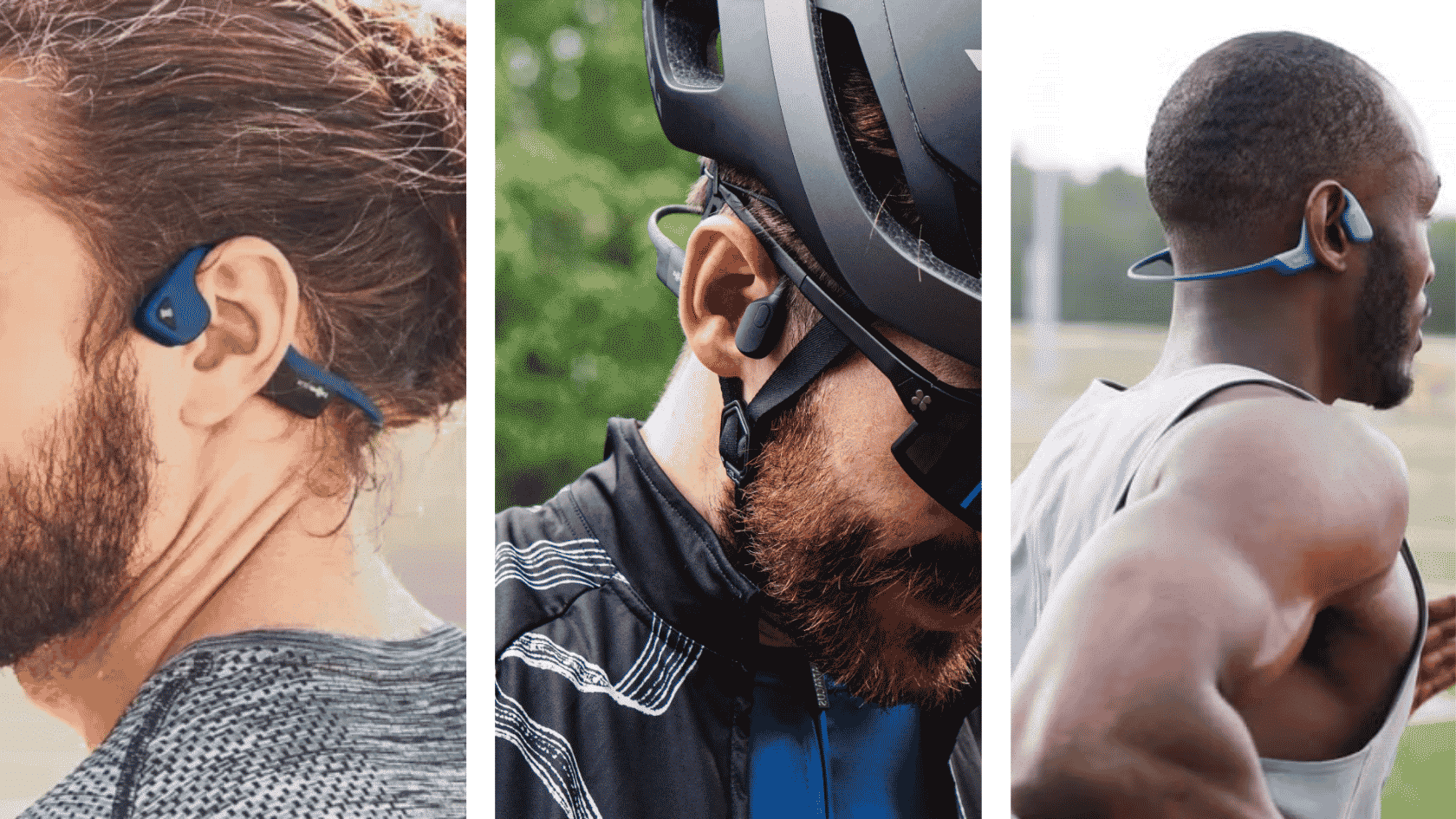
If you are asking, are bone conduction headphones safe, the answer depends on your hearing health, listening volume, fit, and daily usage.
However, existing hearing conditions, long listening sessions, and an uncomfortable fit may increase the chance of unwanted symptoms.
- Healthy Adults: Bone conduction headphones are generally suitable for casual listening, calls, walking, and exercise when the volume stays low.
- Runners and Cyclists: The open-ear design helps users hear traffic, nearby people, and warning sounds while listening.
- People Who Dislike Earbuds: They may be a comfortable option for anyone who experiences ear canal pressure or irritation from in-ear devices.
- Office and Remote Workers: They can support calls and audio while allowing users to hear coworkers, family members, or surrounding sounds.
- People With Hearing Concerns: Anyone with tinnitus, vertigo, hearing loss, implants, or recent ear surgery should speak with a doctor before use.
- Workers in Noisy Areas: These headphones are not hearing protection and should not replace earplugs or earmuffs.
- Users With Ongoing Symptoms: Stop using them if you notice pain, dizziness, ringing, muffled hearing, or lasting hearing changes.
Wrapping It Up
At the end of the day, no headphone is one-size-fits-all, and that’s okay.
What feels like a minor buzz to one person might genuinely bother someone else, and your body’s reaction is valid information, not an inconvenience.
So if you’re on the fence, start small. Try a short session, keep the volume low, and notice how your head and jaw feel afterward.
And if something ever feels off, if it’s a lingering headache or odd pressure, trust that signal. A quick chat with a doctor costs far less than ignoring it.
Staying aware of possible side effects isn’t about fear; it’s about listening to your body while you enjoy the ride.
Frequently Asked Questions
Can Bone Conduction Headphones Be Used with Hearing Aids?
Some models can work alongside hearing aids, but comfort and sound quality depend on the hearing aid style.
Are Bone Conduction Headphones Waterproof?
Many models are water-resistant, but only fully waterproof versions are suitable for swimming.
Can Children Use Bone Conduction Headphones?
Children can use them with adult supervision, proper sizing, low volume, and limited listening time.