



Growing up, my mum wouldn’t stop talking about her iPod. Just music, nothing else. That simplicity stuck with me.
The problem hasn’t gone away. I can pick up my phone to play one song and, twenty minutes later, find myself scrolling through something I never meant to open.
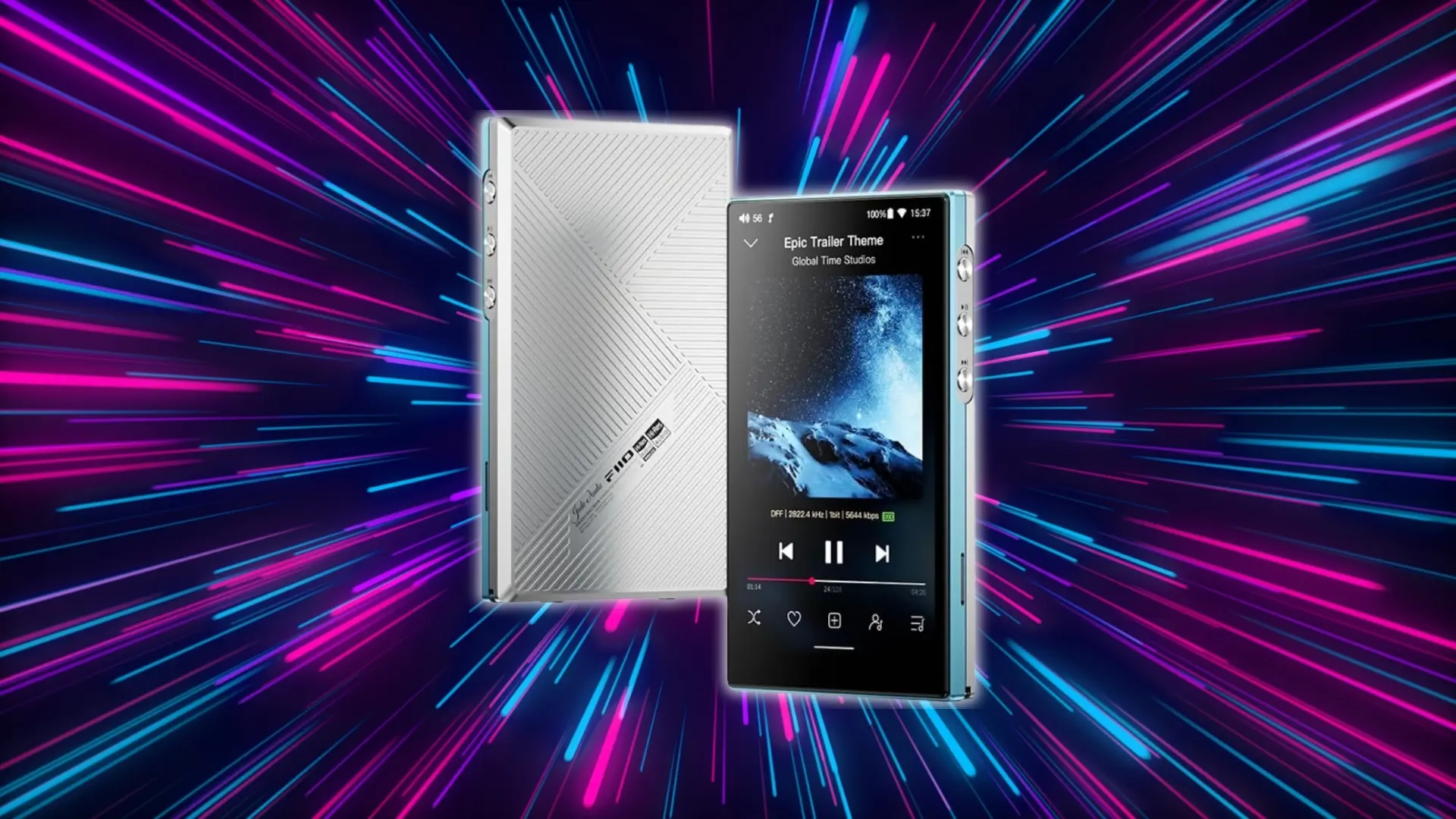
The FiiO JM21 caught my attention for that reason. It is a dedicated digital audio player built around music, but it still has Android for streaming apps when needed.
It promises better wired audio, expandable storage, physical controls, and fewer reasons to stare at a phone. The real question is how well that idea works once specs, battery life, software, sound, and price enter the equation.
What Is the FiiO JM21?
The FiiO JM21 is a compact Android digital audio player built for local music, streaming, and wired headphone use. It runs Android 13, supports expandable storage, and includes both 3.5mm and 4.4mm audio outputs.
Two versions are available, with differences mainly in RAM, storage, and battery capacity.
| Specification | FiiO JM21 |
|---|---|
| Processor | Qualcomm Snapdragon 680 |
| Operating System | Android 13 |
| DAC | Dual Cirrus Logic CS43198 |
| Amplifier | Dual SGM8262 |
| RAM/Storage | 3GB/32GB or 4GB/64GB |
| Expandable Storage | microSD up to 2TB |
| Display | 4.7-inch, 750 × 1334 |
| 3.5mm Output | Up to 245mW + 245mW at 32Ω |
| 4.4mm Balanced Output | Up to 700mW + 700mW at 32Ω |
| Bluetooth | Bluetooth 5.0 |
| USB | USB-C, USB 2.0 |
| Weight | About 156g |
| Thickness | About 13mm |
| 3GB Model Battery | 12.5h single-ended / 9.5h balanced |
| 4GB Model Battery | 16h single-ended / 12.5h balanced |
The table shows why the 4GB/64GB version is the better pick when the price difference is small, mainly because of its extra memory, storage, and longer battery life.
What’s Inside the JM21?
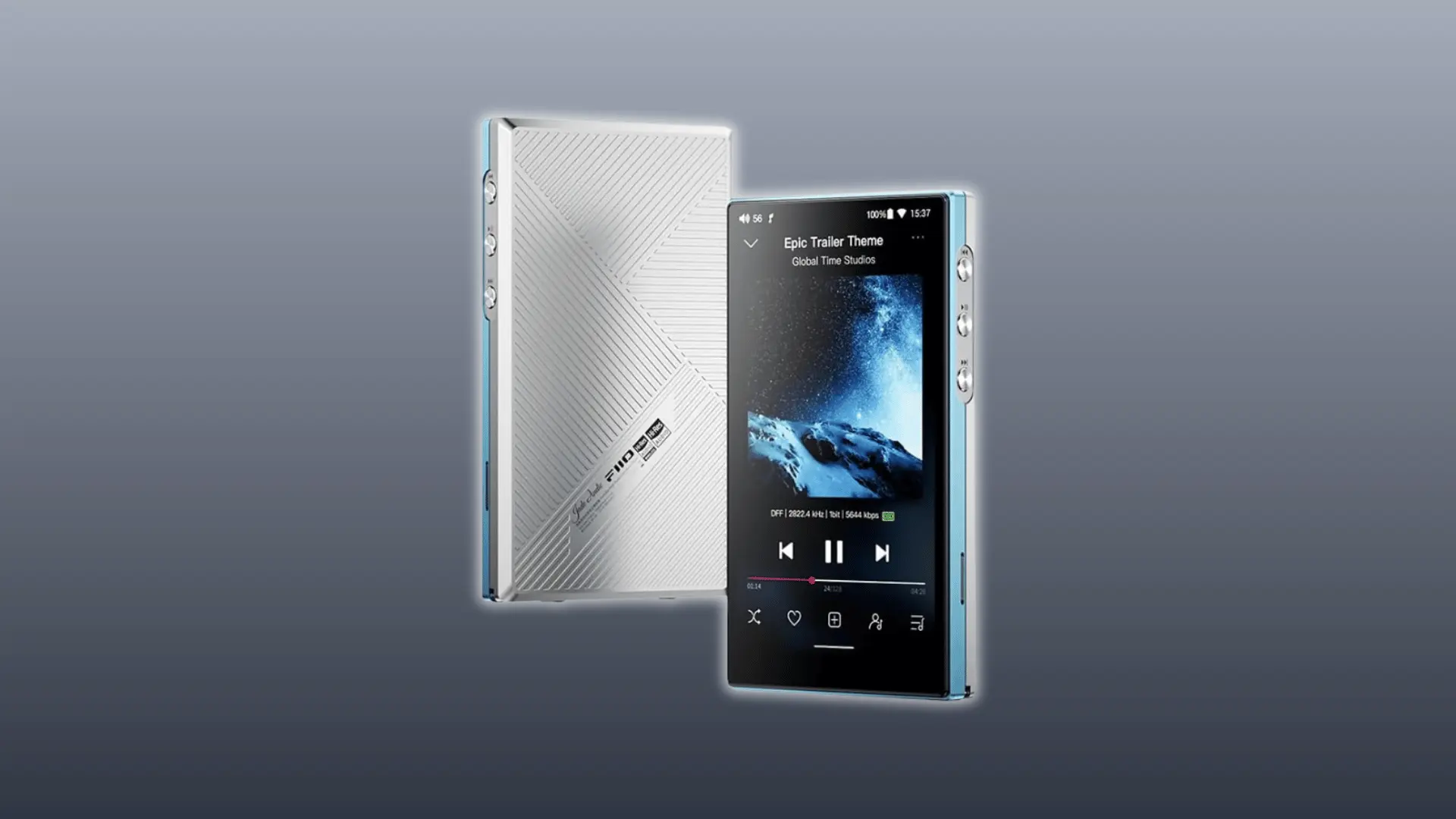
A list of DAC chips and amplifier numbers does not say much unless those parts change how the player works. The JM21’s hardware matters mainly because FiiO has separated the audio side of the device from the jobs handled by the main Android processor.
The Audio Circuit
The JM21 uses two Cirrus Logic CS43198 DAC chips with two SGM8262 op-amps in a fully balanced audio design. FiiO also separates sections of the power supply and shields the main control, DAC, and headphone amplifier areas to help reduce crosstalk and unwanted interference.
That same instinct to isolate the DAC stage from everything else on the board is what drives compact plug-in DACs built for phones and laptops, just scaled down even further.
That is a better explanation for the JM21’s audio focus than saying phone multitasking itself damages sound.
The numbers are also useful. Through the 3.5mm output, FiiO rates the JM21 at up to 245mW per channel into 32 ohms. The 4.4mm balanced connection reaches 700mW per channel under the same load.
That gives the JM21 plenty of power for IEMs and many portable headphones. Very demanding full-size headphones are a different case, and buying a DAP purely to chase maximum output power misses what the JM21 does best.
The Android Side
Android 13 gives the JM21 far more flexibility than an old MP3 player. Major streaming services and other Android apps can be installed, while FiiO’s own music software handles local playback.
The Snapdragon 680 is also a sensible fit for this kind of device. It is not trying to compete with a modern flagship phone, but music apps, library browsing, settings, and general touchscreen use do not demand that level of performance.
There is one important difference between versions. FiiO specifically advises owners of the original 3GB model to limit installed apps and avoid running several apps at once because Android 13 uses a fair amount of memory.
The 4GB model gives Android a little more room to work.
How Does the FiiO JM21 Sound?
Specs can tell me how much power a player produces. They cannot fully describe how music sounds through a particular pair of headphones.
Across independent JM21 reviews, the common theme is a clean and controlled presentation with a slight sense of warmth rather than an aggressive or overly sharp sound. TechRadar called it lively and detailed, while reviewers of the 4GB version also described the output as clean and refined.
That makes sense for the JM21’s role. It is not trying to force a dramatic sound character onto every headphone.
Bass has weight without taking over the mix, vocals stay clear, and the top end generally avoids becoming harsh.
Different reviewers disagree more on soundstage size, which is a good reminder that the IEM or headphone connected to the JM21 still has a major effect on what reaches your ears. That pairing effect is easy to notice when running something like budget in-ear monitors next to pricier gear, since the source only tells part of the story.
The 4.4mm output also deserves some context. Balanced does not automatically mean better sound. Its biggest practical advantage here is the extra output power, making it useful for headphones that need more drive.
For sensitive IEMs, the normal 3.5mm connection may already be all that is needed.
Streaming, Local Playback, and Daily Use
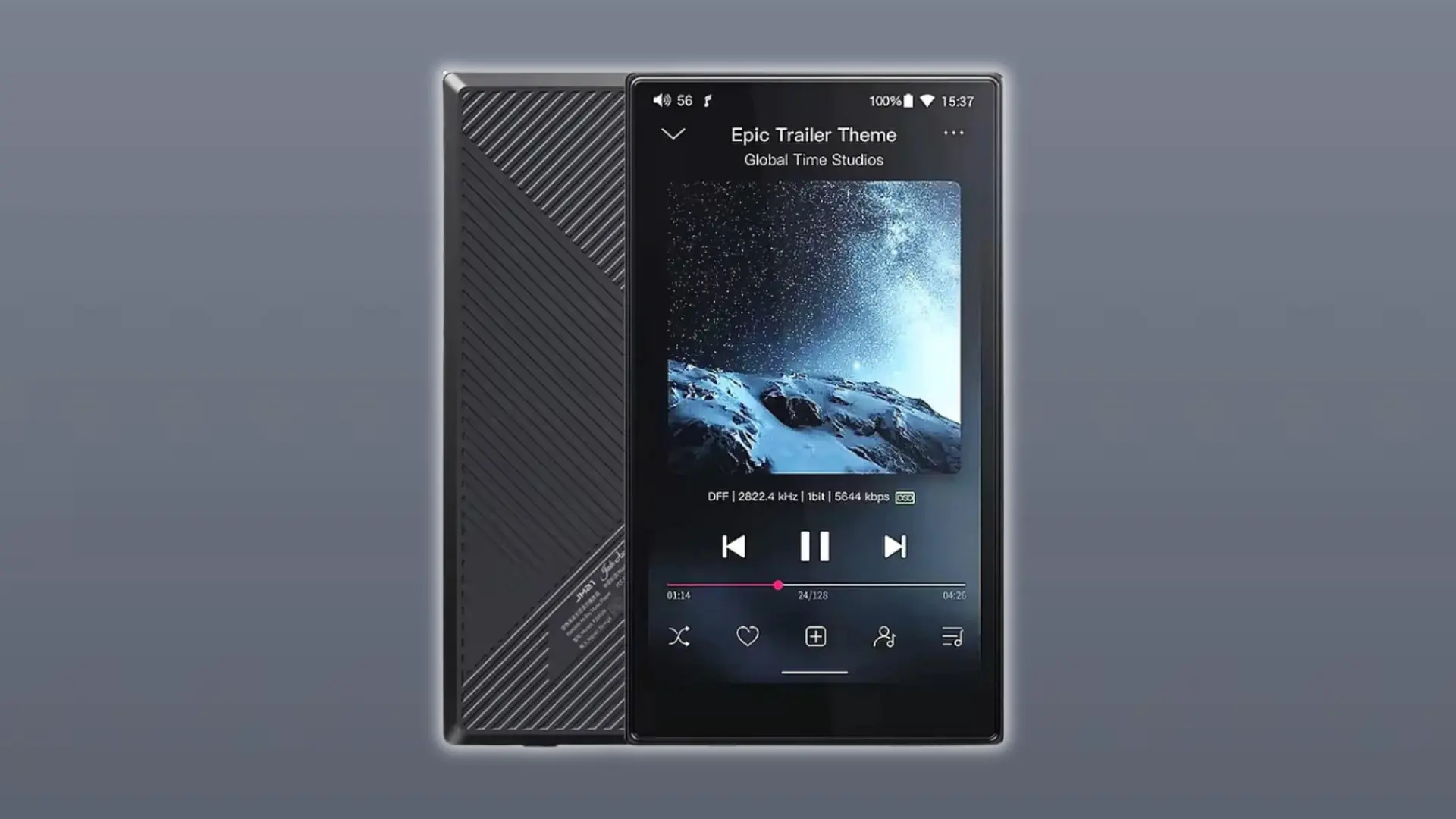
The JM21 works best when treated as a music player first and an Android device second.
Spotify, Apple Music, Tidal, and similar services fit naturally on it. FiiO’s software also avoids Android’s normal system-wide sample-rate conversion for supported music playback, which is useful for listeners paying for lossless or high-resolution streaming.
Local playback is arguably the stronger reason to own one.
The microSD slot accepts cards up to 2TB, giving a large FLAC, WAV, or DSD library far more room than the internal storage alone. Local files also remove the need for a network connection and make the JM21 feel more like the dedicated player that attracted me in the first place.
Working out how much room a growing collection will need is really the same storage capacity planning anyone does before filling up a drive with media
Physical controls help too. Changing volume or skipping a track without waking the screen sounds minor until it becomes part of daily use.
The JM21 also supports Android mode, Pure Music mode, USB DAC mode, and Bluetooth receiving mode. It can send audio through USB or SPDIF as well, so it does not have to stay tied to portable headphones.
That flexibility is one of its strongest features.
Battery Life: The Version Matters
Battery claims around the JM21 can get confusing because two hardware versions are now on sale.
The original 3GB/32GB model has a 2400mAh battery. FiiO rates it for about 12.5 hours through the 3.5mm output and 9.5 hours through the 4.4mm balanced output.
The newer 4GB/64GB version moves to a 3100mAh battery. Its official figures rise to 16 hours single-ended and 12.5 hours balanced.
Those are controlled test figures rather than promises for every setup.
An independent test of the older model recorded roughly 8–9 hours when using Bluetooth or balanced output and around 10–10.5 hours through the single-ended connection. Screen time, wireless use, volume, gain, file type, and attached headphones can all change the result.
For that reason, posts claiming the JM21 has either “9.5 hours” or “16 hours” of battery life can both be correct. They may simply be talking about different versions and outputs.
Where the JM21 Falls Short
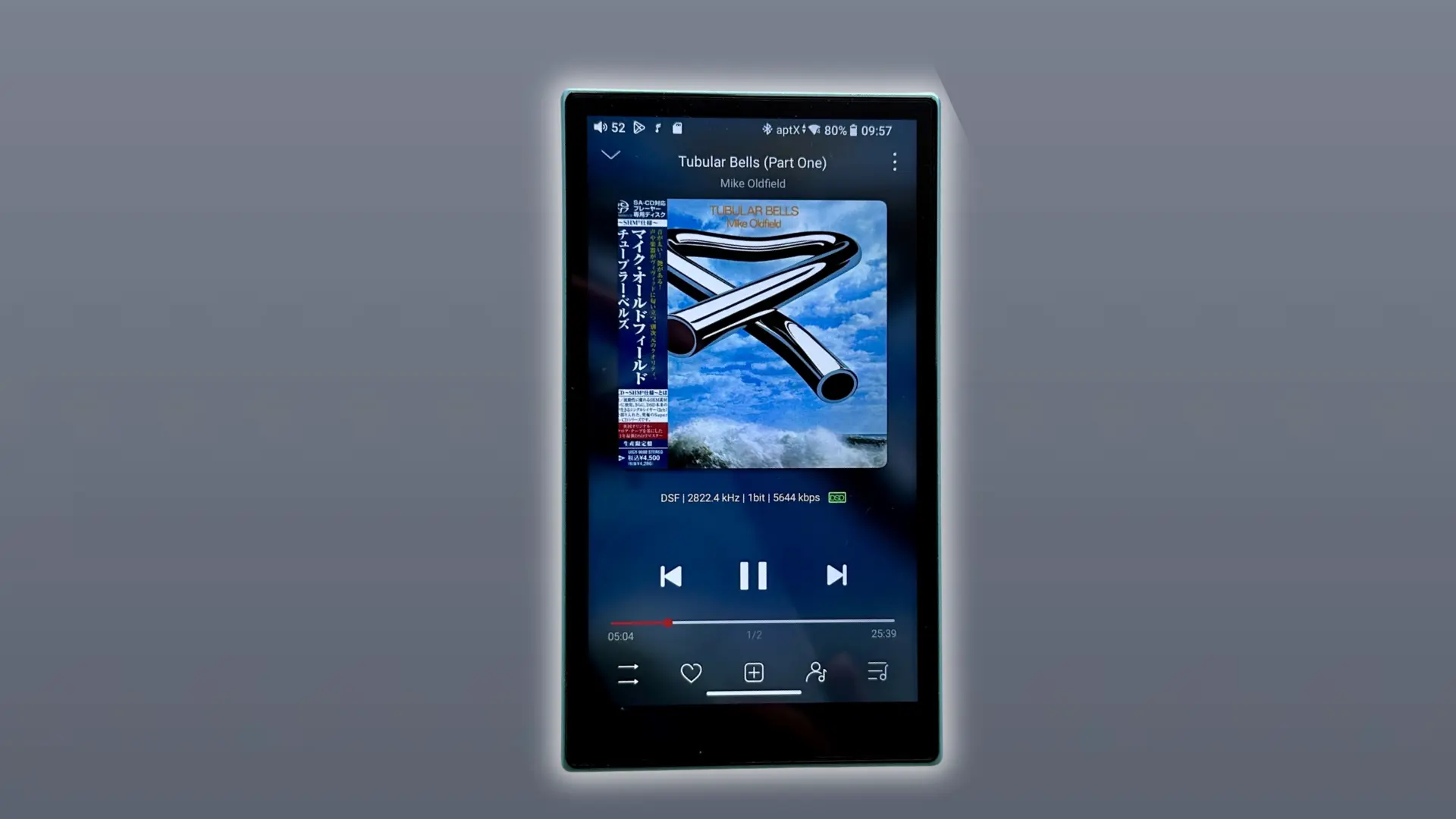
The JM21 gets a lot right for its size, but several compromises deserve attention before spending money on one.
1. USB 2.0 Feels Old
FiiO uses USB-C, but the data connection itself is USB 2.0.
That matters if you regularly copy a large lossless library through the player. Moving a few albums is not a serious problem. Moving hundreds of gigabytes can take far longer than it would through a modern USB 3 connection.
A simple workaround is loading the microSD card through a faster card reader.
2. The Original 3GB Model Has Limited Headroom
Three gigabytes of RAM is enough for a focused music player, but it is not generous for Android 13.
FiiO acknowledges this and recommends keeping the original model focused on streaming music apps rather than loading it with unrelated software or running many apps together.
That limitation fits the JM21’s purpose, but it is still worth knowing.
The 4GB version is the safer choice for anyone who plans to switch frequently between several streaming services.
3. Charging and Software Complaints Exist
There are scattered owner reports of charging problems, battery oddities, and software issues. One Head-Fi owner, for example, reported a JM21 that temporarily stopped indicating a normal charge until the device was restarted. Other owners have reported isolated playback or firmware problems.
That is not enough evidence to call charging failure a common JM21 defect.
FiiO also continues to issue firmware updates. Firmware 1.1.1 was published in April 2026 with additional features and fixes, showing that the software is still being maintained.
I would still buy from a retailer with a clear return process and warranty, especially with any portable device containing a built-in battery.
Who Should Buy the JM21 and Who Shouldn’t?
The JM21 makes the most sense when its focused design solves a problem you already have.
| Details | Who Should Buy | Who Shouldn’t Buy |
|---|---|---|
| Audio | Wants stronger wired audio for IEMs or headphones | Is already happy with phone audio |
| Streaming | Wants music apps without using a main phone | Only streams through wireless earbuds |
| Local Files | Keeps a large FLAC or hi-res library | Has no local music collection |
| Daily Use | Wants physical controls and a music-first device | Wants one device for every task |
| Storage | Needs up to 2TB of removable storage | Rarely stores music offline |
| Balanced Audio | Owns gear that benefits from more output power | Uses easy-to-drive 3.5mm earphones |
| File Management | Loads music occasionally | Moves huge libraries every few days |
The table makes the trade-off fairly clear. The JM21 is valuable because it refuses to be your main phone.
There is an irony, though. Android means it can still become another screen full of apps if you treat it that way. Keeping it focused on music is partly a hardware choice and partly a personal one.
Is the FiiO JM21 Worth Buying in 2026?
Price changes the answer more than any individual specification.
FiiO used a $199.99 regular price for the JM21 during an official April 2026 promotion, with a temporary sale price of $159.99. Other retailers have listed the player considerably higher, and the newer 4GB/64GB model can carry a premium.
At around $200, the JM21 is easy to recommend for someone who wants an Android DAP with strong wired output, expandable storage, streaming support, and a genuinely portable body.
Closer to $250 or $260, the decision becomes less automatic. At that point, comparing the price with newer or more powerful DAPs makes sense.
I would also choose the 4GB/64GB version over the older model when the price difference is modest. The extra RAM is useful, but the larger battery is the more meaningful upgrade.
The strongest reason to buy the JM21 is still simple: it lets music be the main event again.
Conclusion
The FiiO JM21 makes sense because it knows what kind of device it is. It gives music more attention than a normal phone can, without giving up streaming, Bluetooth, expandable storage, or modern touchscreen controls.
Its limits are easy to see. USB 2.0 is slow, the original 3GB model has little spare memory, Android 13 will age, and real battery life depends heavily on how the player is used.
For me, none of those points kills the idea behind it. I like that the JM21 can turn listening back into a deliberate activity instead of the first step toward another hour on a phone.
At the right price, that focus is worth paying for.
Frequently Asked Questions
What is the difference between the FiiO JM21 3GB/32GB and 4GB/64GB versions?
The 4GB/64GB JM21 adds 1GB of RAM, doubles the internal storage, and increases battery capacity from 2400mAh to 3100mAh. Its single-ended battery rating also rises from 12.5 to 16 hours.
Does the FiiO JM21 work as a USB DAC?
Yes. The JM21 can work as a USB DAC with Windows or macOS and supports up to 384kHz/32-bit PCM and native DSD256 in that mode. FiiO notes that USB DAC mode has higher latency, so it is not ideal for video.
Can the FiiO JM21 drive 300-ohm headphones?
FiiO rates the balanced output at up to 80mW per channel into 300 ohms. That can handle some high-impedance headphones, but sensitivity matters too. Very demanding models may still benefit from a stronger amplifier.
Can the JM21 be used without streaming services?
Yes. Local music is one of its strongest use cases. The JM21 supports microSD cards up to 2TB and local decoding up to 384kHz/32-bit PCM and native DSD256.