

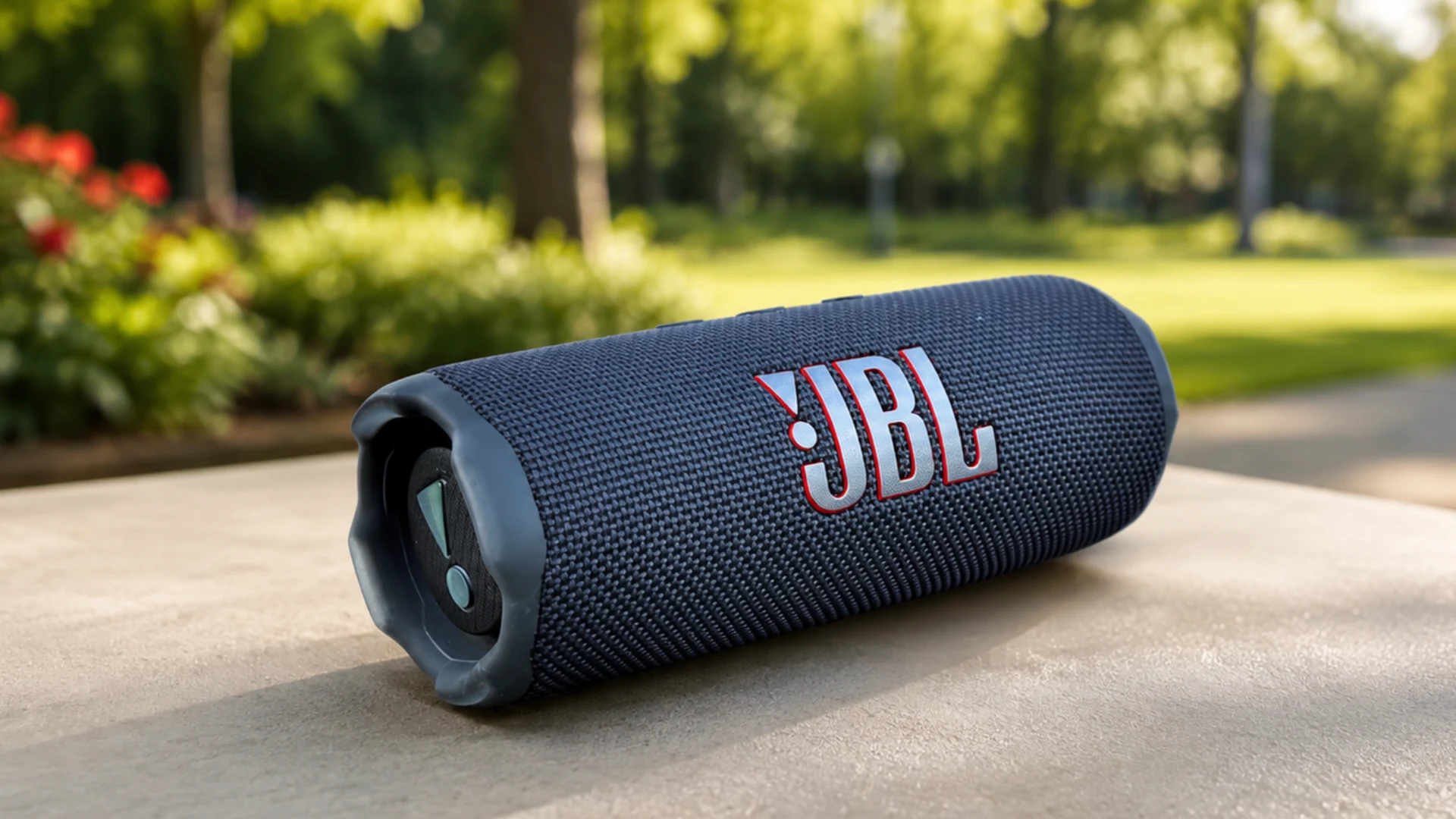
JBL has packed the Flip 7 with stronger protection, updated connectivity, longer rated battery life, and useful attachment options. Specs look promising, but they only explain part of the experience.
I focused more on how the speaker behaves when volume rises, battery-saving features come into play, and outdoor conditions get rough. My JBL Flip 7 review also looks closely at sound balance because that is where the biggest strength and limitation appear.
The Flip 7 sounds surprisingly full for its size at normal listening levels. Push it harder, though, and the bass starts losing weight while the upper frequencies become more noticeable.
That tradeoff matters far more than another line on the spec sheet.
What Does the JBL Flip 7 Actually Offer?
The JBL Flip 7 builds on a formula that already worked well. It remains compact, easy to carry, and capable of producing more sound than its small body suggests.
The Flip 6 already offered dependable audio, good portability, and strong protection, so JBL needed meaningful changes to make the newer model stand apart.
Balancing real upgrades against a well-liked predecessor is a challenge other speaker makers face too, something generational speakers tend to highlight when an older and newer model sit side by side.
Those changes include an IP68 rating, longer rated playback, PushLock attachments, Auracast support, wired USB-C audio, and more sound adjustment through the JBL Portable app.
None of those additions completely change what the Flip series is about. The Flip 7 is still a compact everyday speaker first. The bigger question is how well those upgrades improve the experience once sound quality, battery use, and real-world portability enter the mix.
How Does the JBL Flip 7 Sound?
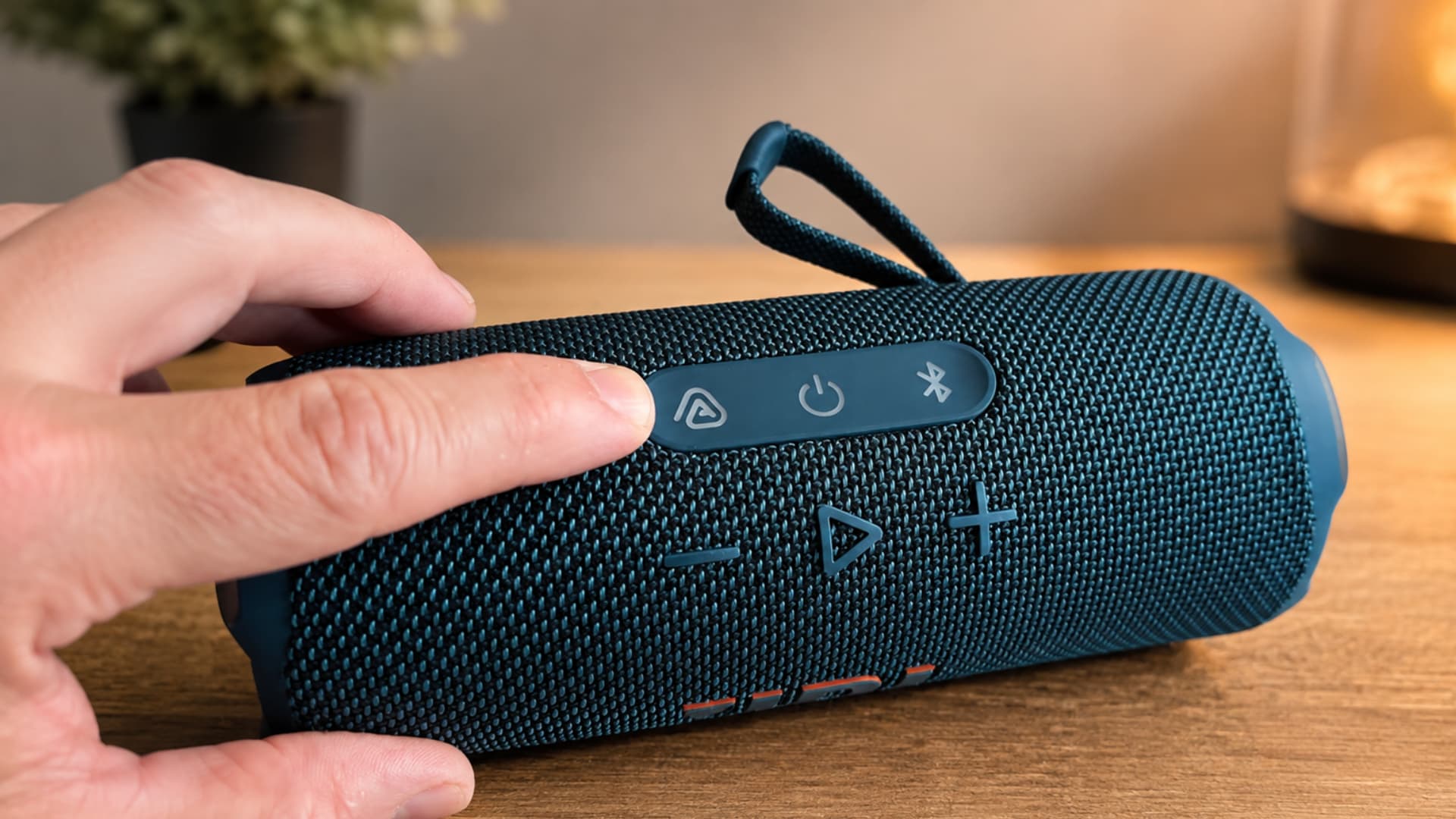
Sound quality is one of the strongest reasons to consider the Flip 7. At sensible listening levels, it delivers a balanced mix of bass, vocals, and treble without sounding strained.
1. Bass Response
At moderate volume, the Flip 7 produces punchy bass with enough weight to make pop, electronic music, and other bass-heavy tracks feel lively.
The low end does not dominate the rest of the mix. Vocals still come through clearly, which keeps the speaker from sounding muddy during normal listening.
Its compact size naturally limits how deep the bass can reach, but the result still feels strong for a portable speaker of this size. That size-versus-depth tradeoff becomes even clearer when you look at larger home speaker setups, where more cabinet volume simply gives the low end more room to develop.
2. Vocals and Midrange
Vocals remain clear and forward without sounding disconnected from the bass.
That helps podcasts, acoustic music, and vocal-heavy tracks sound easy to follow. Instruments also retain enough separation to keep the presentation from feeling crowded.
The midrange is one of the reasons the Flip 7 works well across several types of content instead of feeling tuned only for bass-heavy music.
3. Treble Clarity
Higher frequencies stay crisp through the middle of the volume range.
Cymbals, vocals, and brighter instruments retain enough definition without becoming overly aggressive during normal listening.
The treble becomes more important once the speaker is pushed harder, though, because changes in bass output can make those upper frequencies seem more prominent.
4. Indoor and Outdoor Performance
Indoors, walls and nearby surfaces can reinforce the Flip 7’s low frequencies and make the speaker sound fuller.
Outdoors, that reinforcement disappears. Bass spreads more freely, so the speaker can sound slightly leaner in open spaces.
The difference is normal for a compact speaker, but it also means outdoor users may notice its volume limitations sooner than someone listening in a bedroom or kitchen.
What Happens When the Volume Gets High?
High-volume performance is where the Flip 7’s biggest compromise appears.
Below roughly 70 to 75 percent volume, the speaker keeps a fairly convincing balance between bass, mids, and treble. Push beyond that range, and the presentation begins to change.
Bass becomes less prominent as output rises, while mids and highs move further forward. Around the upper end of the volume range, that shift can make music sound thinner and slightly sharper.
The behavior makes sense for a small portable speaker. Reducing low-frequency output gives the driver more room to play loudly without becoming heavily distorted.
That means maximum volume is not necessarily the Flip 7’s best volume.
For everyday listening, its strongest performance comes through the middle of its output range, where bass still has weight and the overall balance feels more natural.
Can the 7-Band EQ Improve the Sound?
The JBL Portable app gives the Flip 7 a 7-band equalizer, providing more control than simple bass and treble presets.
Small EQ changes can help adjust the sound to suit different rooms, music, or personal preferences. Adding a little low-end weight can help outdoors, while reducing brighter frequencies may make longer listening sessions more comfortable.
EQ cannot completely overcome the physical limits of a compact speaker, especially near maximum volume.
It works best for fine adjustments rather than trying to force more bass or output dramatically from the Flip 7.
Used carefully, the equalizer makes an already balanced speaker easier to tune without changing what makes its default sound work well.
What Has JBL Improved Beyond Sound Quality?
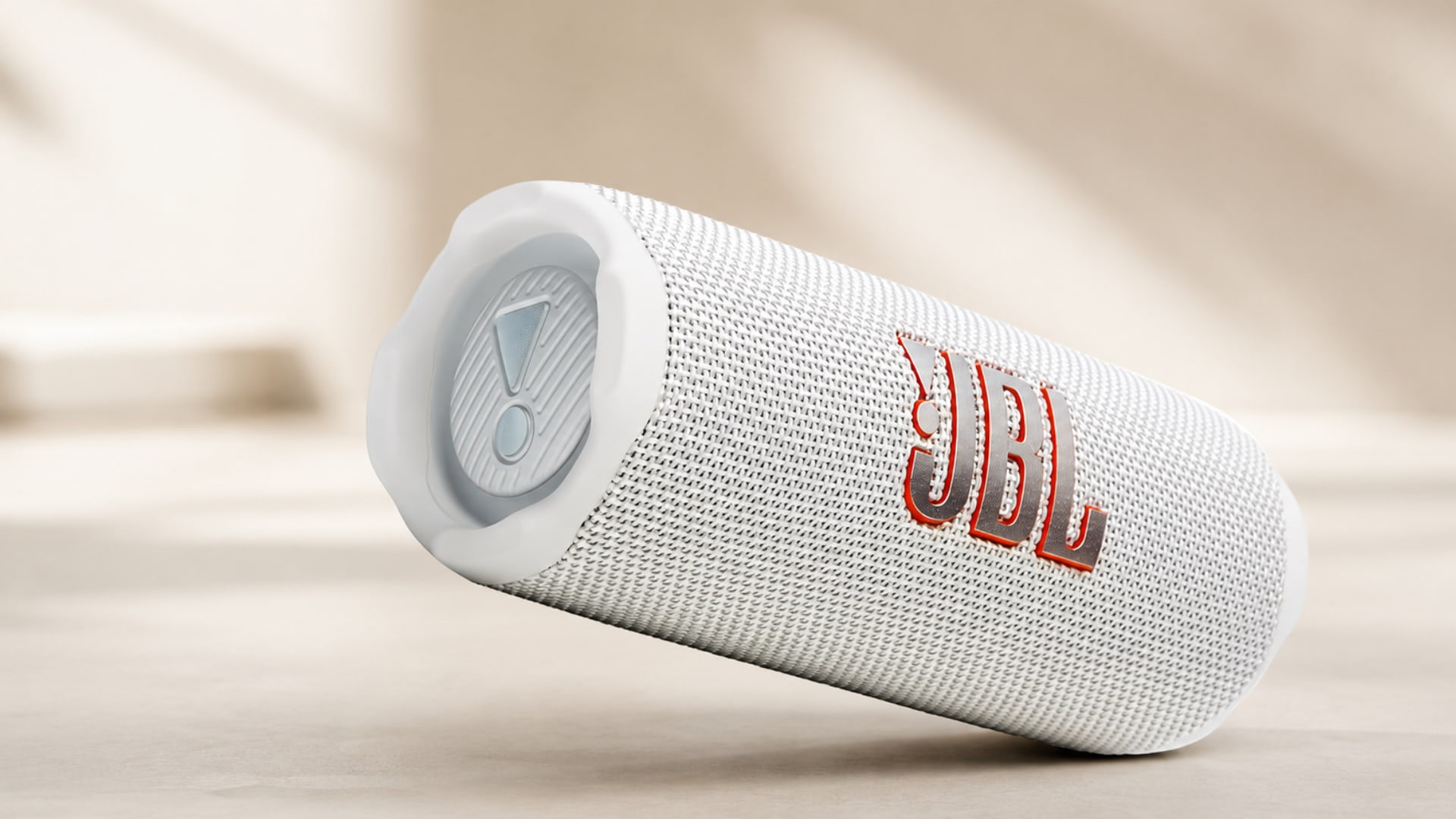
Beyond sound, the JBL Flip 7 brings meaningful upgrades in design, battery life, durability, and overall everyday value.
1. Design and Build
At 7.2 x 2.7 x 2.8 inches and 1.82 pounds, the Flip 7 remains compact enough for backpacks and side pockets.
Its familiar tubular design changes little from the Flip 6, but JBL adds a four-nub rubber base and updated mounting system. The included carabiner also makes attaching it to bags much easier.
2. Battery Life
JBL rates the Flip 7 for up to 14 hours of playback, increasing to 16 hours with Playtime Boost enabled. That improves on the Flip 6 rating and gives the speaker enough endurance for day trips or gatherings.
Playtime Boost extends runtime by reducing some bass output, while charging continues through the USB-C connection.
3. Durability
The Flip 7 carries an IP68 rating, improving on the Flip 6’s IP67 protection. It provides strong resistance against dust and water, making the speaker better suited to pools, beaches, and outdoor trips.
JBL also rates it for drops from up to one meter, adding another layer of protection against common portable-speaker accidents.
4. Price and Value
The Flip 7 launched at $149.95, up from Flip 6’s $129 starting price. That’s a real increase, and it’s fair to ask whether the upgrades justify it.
Given the jump in wattage, battery life, water resistance, and the addition of Auracast, the price increase tracks with what actually changed.
Together, these upgrades make the Flip 7 easier to carry, harder to damage, longer lasting, and more practical every day.
What Do JBL Flip 7 Owners Say on Reddit?
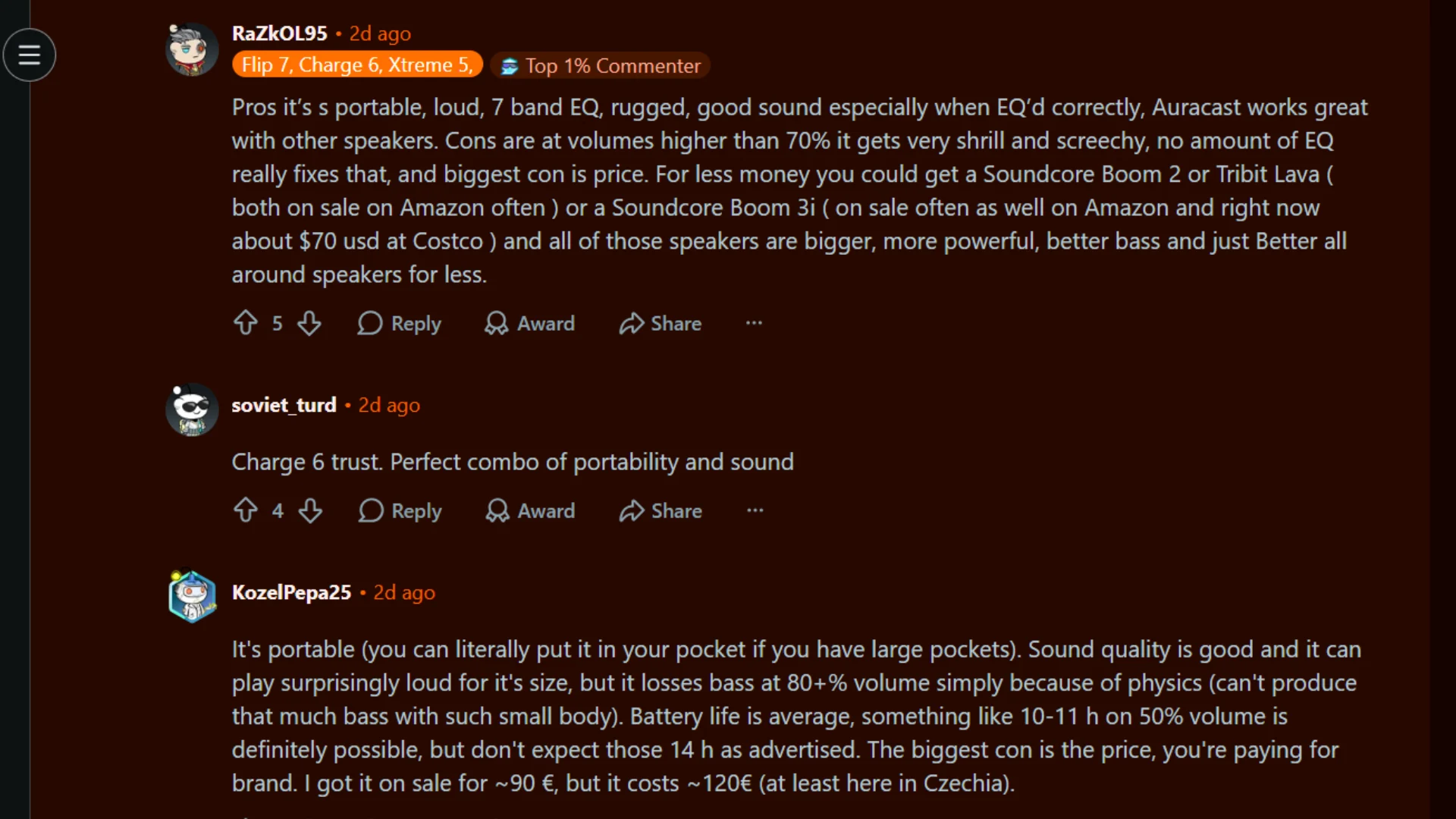
Reddit discussions add a useful real-world view of how the JBL Flip 7 performs outside controlled testing.
Owners generally praise its portability, rugged build, strong output for its size, 7-band EQ, and Auracast support. The biggest concern appears at higher volume levels.
Several users report that the speaker becomes sharper above roughly 70 percent volume, while bass starts dropping noticeably around 80 percent.
Battery life also receives mixed feedback, with some owners reporting around 10 to 11 hours at moderate volume instead of reaching JBL’s advertised maximum. Price is another common criticism, especially when larger alternatives cost less.
Overall, the discussion supports the same pattern: the Flip 7 performs well at moderate volume, but its compact size creates clear limits when pushed harder.
JBL Flip 7 Pros and Cons
The JBL Flip 7 offers a strong mix of portability, durability, sound control, and convenience, though a few limits are worth considering.
| Pros | Cons |
|---|---|
| Bass, vocals, and treble remain controlled at moderate volume levels. | Low frequencies become less noticeable near the top of the volume range. |
| The small body is easy to carry, pack, and place in tight spaces. | Treble can sound more prominent when the speaker is played at higher volumes. |
| IP68 resistance and added drop protection suit outdoor and travel use. | Actual playback time may fall below JBL’s maximum battery estimate. |
| The 7-band equalizer gives you more control over the speaker’s final sound. | The newer model costs more than the Flip 6 did at launch. |
| The mounting system and included carabiner make carrying the speaker more convenient. | — |
| Wired playback provides another useful option when Bluetooth is not preferred. | — |
Overall, the Flip 7 suits listeners who value portability, durability, and balanced everyday sound more than maximum bass or output.
Is the JBL Flip 7 Worth It Over the Flip 6?
The Flip 7 improves several areas, but the value of upgrading depends heavily on what already works for you.
Here is where the main differences sit:
| Feature | JBL Flip 7 | JBL Flip 6 |
|---|---|---|
| Water and Dust Rating | IP68 | IP67 |
| Rated Battery Life | Up to 14 hours | Up to 12 hours |
| Extended Battery Mode | Up to 16 hours | Not available |
| Attachment System | PushLock | Carrying strap |
| Multi-Speaker Support | Auracast | PartyBoost |
| USB-C Audio | Supported | Not supported |
| Launch Price | $149.95 | $129 |
The newer model brings better protection, longer rated playback, updated speaker pairing, PushLock attachments, and USB-C audio.
Those are meaningful additions for a new buyer.
For someone who already owns a working Flip 6, the case is weaker. The upgrade makes more sense if stronger outdoor protection, easier attachment options, Auracast, or wired audio solve a specific problem.
Sound alone may not be enough reason to replace the older model.
Who Should Buy the JBL Flip 7?
The Flip 7 makes the most sense for people who value portability more than maximum bass or party-level output.
It suits:
- Day trips and travel
- Pool and beach use
- Camping
- Bedrooms and kitchens
- Patios
- Small gatherings
- Everyday background listening
Someone who regularly plays music near maximum volume may be better served by a larger speaker with more physical headroom.
The same applies to listeners who care more about deep bass than compact size.
The Flip 7 works best as a portable speaker that happens to get loud, rather than a loud speaker that happens to be portable.
Final Verdict
The JBL Flip 7 gets the important parts right. It is compact, rugged, easy to carry, and capable of producing surprisingly full sound for its size.
My main reservation is high-volume performance. Bass starts losing weight as the speaker approaches its upper range, which can make the sound noticeably thinner.
I still think the overall balance makes sense for the type of speaker JBL has built.
The key takeaway from this JBL Flip 7 review is simple: its strengths show most clearly at moderate volume, where sound quality, portability, and durability work together well.
For Flip 6 owners, the upgrade makes the strongest case through IP68 protection, PushLock attachments, Auracast, and USB-C audio rather than sound alone.
Frequently Asked Questions
Is the JBL Flip 7 waterproof?
Yes. The Flip 7 carries an IP68 rating, meaning it’s fully dust-tight. JBL specifies that the Flip 7 can withstand submersion in up to 1.5 meters of water for up to 30 minutes. It handles pool, beach, and rain exposure without a case, though it’s built for water resistance, not prolonged underwater use.
How long does the JBL Flip 7 battery last?
Standard listening delivers around 14 hours at moderate volume. Playtime Boost mode extends that to roughly 16 hours. It does this by trimming low-end bass in favor of mids and highs. The extra runtime comes with a noticeably thinner sound.
Is the JBL Flip 7 worth it over the Flip 6?
If you already own a Flip 6, the upgrade is incremental, not essential. The core sound trade-offs are similar. The Flip 7 mainly adds a stronger IP68 rating, the PushLock attachment system, and wired USB-C lossless audio. Those matter most if durability or attachment options were your main complaints.
Does the JBL Flip 7 sound bad at high volume?
Not bad, but noticeably different. Pushed past roughly 75 to 80 percent volume, the speaker reduces bass to protect its driver from distortion. That can make the sound feel thinner or sharper. Staying below that threshold keeps the fuller, more balanced sound most reviewers describe.