

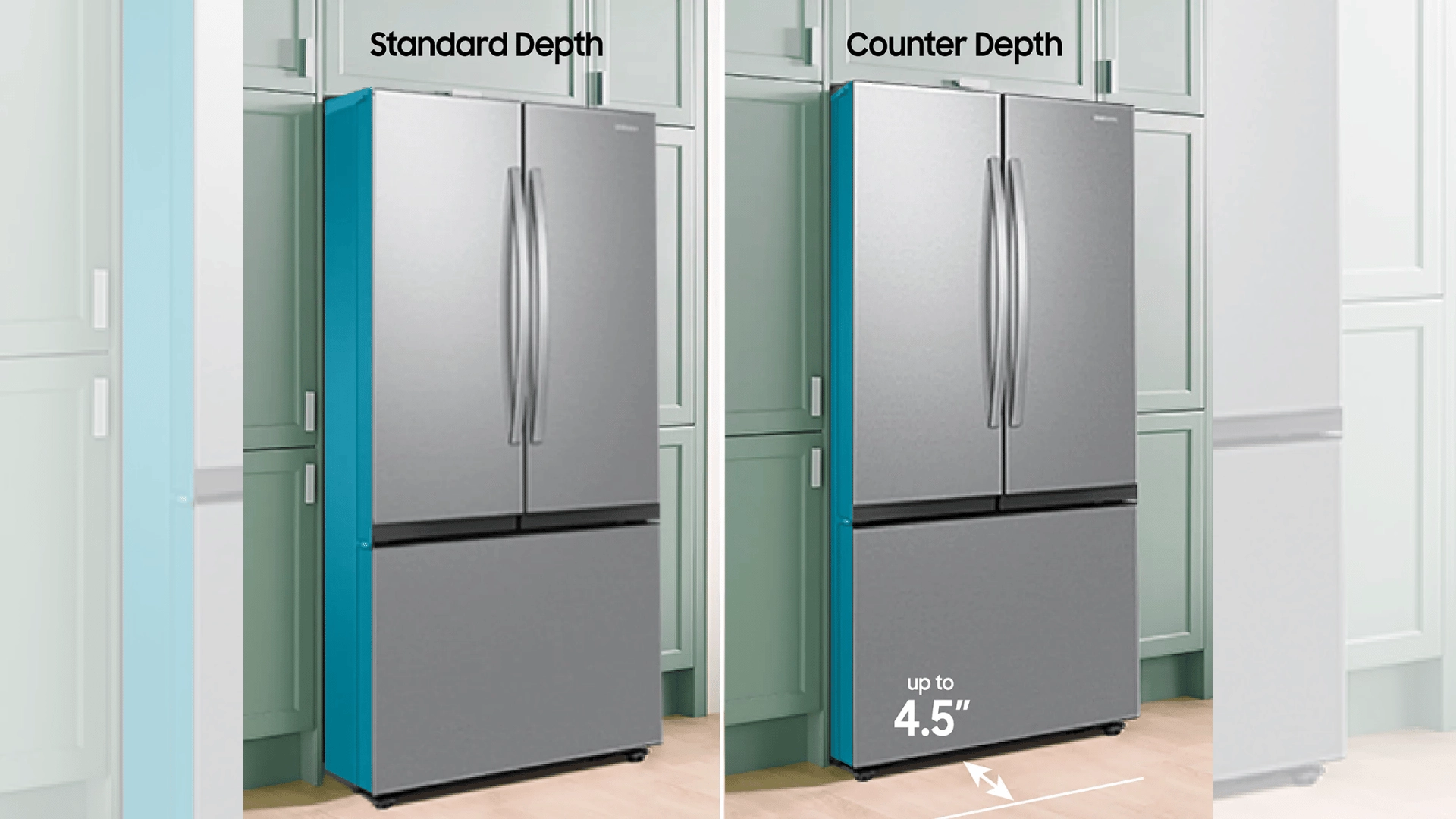






A fridge can look perfect in a store and still feel wrong once it sits in your kitchen. The difference often comes down to depth.
A counter-depth refrigerator vs. a standard model affects walking space, storage room, price, and how built-in your kitchen looks.
Counter-depth sits closer to your cabinets, while standard depth gives you more room for food.
The better choice depends on how your kitchen is shaped and how much storage your family needs.
I will help you compare fit, cost, capacity, and daily use so the choice feels easier. First, let us look at what each fridge type actually means.
What is a Counter-Depth Refrigerator, and What is a Standard-Depth One?
Counter-depth means the fridge body sits close to your counter edge, usually 24 to 30 inches deep.
Standard-depth runs deeper, typically 30 to 36 inches, so the box sticks out past your cabinets. Neither number includes the doors or handles.
Standard counter depth in most US kitchens runs about 24 to 25 inches once you include the countertop overhang, which is exactly the range counter-depth fridges are built to match.
That’s also why manufacturers rarely just shave inches off a standard model to make it counter-depth.
Many widen or heighten the counter-depth version instead, so the lost front-to-back space gets made up somewhere else on the box.
The 24 to 30-inch range isn’t fixed either. It shifts depending on the model and brand.
A 24-inch chassis sits nearly flush once you add door thickness. A 30-inch chassis, on the low end of “standard,” can look almost identical to counter-depth once it’s installed.
That’s why two fridges labeled differently can look the same in a showroom. The label tells you where the manufacturer classified it. It doesn’t always tell you how it will actually sit in your kitchen.
Door swing matters here too. Some counter-depth doors open wider to clear the extra chassis depth they’re compensating for.
That means the doors themselves can stick out further than the numbers suggest, even on a model built to sit close to your counter.
Counter-Depth vs. Standard-Depth Refrigerator: Side-by-Side Comparison
A quick side-by-side comparison makes the trade-offs easier to understand. Focus on depth, storage, price, fit, and daily use before choosing the right refrigerator for your home.
| Feature | Counter-Depth Refrigerator | Standard-Depth Refrigerator |
|---|---|---|
| Depth | Usually 24 to 30 inches deep | Usually 30 to 36 inches deep |
| Kitchen fit | Sits closer to the cabinet line | Extends further past the cabinets |
| Storage space | Holds less, often 4 to 6 cubic feet less | Offers more room for food and large items |
| Price | Usually costs more | Usually offers better value for capacity |
| Daily use | Shallower shelves make food easier to see | Deeper shelves fit more but can hide items |
| Best for | Narrow kitchens and built-in-style layouts | Large families, bulk shopping, and extra storage |
Counter-depth works best when space and appearance matter. Standard depth is better when you want more storage and lower cost for the same width in your kitchen.
Why Do Counter-Depth Refrigerators Cost More and Hold Less?
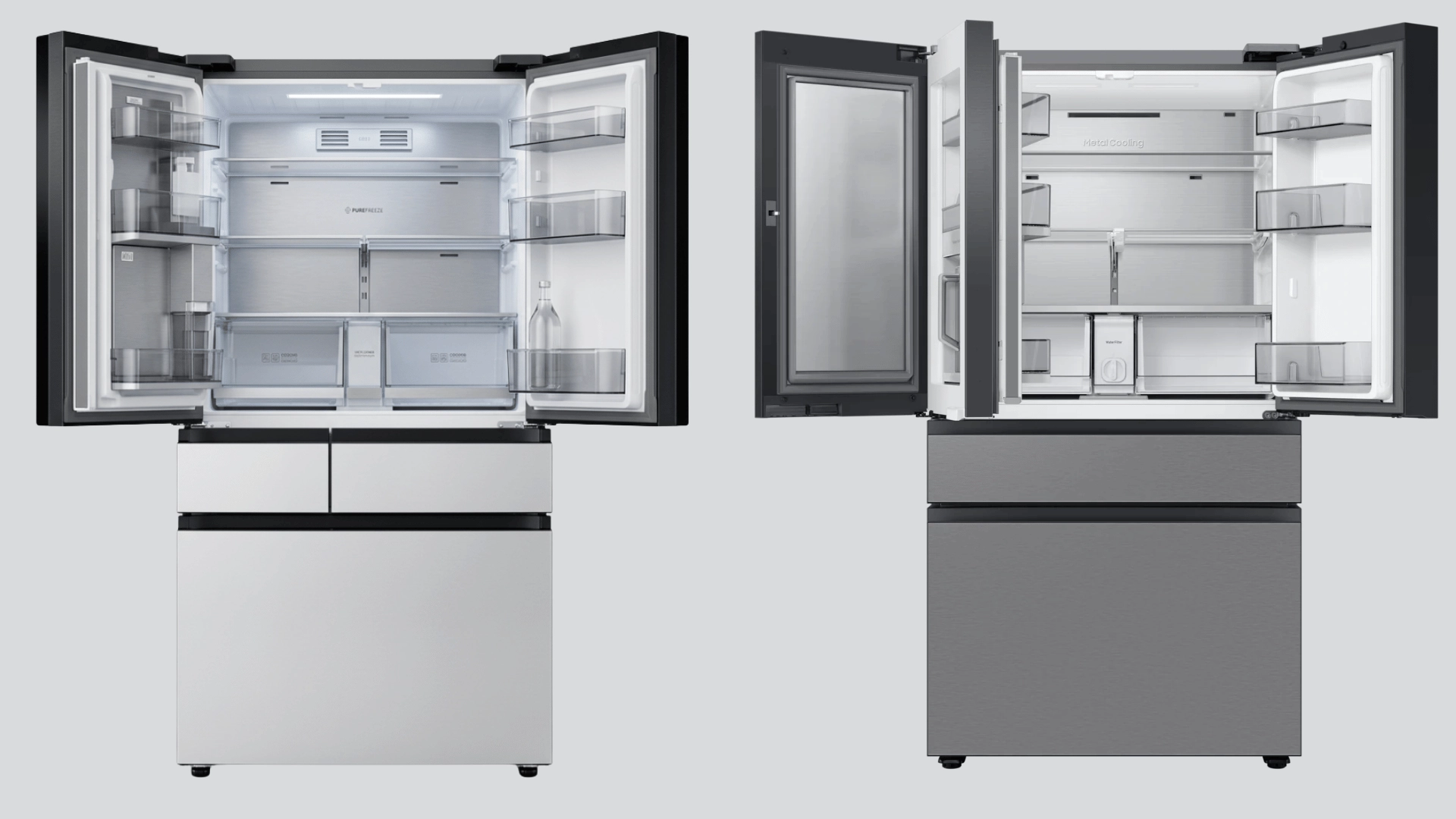
Counter-depth refrigerators cost more while offering less storage. The difference usually comes from their compact design, internal layout, and lower production volume.
- Compact component placement: Standard refrigerators have more room behind the unit for compressors and coils. Counter-depth models must fit these components into a shallower body.
- Reduced usable space: Internal components can take up room near the back or upper corners, leaving less space for shelves, drawers, and food.
- More complex construction: Fitting the cooling system into a slimmer design requires additional planning and specialized manufacturing. That same tight internal packing is part of why component-level repairs, like an ice maker that stops working, can be trickier to diagnose in a shallower body.
- Lower storage capacity: A counter-depth model may offer 4 to 6 fewer cubic feet than a standard refrigerator of the same width.
- Smaller production numbers: Counter-depth refrigerators sell in lower volumes, so manufacturers have fewer opportunities to reduce production costs.
The result is a refrigerator with a cleaner cabinet fit but less storage and a higher price. You pay for the slimmer profile, not extra capacity.
A few manufacturers have started closing that price-versus-features gap. GE Profile’s newest smart French-door line.
For example, sells the same feature set in both standard-depth and counter-depth versions, so buyers aren’t giving up smart features for the slimmer body anymore, just the extra cubic feet.
How Do Counter-Depth and Standard-Depth Fridges Perform in Daily Use?
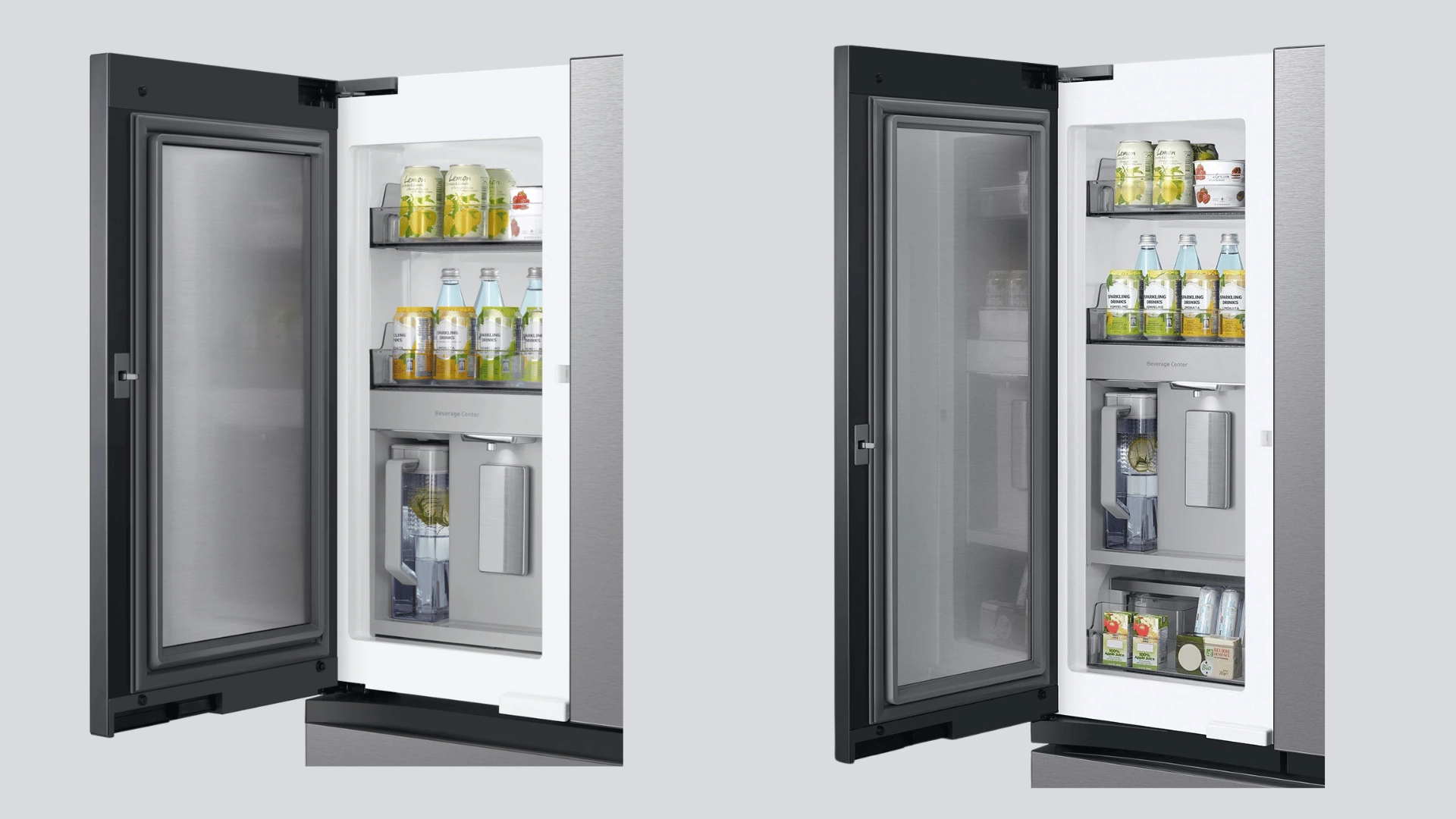
Counter-depth and standard-depth refrigerators perform differently once you’re actually using them day to day: counter-depth keeps everything visible at a glance, while standard-depth gives you more forgiving storage at the cost of things getting buried in back.
Specs only tell half the story. Daily use is where the real differences show up.
Counter-depth shelves are shallower, so you can see everything at a glance. Nothing hides behind three rows of leftovers.
Standard depth gives you more room to work with. Big platters, tall bottles, party-sized trays; they all fit more easily. That extra depth comes with a catch.
Stuff pushed to the back gets forgotten fast, and forgotten food is wasted food.
My honest take after working around both types in real kitchens: a counter-depth fridge only feels like the smarter upgrade if you actually cook often enough to notice what’s sitting on the shelf.
I’ve had both types in kitchens I’ve worked in, and the pattern holds every time. Standard-depth wins on raw capacity; counter-depth wins on keeping things from getting lost.
One question comes up a lot: will a pizza box fit in a counter-depth fridge? Yes, it will.
Depth affects how far back the shelves go, not how wide they are. A standard-size pizza box sits fine on a standard-width shelf either way.
So the daily experience isn’t really about how much space you have. It’s about how well you can actually use the space you’ve got.
Which One Fits Your Kitchen?
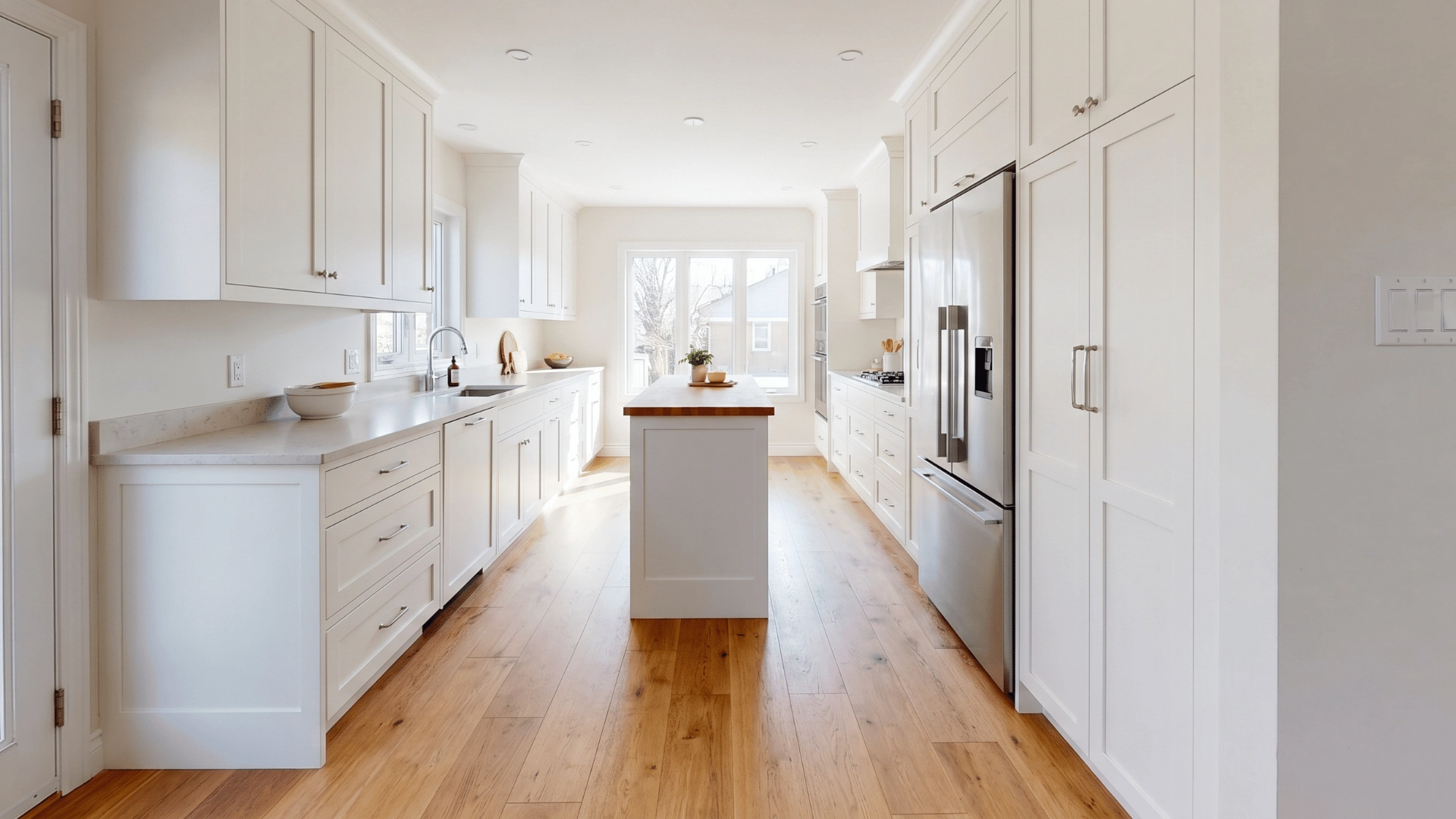
The right choice comes down to your kitchen layout: pick counter-depth if you have a narrow or open-plan kitchen and want a built-in look, and pick standard-depth if you’re stocking up for a large family or regularly buying in bulk.
Think about how you use your kitchen each day. Layout, storage needs, and traffic flow usually make the choice easier.
- Choose counter-depth for narrow kitchens: Galley kitchens and tight walkways benefit from the slimmer profile. It leaves more room near islands, doors, and busy work areas.
- Choose counter-depth for a built-in look: It sits closer to the cabinet line, so the kitchen looks cleaner and more finished.
- Choose standard depth for a large family: The extra space helps when you store more meals, drinks, and leftovers.
- Choose standard depth for bulk shopping: Large grocery hauls, party trays, and oversized containers fit more easily.
- Avoid standard depth in tight enclosures: It may stick out past the cabinets and make the surrounding layout look unfinished.
The better choice depends on your kitchen, not the spec sheet. Pick the depth that fits your space, storage habits, and daily routine.
If you’re weighing the investment either way, it helps to know how long fridges typically last before you commit to a depth and a budget.
Conclusion
Choosing between a counter-depth refrigerator vs. a standard model is really about how your kitchen works every day.
Counter depth gives a cleaner cabinet line and makes food easier to see, but it usually costs more and holds less.
Standard depth gives better storage value, especially for families or bulk shopping, but it can stick out into tight walkways.
I would measure the cabinet depth, door swing, and walking space before comparing features or finishes. A fridge should support your routine, not create daily frustration.
Which matters more in your kitchen, extra storage or a cleaner built-in look? Tell us, share with us in the comments below.
Frequently Asked Questions
Is a Counter-Depth Refrigerator Worth It?
It’s worth it if you want a built-in look and easier-to-see contents. If you need maximum storage for your money, a standard-depth fridge gives you better value.
What are the Disadvantages of Counter-Depth Fridges?
They cost more, hold 4 to 6 fewer cubic feet than a same-width standard model, and the doors still stick out past your counter edge.
Can You Fit a Pizza Box in a Counter-Depth Fridge?
Yes. Counter-depth only reduces front-to-back depth, not shelf width. A standard-size pizza box fits the same as it would in a standard-depth model.
Should I Get a Counter-Depth Fridge or a Standard One?
Go counter-depth for a narrow or open kitchen and a built-in look. Go standard depth if maximizing storage within your budget matters more than appearance.