

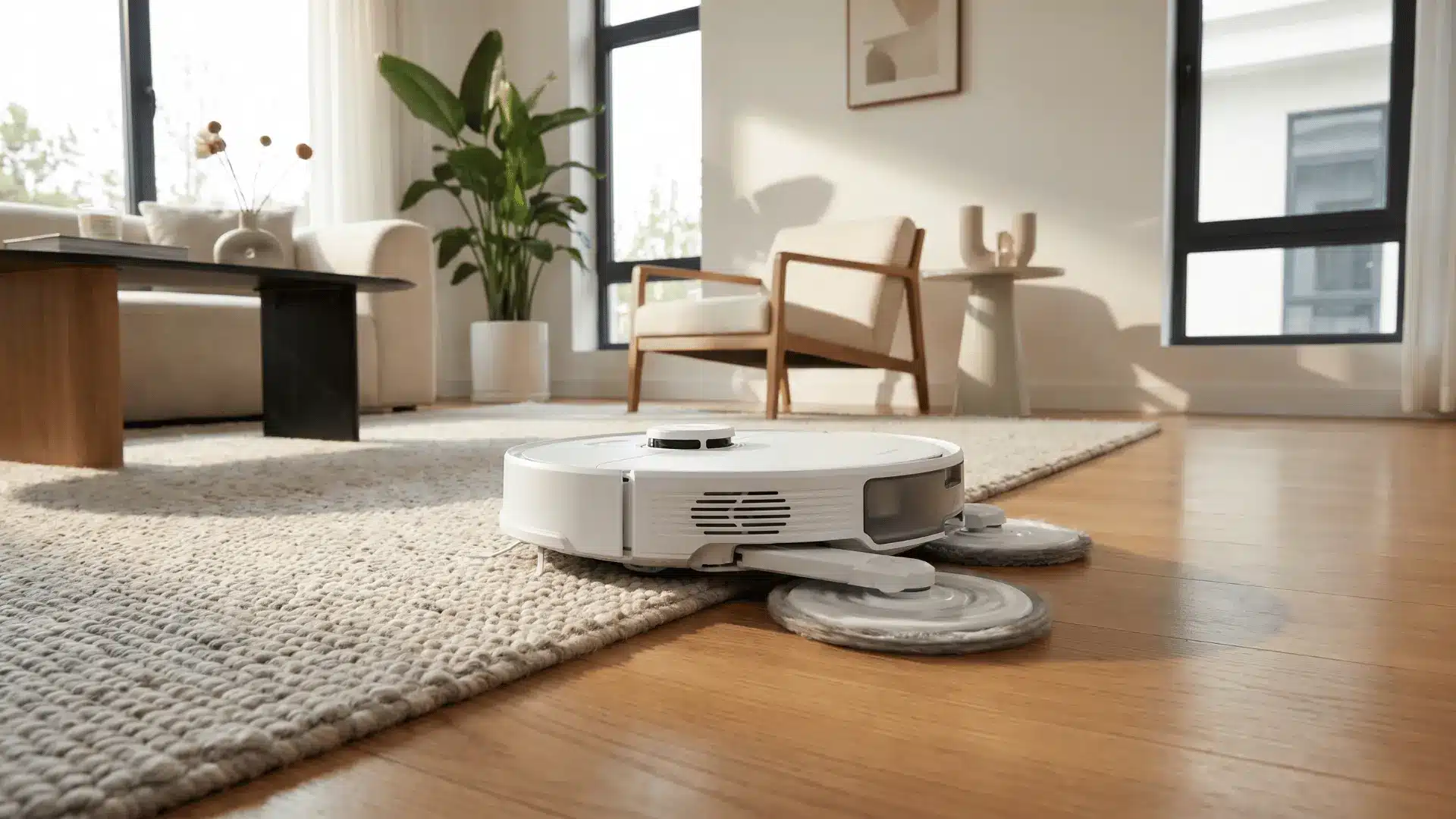





Tired of robot vacuums leaving dust in corners or struggling on rugs?
This robot vacuum addresses those frustrations with smart LiDAR sensors, an extending FlexiArm mop, and a self-cleaning dock that handles routine chores automatically.
It performs well on hard floors, low- to medium-pile carpets, and edges where dirt builds up. For homes with mixed flooring, it delivers consistent coverage without constant input.
Let’s look at how it compares to the higher-end Roborock Qrevo Master, so you can decide whether the Pro covers your needs or the Master is worth the extra spend.
What the Roborock Qrevo Pro Review (and Where It Fits in the Lineup)
The Roborock Qrevo Pro sits in the middle of Roborock’s Qrevo series; above the base model in hardware and features, below the top-end Qrevo Master in price and power. It’s built for people who want real upgrades without paying for capabilities they won’t use.
Qrevo (Base)
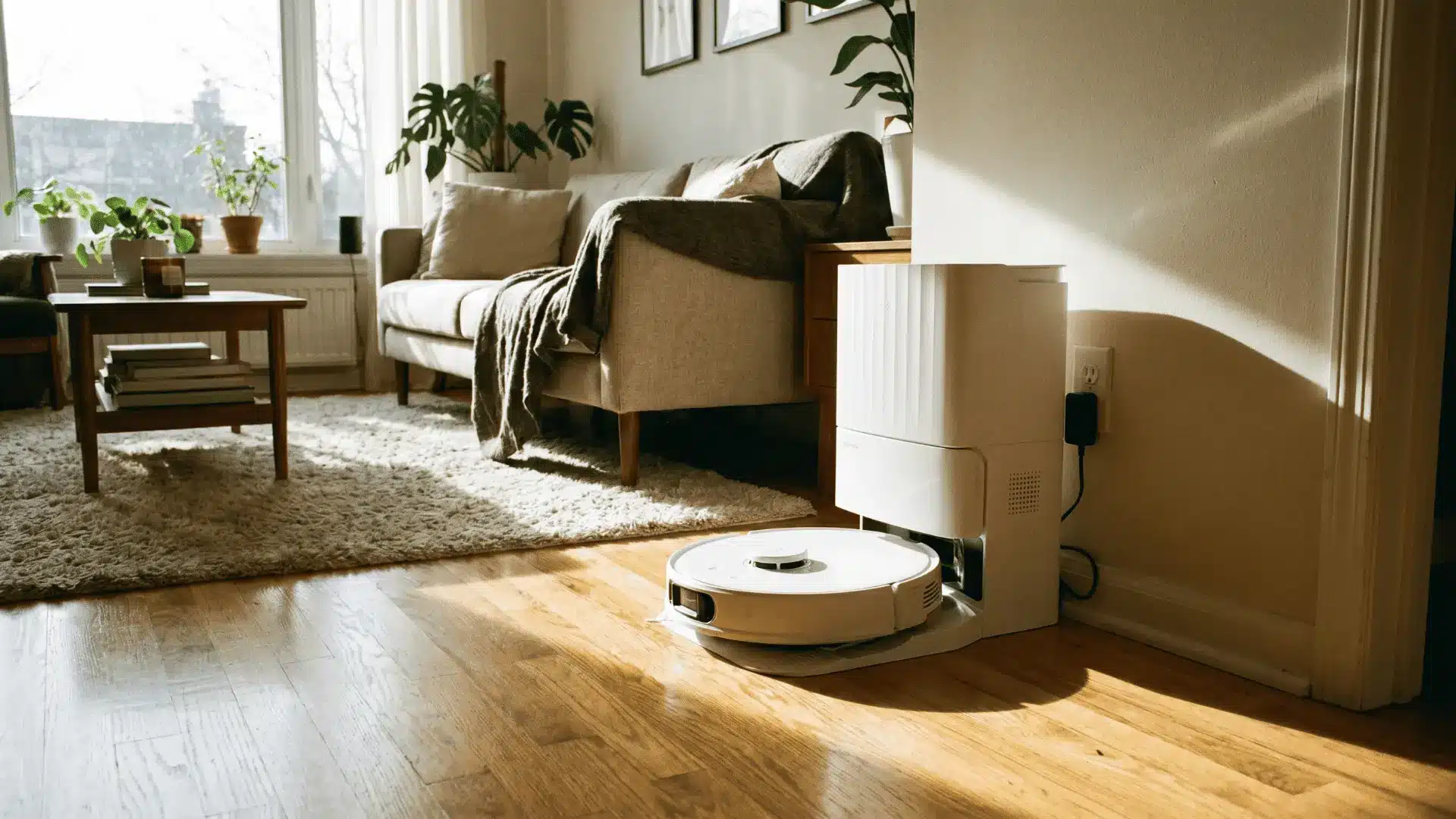
The base Qrevo covers standard robotic cleaning with LiDAR navigation. It’s the most affordable entry into the series and handles straightforward layouts without the extra hardware the Pro brings.
Qrevo Pro
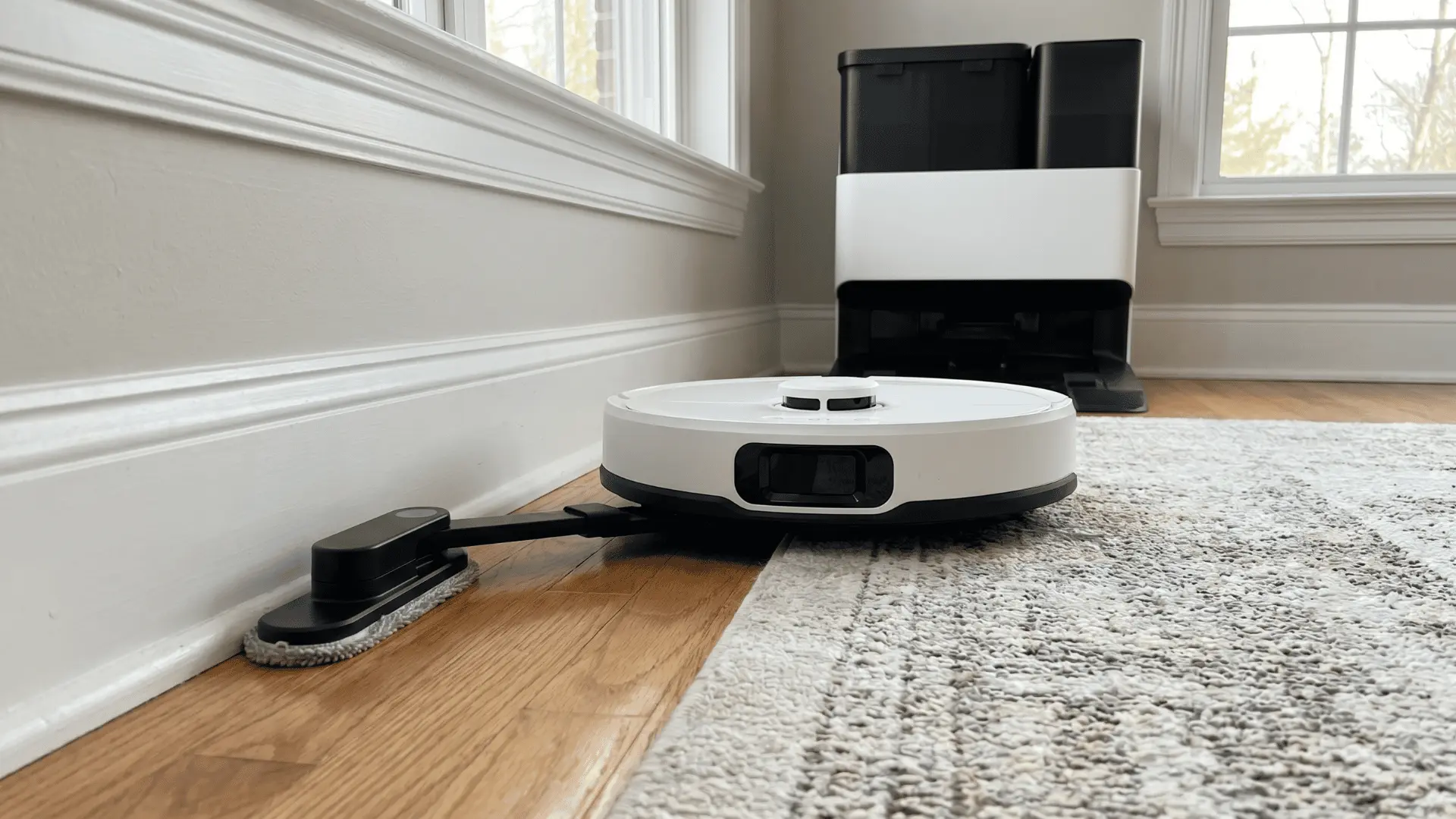
Three specific upgrades separate the Pro from the base model. Each one has a practical impact on day-to-day cleaning:
- FlexiArm: The mop arm extends outward to reach edges and baseboards. The base model can’t do this.
- Dock 2.0: Handles automatic mop washing, mop drying, and dustbin emptying. More on this below.
- Suction: 7,000 Pa HyperForce®, confirmed on Roborock’s product page and all major retailers. Some third-party listings inflated this figure; 7,000 Pa is the correct spec.
Compared with the Qrevo Plus, the real gap is the FlexiArm and the Dock 2.0. The Plus uses a fixed mop pad and a simpler dock that requires manual mop washing. Those two differences are where the ~$100–$150 price gap actually lives.
Qrevo Master
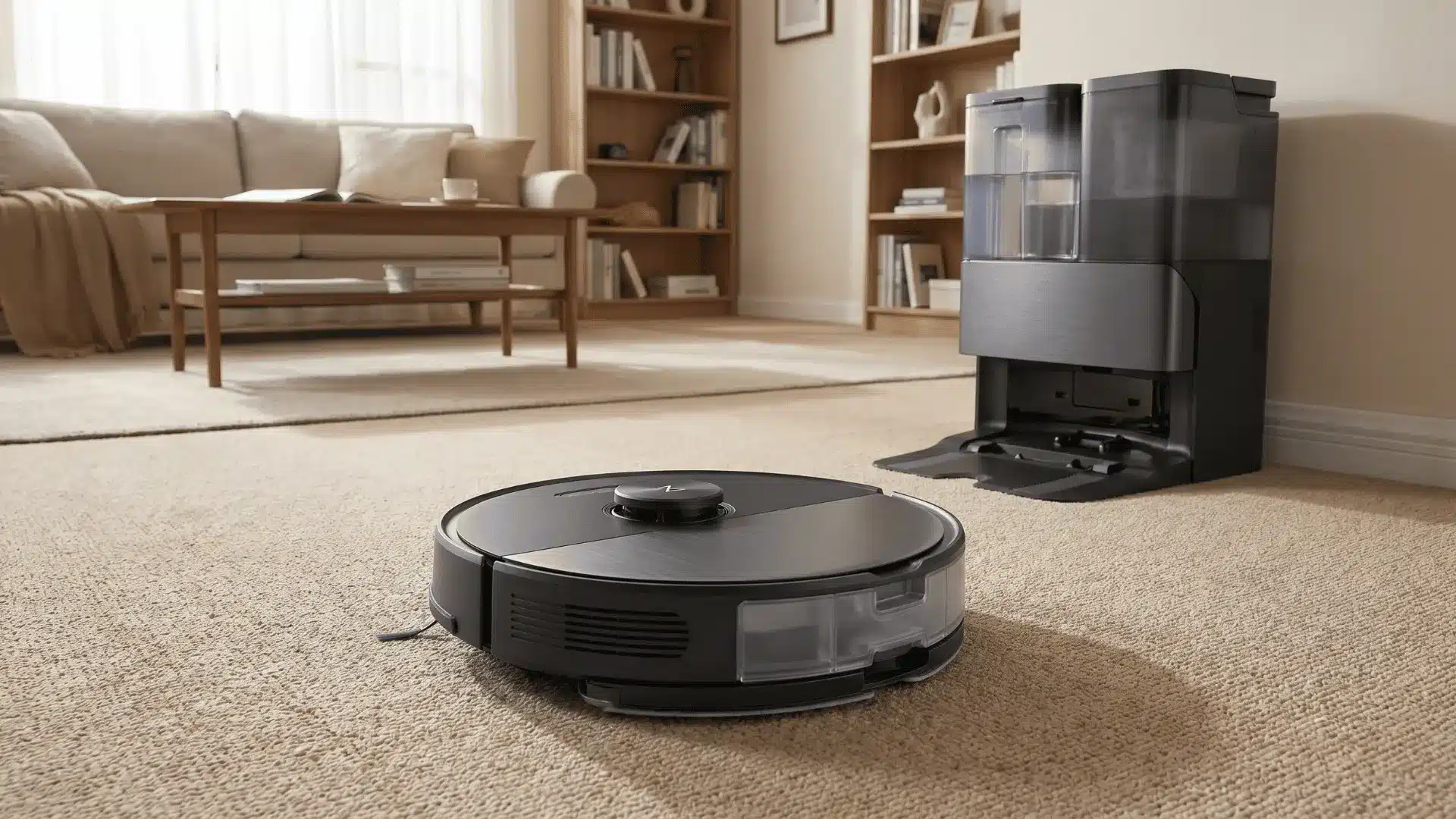
The Qrevo Master is Roborock’s full-power option: stronger suction, camera-based obstacle avoidance, and a more capable dock. It’s built for heavier use cases: deep-pile carpet, heavy pet hair, and complex layouts.
The Pro is for people who want meaningful upgrades over the base model but don’t need the Master’s ceiling. If Roborock releases a Qrevo Pro 2, check for spec changes; successors in this line have historically added more than just a new name.
FlexiArm Mopping System: How It Works and Where It Doesn’t
The FlexiArm is the Qrevo Pro’s most distinctive feature. It solves a real problem: standard robot mops leave a gap along walls and baseboards because the pad can’t extend past the robot’s body. The FlexiArm closes that gap.
Using LiDAR sensors and proximity logic, the arm detects walls, furniture edges, and baseboards as the robot moves. It swings outward by 5–6 cm per side, mops the edge, then retracts automatically once past the obstacle.
The result is streak-free cleaning along straight edges without any manual follow-up.
The Multifunctional Dock 2.0 handles mop maintenance using Dynamic Hot Water Mop Washing. It heats water to 140°F to break down grease and grime, not just to rinse the pad.
Intelligent Dirt Detection monitors how dirty the mop pads are mid-wash. If they’re still soiled, the dock runs another wash cycle automatically before drying.
Drying uses 113°F warm air to prevent mold and odor between cleans. You don’t check or intervene; the dock decides when the mop is actually clean.
Where the FlexiArm Doesn’t Work
The FlexiArm handles most edge scenarios well. A few physical conditions will prevent it from fully extending, and it’s worth knowing them before you set expectations:
- Low furniture clearance: The arm won’t fully extend under cabinets with less than 9–10 cm of clearance.
- Tight gaps: Narrow corridors or closely spaced furniture prevent extension.
- Inside corners: Corners narrower than the arm span may see minimal or no deployment on repeated passes.
These are edge cases, not deal-breakers. In most rooms, the FlexiArm covers what standard robot vacuums consistently miss.
Performance on Every Surface: Hard Floors, Carpet, and Obstacle Avoidance
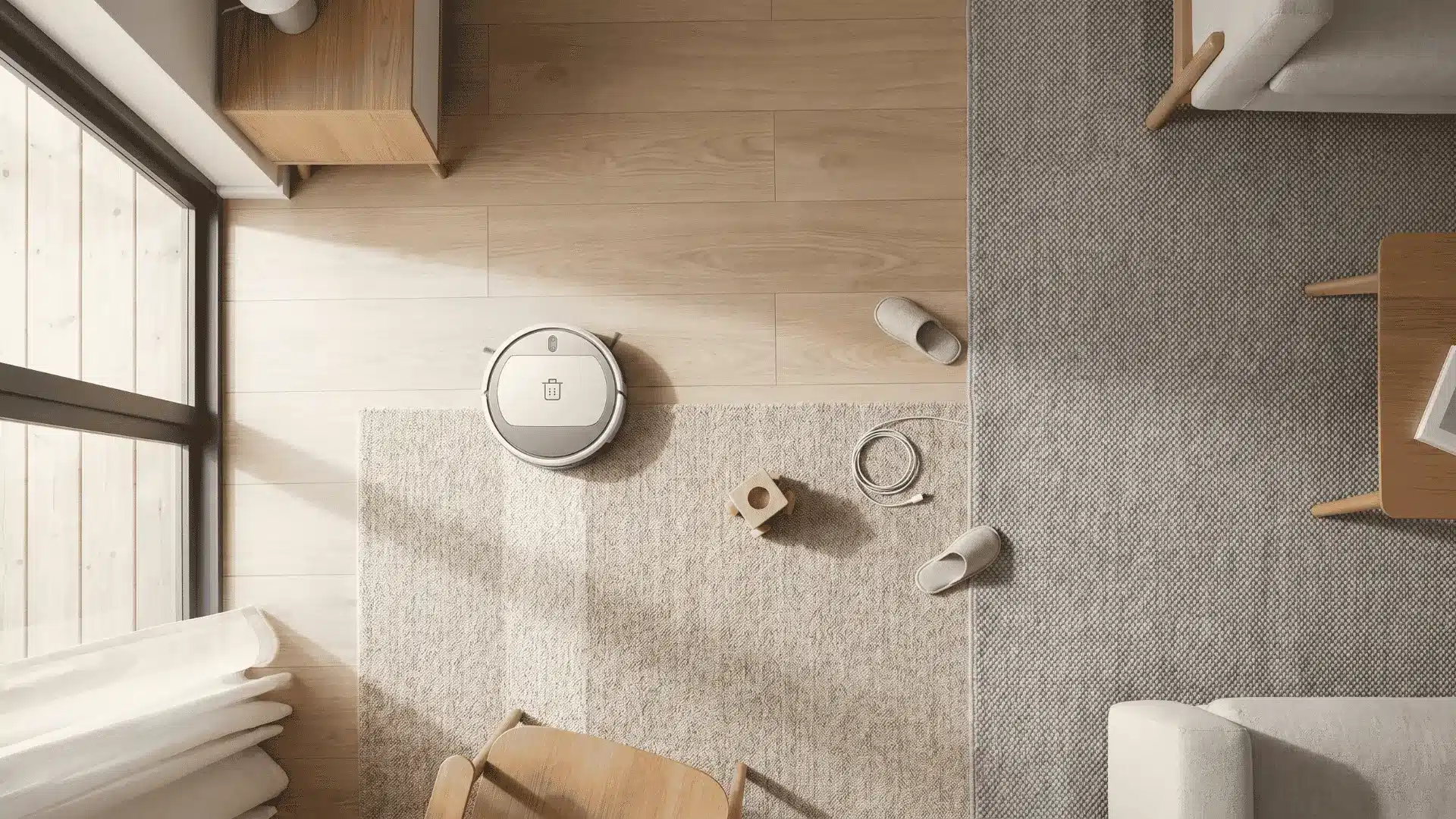
Surface performance is where the Qrevo Pro earns its position in the lineup. Hard floors are its strongest ground, moderate carpets are handled reliably, and obstacle avoidance works well within its sensor-based limits.
Hard Floor Pickup
Hard floors are where this robot is most consistent.
It picks up dust, pet hair, and larger debris efficiently, and the improved brush design captures more on the first pass, including edges and corners that earlier Qrevo models often left behind.
Transitions to area rugs happen without hesitation or a drop in suction performance.
Carpet Performance and the Mop-Lift Failure Condition
Carpet performance splits clearly by pile height. On low- to medium-pile carpet, the mop lifts automatically, and the suction handles debris reliably. The lift is more consistent than the base Qrevo, less dependent on the robot making a perfect pass to trigger it.
Deep or uneven rugs are where the system needs help. The mop may not lift fully on a thick pile, which risks moisture transfer into the carpet.
Set a no-mop zone in the app for any rug with significant depth and the problem doesn’t occur.
Obstacle Avoidance: Reactive Tech and Small-Object Blind Spots
The Qrevo Pro uses Reactive Tech Obstacle Avoidance, a sensor-based system that detects furniture, chair legs, and fixed objects in real time.
It senses that something is present and routes around it, but unlike camera-based systems on the Qrevo Master, it doesn’t identify or classify what it’s detecting.
In practice, that distinction matters for small objects. Cords, socks, and toys under roughly 2 cm can get pushed or caught rather than avoided. Fixed furniture is handled well. Cluttered floors still need a light tidy before each run.
The 5,200mAh battery delivers up to 180 minutes of runtime on a single charge; enough to cover most homes in one pass. If the battery runs low mid-clean, the robot docks, recharges, and resumes exactly where it stopped.
Value, Pricing, and Who Should (and Shouldn’t) Buy It
At $550–$600, the Qrevo Pro sits in a specific band: more capable than budget robots, less expensive than the full-featured Master. Whether that price makes sense depends entirely on your floor type and how much automation you actually want.
What the Price Buys: Feature Premium vs. Budget Alternatives
Here’s how the Qrevo Pro stacks up against the two most common alternatives buyers compare it to:
| Feature | Roborock Qrevo Pro ($550–$600) | Budget Robot (~$300) | Qrevo Master (~$1,000–$1,600) |
|---|---|---|---|
| Navigation | LiDAR mapping for precise coverage | Basic navigation | Advanced LiDAR & camera mapping |
| Edge Cleaning | FlexiArm edge-mopping system | Fixed mop or none | FlexiArm with stronger motors |
| Mop Maintenance | Dock 2.0 — hot water wash, auto-dry, dirt detection | Manual mop cleaning | Dock 2.0 with enhanced performance |
| Suction Power | 7,000 Pa — strong for hard floors & medium carpets | Moderate | 10,000 Pa — better for deep-pile carpet |
| Battery / Runtime | 5,200mAh / up to 180 min | Varies (typically 60–120 min) | 5,200mAh / up to 180 min |
| Pet-Hair Handling | Good for moderate shedding | Limited | Specialized tools for heavy shedding |
| Upgrade Value | Tangible improvement over base Qrevo — FlexiArm & Dock | N/A | Stronger core performance, but significantly higher cost |
The Qrevo Pro earns its price in mixed-floor homes. If you mostly need suction-only on a single surface type, there are cheaper ways to get there.
Who Should Buy It, Who Should Skip It
Your floor type is the deciding factor here. The Qrevo Pro is very good for one specific kind of home and a poor fit for two others.
Strong Buy: Hard Floors + Area Rugs
This is the home the Qrevo Pro was designed for. LiDAR handles transitions without hesitation, the FlexiArm reaches baseboards and edges that standard robots miss, and the dock handles mop maintenance automatically. If this is your situation, the Pro earns its price.
Skip It: Wall-to-Wall Carpet
The mopping system adds nothing here, and 7,000 Pa suction, solid as it is, it doesn’t justify mid-range pricing when a carpet-focused robot or a traditional vacuum does the same job for less.
Conditional: Heavy Pet Hair
Moderate shedding is handled well. Heavy, daily shedding is a different challenge.
The Qrevo Master’s stronger suction and anti-tangle brush system are built for that load. The Pro will keep up between deep cleans, but may not be enough as the primary tool in a heavy-shedding household.
For most buyers, the Qrevo Pro works best where mopping and edge cleaning both matter. If only one of those applies to your home, a different model likely fits better.
Roborock Qrevo Pro vs. Qrevo Master: Key Differences and Which to Choose
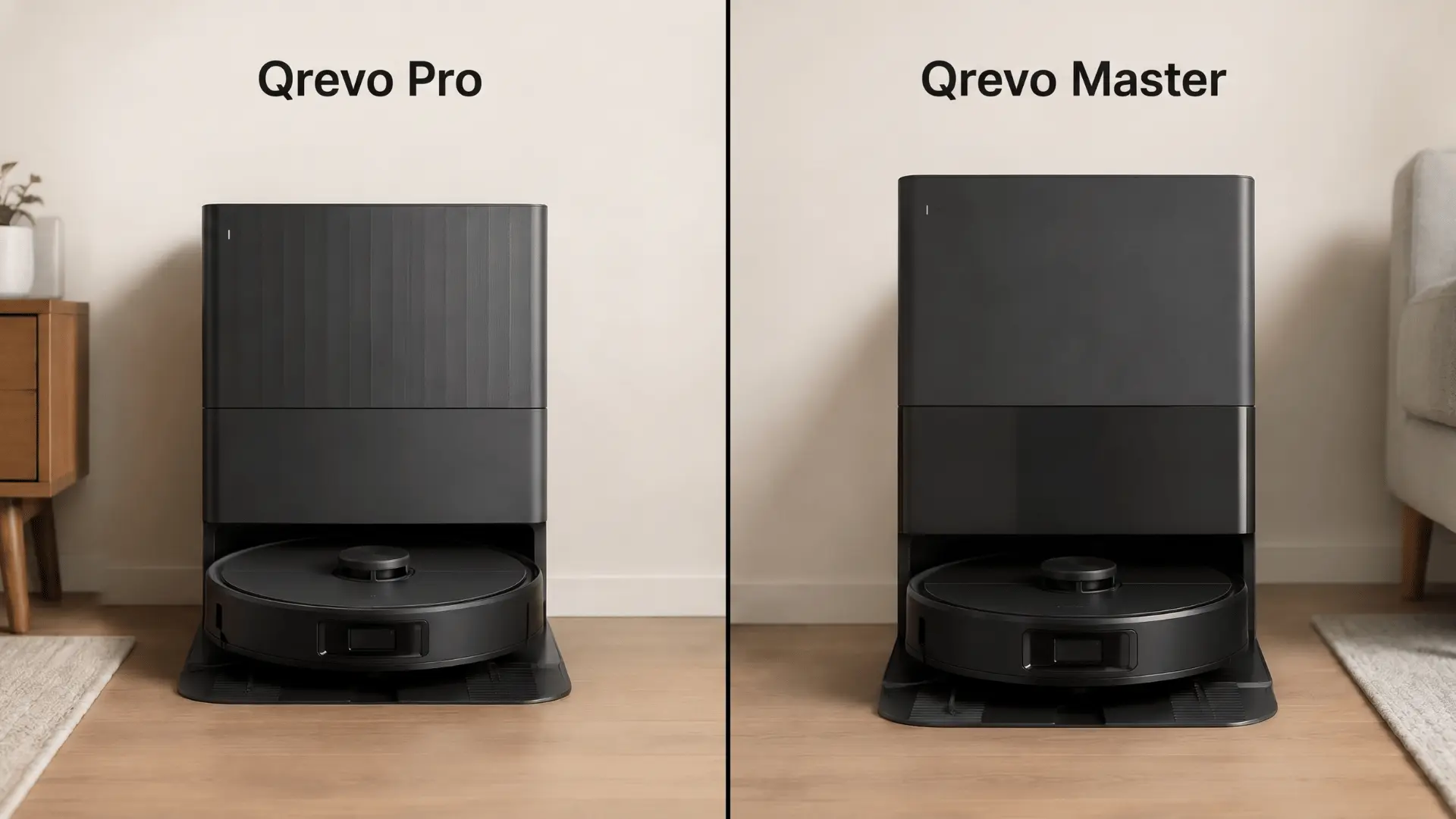
Both robots share the FlexiArm and Dock 2.0 foundation. The gap between them is in suction ceiling, obstacle avoidance sophistication, and how well each handles the worst-case scenarios in your home.
| Feature | Qrevo Pro | Qrevo Master |
|---|---|---|
| Suction Power | 7,000 Pa — strong for hard floors and low/medium-pile carpets | 10,000 Pa — better for deep-pile and high-traffic carpets |
| Mopping System | FlexiArm + Dock 2.0 | FlexiArm + Dock 2.0 (upgraded motors & navigation) |
| Pet-Hair Handling | Good for moderate shedding | Advanced — built for heavy, daily pet hair |
| Obstacle Avoidance | Reactive Tech — sensor-based, handles fixed furniture well | Camera-based — identifies and avoids smaller objects more precisely |
| Ideal Home Type | Mixed hard floors + area rugs | Deep carpet, heavy pet hair, complex layouts |
| Price Range | ~$550–$600 | ~$1,000–$1,600 (frequently discounted) |
For mixed hard floors and area rugs, the Pro delivers everything you need at a lower price. The Master makes sense when deep-pile carpet, heavy shedding, or cluttered layouts push the Pro to its limits.
App, Scheduling, and Long-Term Ownership
The Qrevo Pro is designed to run with minimal input, but “mostly automated” still requires occasional hands-on care to stay that way. Here’s what you’re actually signing up for:
Multifunctional Dock 2.0
The dock handles the tasks that make robot vacuums feel like work: it empties the dustbin, washes the mop pads with 140°F hot water, runs a second wash if the pads are still dirty, and dries everything with warm air before the next run.
What it doesn’t handle: hair wrapped around the brush roll, worn mop pads that need replacing, and residue that builds up in the dock’s wash tray over time. Those still need you.
Roborock App Features
The app gives you precise control over how and where the robot cleans. Once your floor is mapped, you can adjust the cleaning routine down to the room level:
- Room mapping: Assign specific rooms or zones to clean on demand rather than running the full floor every time.
- No-mop zones: Wall off carpet edges, pet feeding areas, or any surface you don’t want mopped; the robot won’t cross them.
- Scheduling: Set different schedules by room; daily mop in the kitchen, weekly vacuum in the office.
- Power and water-flow settings: Adjust suction and mop intensity by surface type for each cleaning run.
- OTA firmware updates: Roborock pushes feature and navigation improvements over time with no action needed on your end.
The more time you spend configuring zones and schedules upfront, the less you interact with it afterward. That initial setup is where the long-term convenience is actually built.
Long-Term Ownership Tips
The dock automates most of the routine, but three maintenance tasks still fall to you, and ignoring them eventually affects performance:
- Brush roll: Remove tangled hair every 1–2 weeks. It wraps around the axle and the dock has no way to detect or fix it.
- Dust bag: The 2.7L bag lasts roughly 6–8 weeks under normal use before it needs swapping.
- Dock wash tray: Rinse it monthly. Detergent residue builds up over time and reduces hot water effectiveness.
None of these takes more than a few minutes. Done consistently, they’re the difference between a robot that stays reliable and one that slowly degrades without obvious cause.
Wrapping Up
The Roborock Qrevo Pro is a strong performer for mixed-floor homes. The FlexiArm handles edges that standard robots skip, the dock manages mop maintenance on its own, and LiDAR navigation keeps coverage consistent across different surfaces.
With a bit of initial setup, room mapping, and a few zone adjustments, it handles most daily cleaning on its own. For most mixed-floor homes, that’s exactly the point.
For more tips, comparisons, and in-depth guides on robot vacuums, check out the other blogs on the site.
Frequently Asked Questions
What is the difference between the Roborock Qrevo Pro and the Qrevo Plus?
The Qrevo Pro adds the FlexiArm extending mop and the Multifunctional Dock 2.0, while the Qrevo Plus has a fixed mop and a simpler dock. Pro is better for edge cleaning and hands-off maintenance; Plus is fine for basic vacuuming and occasional mopping.
What type of floors is the Roborock Qrevo Pro best for?
It performs best on hard floors like hardwood, tile, and linoleum, and handles low- to medium-pile carpets well. Mixed-floor homes with hard floors and area rugs see the most benefit.
Which Roborock model is the best?
There’s no single best model, it depends on your floor type and budget. The Qrevo Pro is ideal for mixed floors, the Master is stronger for pet hair and complex navigation, and the base Qrevo covers simple vacuum-only needs.
Does the Roborock Qrevo Pro work with Google Home or Alexa?
Yes, it supports both Google Assistant and Alexa for basic start, stop, and dock commands. Full cleaning control, room selection, mop modes, and zone settings require the Roborock app.