

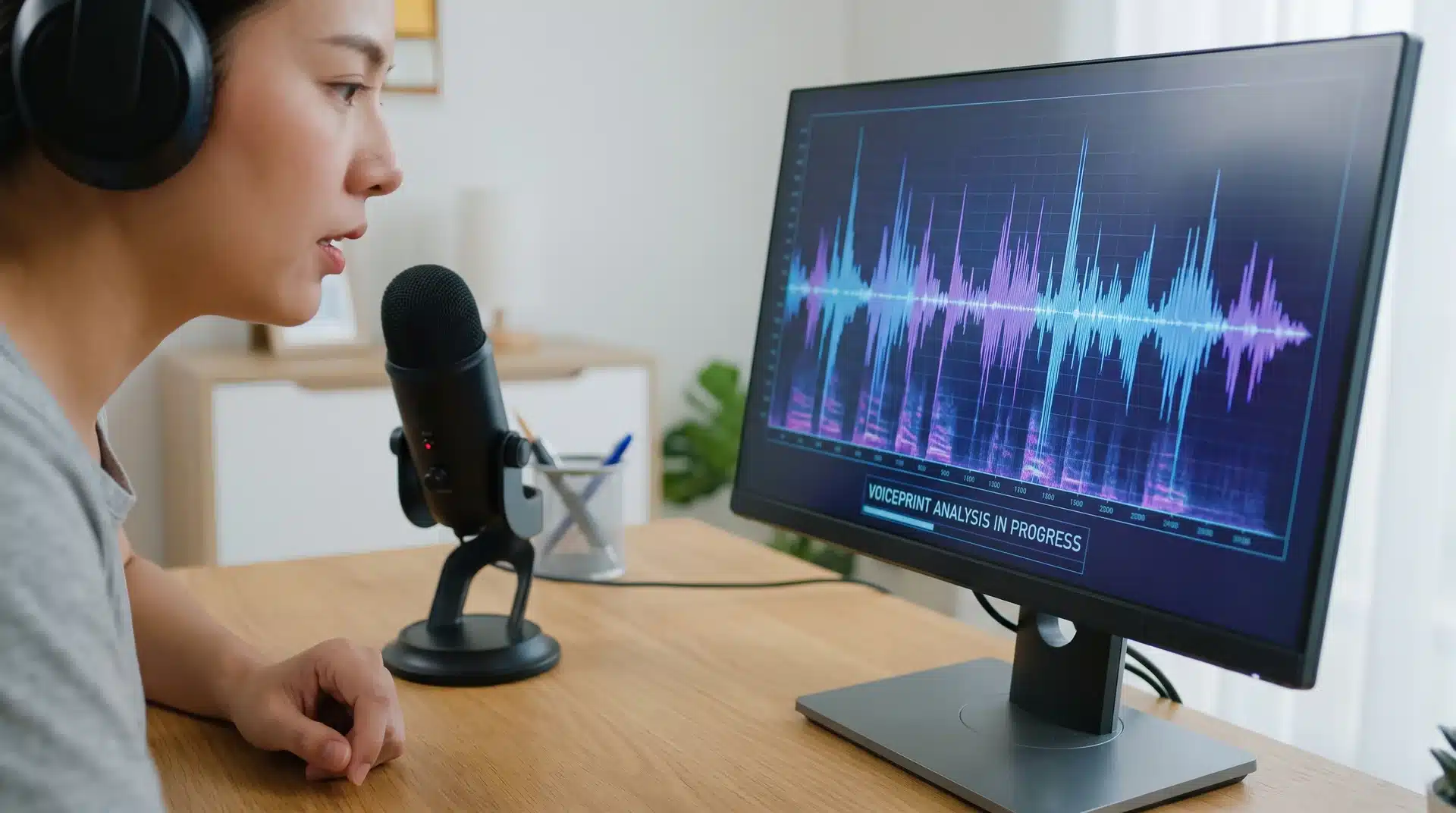



Your voice is more unique than you realize. Throat shape, speaking rhythm, and sound patterns combine to create a vocal signature that is difficult to replicate.
Voice biometrics turns these patterns into a form of identification. Instead of recognizing words, it analyses the physical and behavioral traits behind how you produce sound.
A voiceprint is not a recording of your voice. It is a mathematical model of your speech characteristics, which makes it different from voice assistants or call recordings.
The technology offers strong security benefits, but it also has limitations worth understanding. In this guide, I’ll cover how voice biometrics works, where it is used, and its key advantages and challenges.
What Is Voice Biometrics and What Does It Actually Measure?
Voice biometrics verifies identity by converting your vocal characteristics into a mathematical model, which is stored and used for authentication.
It does not store voice recordings; the system extracts measurable vocal features, converts them to numerical data, and discards the audio.
These features come from two sources:
- Physiological traits like vocal tract length, nasal cavity shape, and larynx position remain fairly consistent.
- Behavioral traits: your cadence, rhythm, pronunciation, and word emphasis form a distinct speaking signature.
Alone, neither is enough. Together, they create a voiceprint that’s hard to replicate. Someone might imitate your accent or tone, but they cannot easily reproduce the combination of your physical traits and lifelong speech patterns.
How Voice Biometric Verification Works
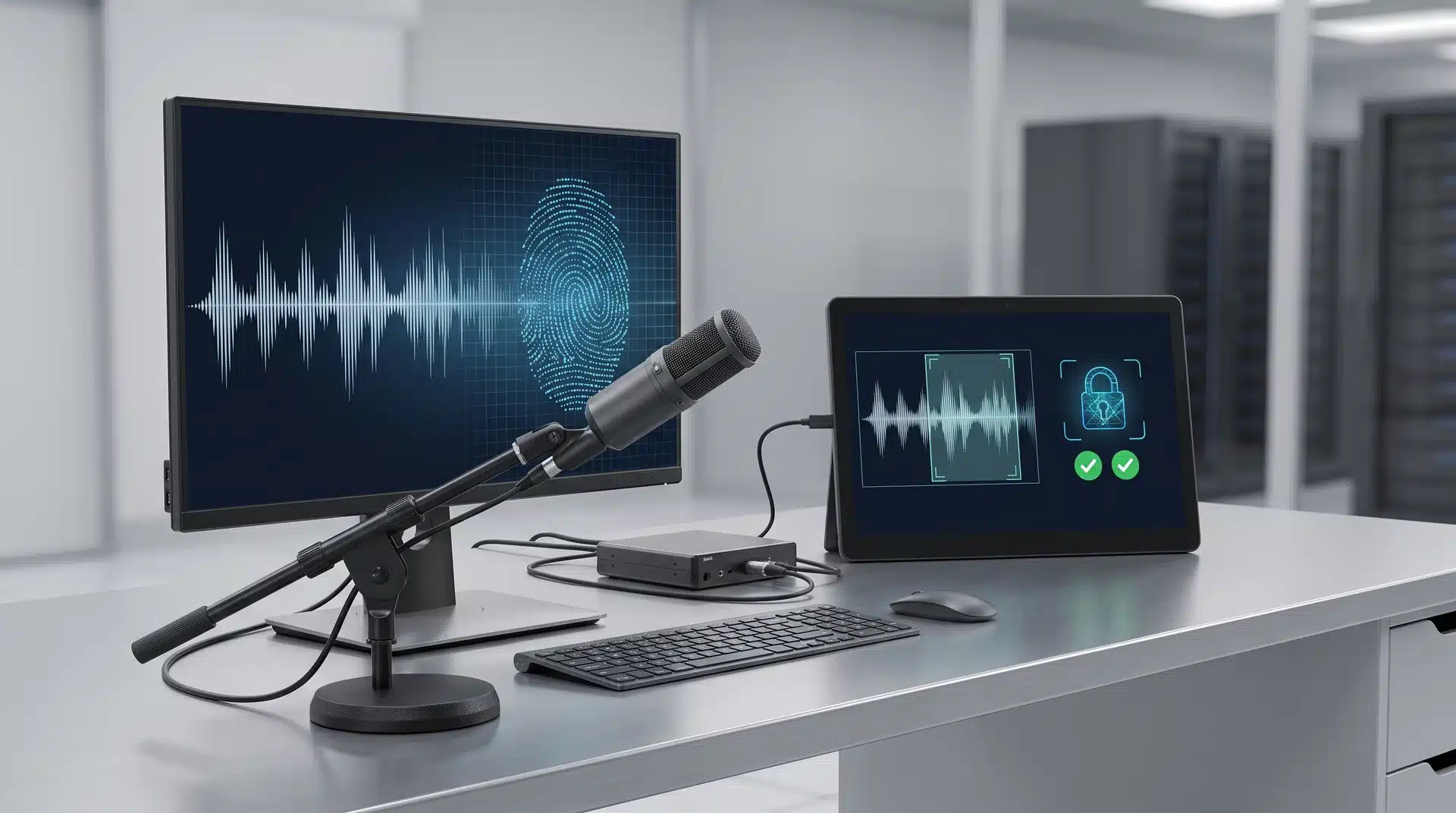
Voice biometrics happens in two stages. First, the system builds your voiceprint. Then it uses that voiceprint to decide whether you are who you claim to be.
Step 1: Enrollment
Enrollment is the first stage where the system learns your voice patterns. You provide a sample, which it converts into a unique mathematical voiceprint.
The quality of this sample affects future accuracy. Clear speech improves matching, while noise, poor recordings, or unusual speaking conditions can reduce reliability.
Step 2: Verification
During verification, the system captures your live voice and extracts key speech features for comparison against your stored voiceprint.
It then generates a match score based on similarity. The system uses this score to decide whether the voice belongs to the enrolled user.
Step 3: Threshold Decision
High thresholds may reject legitimate users due to noise, illness, or recording changes. Low thresholds increase risk from similar voices, replay attacks, or synthetic audio.
There is no universal setting that works for every deployment. Organizations must decide where to draw the line between security and convenience, knowing that reducing one type of error usually increases the other.
Active vs. Passive Voice Authentication
Active and passive authentication use the same underlying technology but create different user experiences. The main difference is whether the user is aware that verification is happening.
| Factor | Active Authentication | Passive Authentication |
|---|---|---|
| How it works | User speaks a specific phrase or responds to a voice prompt | System analyzes speech during a normal conversation |
| User awareness | User knows authentication is taking place | Verification happens in the background |
| Voice sample | Uses short, controlled voice samples | Uses natural speech collected during interaction |
| Convenience | Less convenient because users must complete a prompt | More convenient because no extra action is required |
| Accuracy factors | More affected by noise, illness, and microphone quality due to shorter samples | Uses more speech data, allowing broader context for decisions |
| Privacy concerns | Lower because users actively participate | Higher because monitoring happens during regular conversations |
| Common considerations | Better control over the authentication process | Requires stronger disclosure and consent practices |
Neither approach is automatically better. Active authentication prioritizes control, while passive authentication focuses on convenience. The right choice depends on the balance between security, user experience, and compliance needs.
Voice Cloning Risks and Liveness Detection
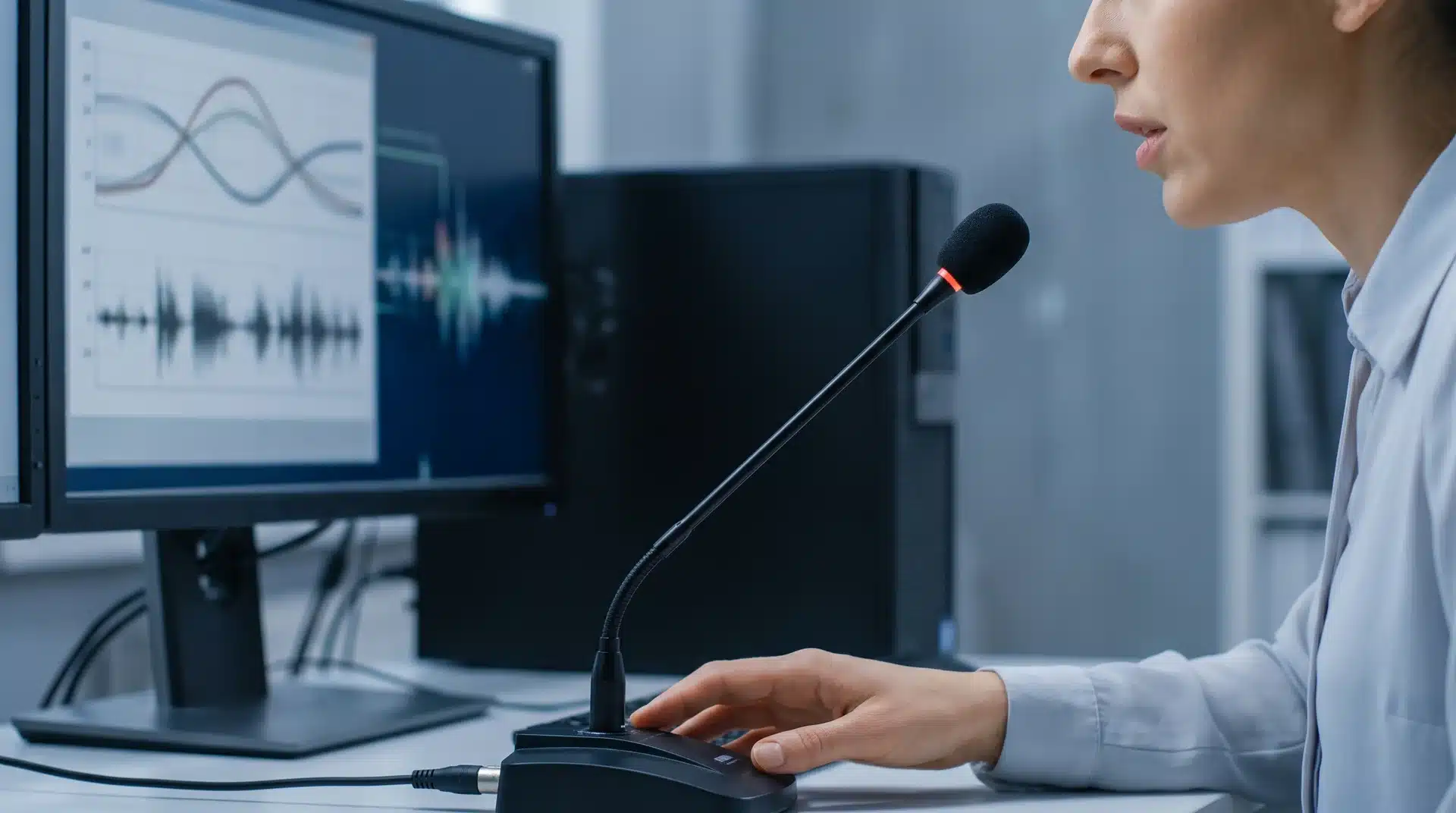
Voice biometrics does not mainly fail because someone steals a voiceprint. The bigger challenge is synthetic audio that can imitate a real person’s voice convincingly.
AI voice cloning tools can recreate speech patterns, tone, and pronunciation from short audio samples.
AI voice cloning tools can recreate speech patterns, tone, and pronunciation from short audio samples; part of a broader pattern of the types of digital threats that target authentication that security teams must account for.
Liveness detection helps solve this by checking whether audio comes from a real person speaking live or from a recording, replay, or synthetic voice.
| Signal Analyzed | What It Helps Detect |
|---|---|
| Breathing patterns | Natural pauses and airflow from a live speaker |
| Frequency variations | Small changes found in human speech |
| Room acoustics | Whether audio matches a real environment |
| Microphone characteristics | Signs of replayed or processed audio |
These checks make spoofing harder, but they are not perfect. As AI-generated voices improve, detection systems must continue adapting.
Voice Biometrics Use Cases and Requirements
The technology works across different environments, but the risks and requirements change depending on how authentication is used. A banking call center has different needs than a mobile app login.
Contact Centers and Banking
Voice biometrics in contact centers is often used for passive authentication during normal conversations. The system analyzes the customer’s voice while they interact with an agent, reducing the need for repeated security questions.
The main benefit is faster verification and a smoother customer experience. However, phone spoofing, poor call quality, and background noise can affect accuracy and require stronger security controls.
Organizations also need clear user notice and consent before collecting voice data, especially in regulated industries where privacy requirements are strict.
Mobile Apps and MFA
Mobile apps usually use active authentication, where users intentionally verify their identity through a voice prompt or security step.
The advantage is quick access and easier transaction approval. The main risks include replay attacks, synthetic voices, and attempts to bypass authentication using AI-generated audio.
Mobile implementations require strong encryption, secure data handling, and additional authentication layers, and understanding how memory integrity protects sensitive system processes helps explain why those layers matter for sensitive accounts.
The technology may be similar in both cases, but the security approach depends on the environment, risk level, and compliance requirements.
Voiceprint Privacy and Compliance
Voiceprints are treated differently from ordinary personal data. In many regions, they are classified as biometric information, which comes with stricter rules for collection, storage, and use.
Key compliance requirements include:
- Consent: Users must be informed about voice data collection and provide agreement before enrollment.
- Purpose Limits: Voiceprints should only be used for the specific purpose explained during collection. Using them for unrelated activities can create compliance issues.
- Retention Rules: Organizations need clear policies for how long voiceprints are stored and when they should be deleted.
- Deletion Rights: Depending on local laws, users may have the right to request removal of their biometric data.
Requirements vary by region. GDPR classifies voiceprints as special-category biometric data, while Illinois BIPA requires strict consent practices and allows legal action for violations.
Privacy and compliance should be considered from the beginning of system design, not added after the technology is already deployed.
Conclusion
Voice biometrics is becoming everyday infrastructure. It runs behind phone calls, mobile logins, and banking transactions, often invisibly.
What makes it work isn’t the voice itself. It’s the mathematical model built from it, the liveness checks defending it, and the compliance framework governing it.
Each layer depends on the others. Strong matching with outdated liveness detection leaves you exposed. Solid security with weak consent practices creates legal risk.
Used well, it’s faster and harder to manipulate than most authentication methods. If you’re evaluating it seriously, start with the regulatory requirements they’ll shape every technical decision that follows.
Frequently Asked Questions
What is the difference between voice recognition and voice biometrics?
Voice recognition identifies what you said, while voice biometrics identifies who is speaking. One focuses on speech content, while the other analyzes unique vocal characteristics for identity verification.
Can a recorded voice fool a voice biometrics system?
A basic recording usually fails against modern liveness detection. However, advanced AI-generated voices are harder to detect, and results depend on system design and update frequency.
Is a voiceprint stored as an audio file?
No. During enrollment, the system converts your speech into a mathematical model. The voiceprint cannot be played back like a recording or used as an original audio copy.
Can someone change their voiceprint like a password?
No. A voiceprint is based on physical and behavioral speech patterns, not a chosen password. If compromised, organizations must rely on additional security layers instead of simply replacing the voiceprint.